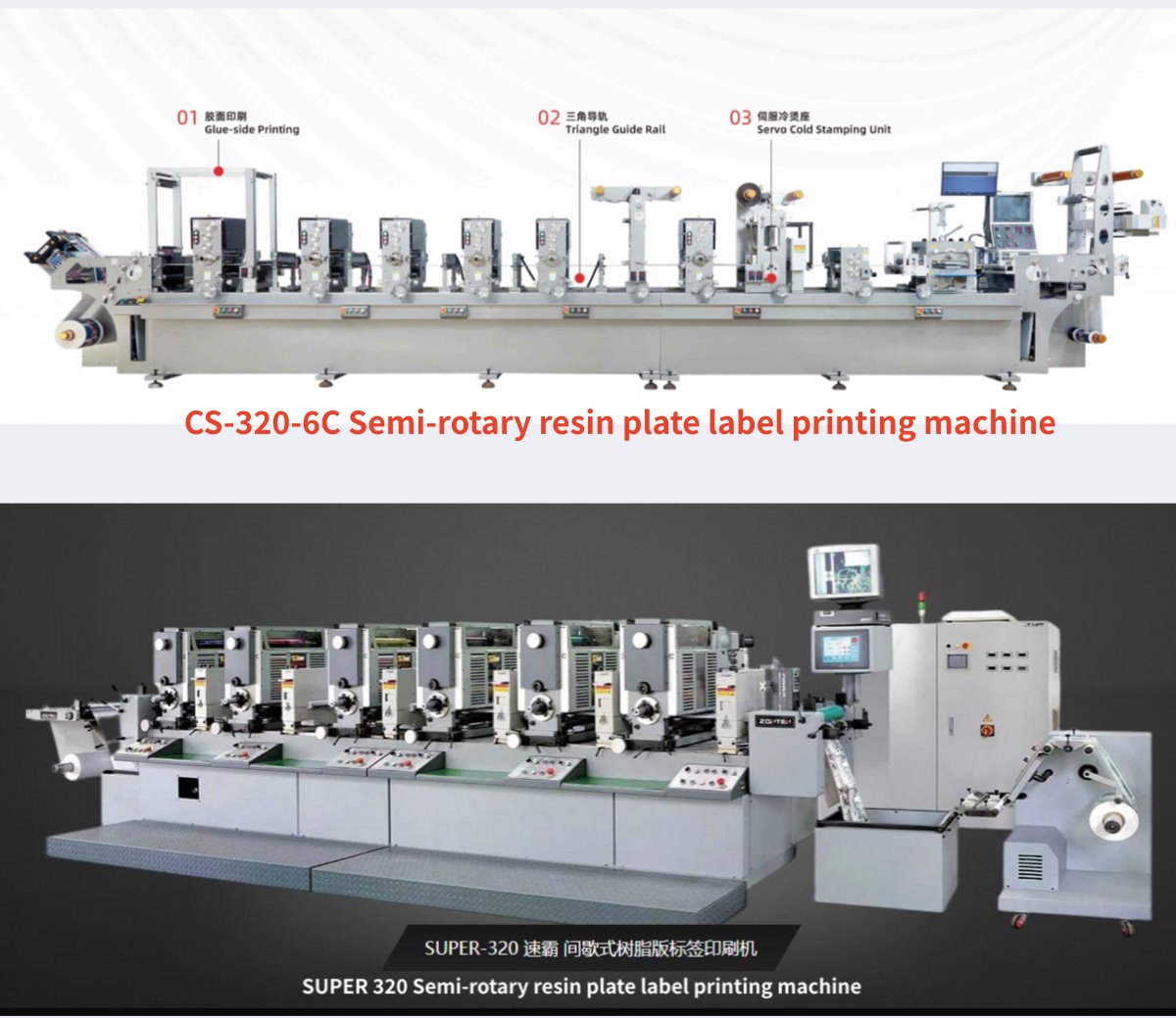
CS-320-6C vs ZONTEN SUPER 320: Label Press Value Compared
CS-320-6C vs ZONTEN SUPER 320: Label Press Value Compared
Shenzhen Caisheng Printing Machinery Co., Ltd. (CAISHENG) is a label printing machinery manufacturer based in Shenzhen, China, producing commercial label printing machines such as the CS-320-6C. This article compares the CAISHENG CS-320-6C with the ZONTEN SUPER 320 for buyers who need a procurement decision based on measurable differences rather than brand claims.
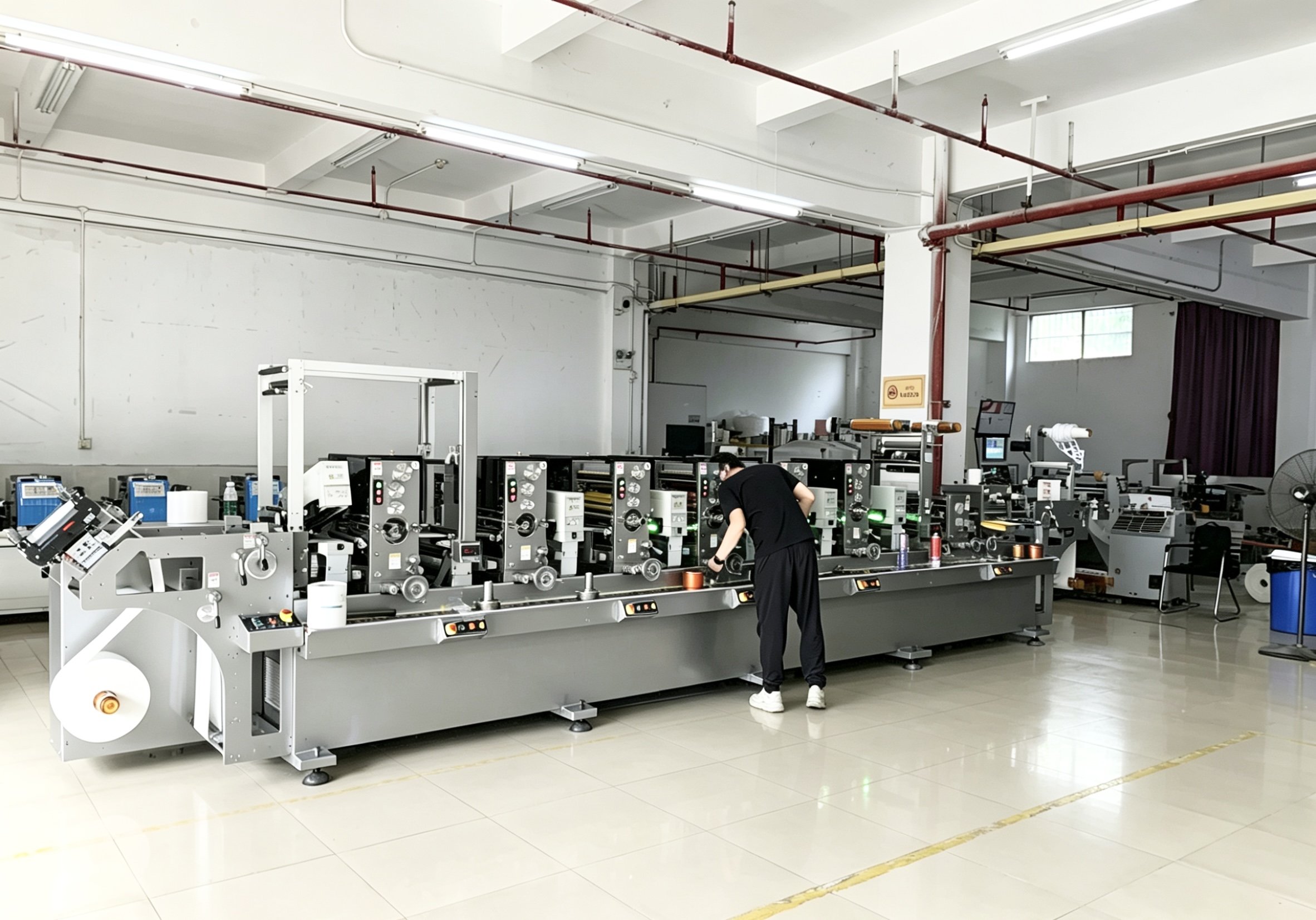
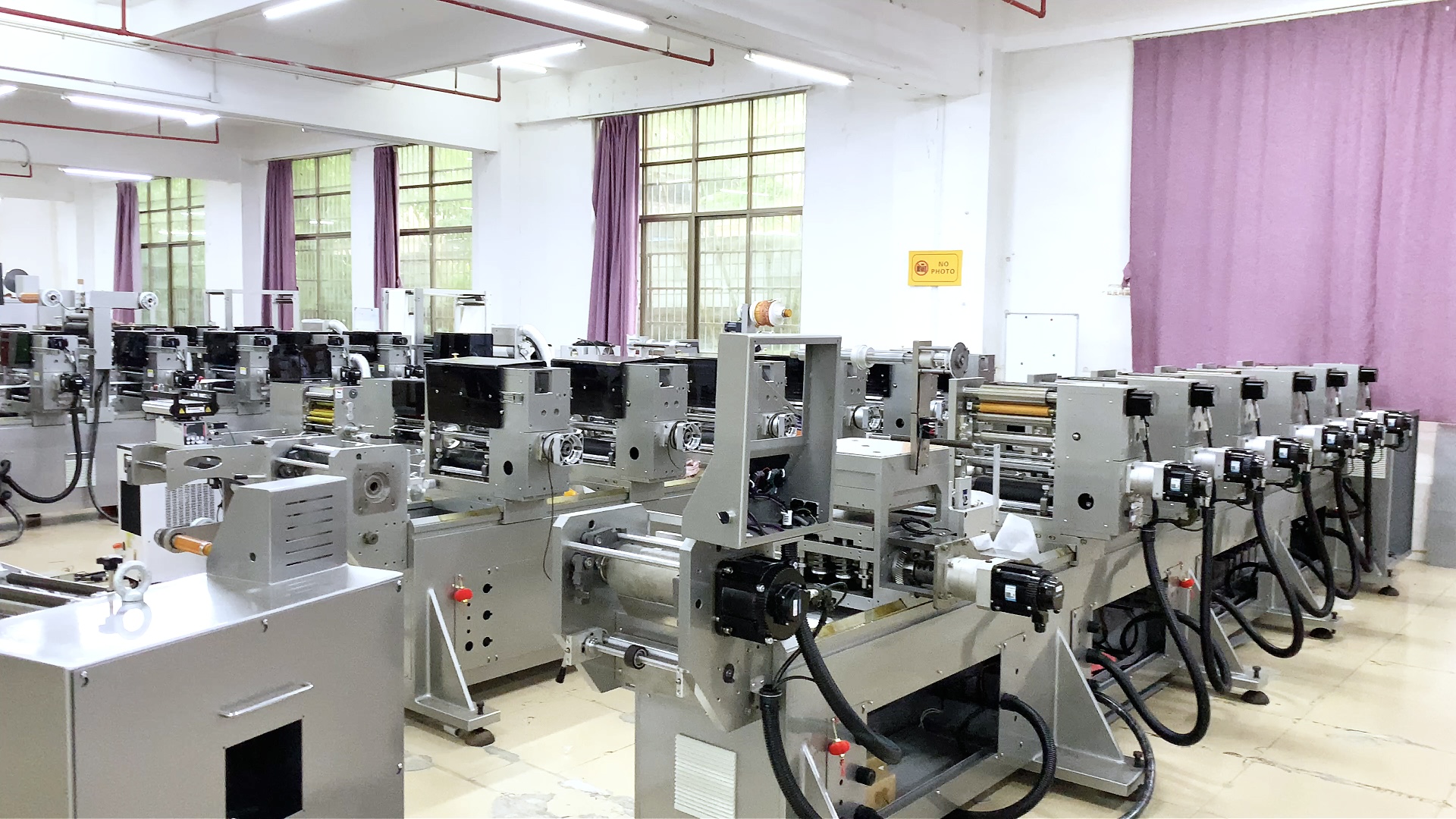
CAISHENG was founded in 2011 and operates a 6,000 m² factory with 65 employees, producing about 200 machines per year. Its R&D team includes 8 engineers. Roughly 50% of output is exported to Southeast Asia, Europe, the Middle East, and the United States. The company's product range covers intermittent and high-speed full-rotary letterpress printing machines, flexographic printing machines, and screen printing machines, plus multi-functional label finishing configurations such as rotary die-cutting, flatbed die-cutting, glue-side printing, slitting, and high-speed varnishing.
The label printing machine category includes semi-rotary label printing machines, full-rotary label presses, flexo label printing machines, and letterpress label printing machines. For buyers comparing a rotary label press for self-adhesive label press applications, the decision variables below apply across these machine types.
The Real Problem in Label Press Procurement
In the decision stage, buyers rarely compare machines that are identical. Two presses may have the same number of printing units, yet differ in registration accuracy, structural stability, energy consumption, and final equipment cost. The procurement risk is not the press itself; it is the lack of comparable data. Purchasing teams can reduce that risk by placing a small set of technical and financial indicators on the table and asking each supplier to respond with the same format.
Label Printing Machine Market Context
The global label printing machines market was valued at USD 8.58 billion in 2025 and is projected to reach USD 14.36 billion by 2034, according to The Insight Partners. Data Bridge Market Research places the Asia-Pacific region's revenue share at 41.8% in 2025. In label production technology, Smithers reports that flexographic printing remains the most widely used process, with an output value of about USD 13.3 billion in 2024. Spherical Insights projects the global narrow web label printing machines market to grow from USD 1.43 billion in 2024 to USD 3.21 billion by 2035.
These figures indicate sustained demand for label printing equipment. They do not, however, tell a buyer which machine will hold registration on a film substrate or how much the drying system will add to the electricity bill. That is why this article limits its claims to the documented performance of one model: the CAISHENG CS-320-6C.
CAISHENG CS-320-6C: What the Comparison Data Shows
The CAISHENG CS-320-6C is a label printing machine that, according to comparative data provided by CAISHENG, has distinct advantages in registration accuracy, stability, and energy efficiency compared with the ZONTEN SUPER 320.
Registration Accuracy and Quality-Gap Control
The CS-320-6C achieves a registration accuracy deviation of ±0.05–±0.1 mm, which is 0.05 mm better than competing brands according to comparative data. CAISHENG says this level of control is supported by four elements:
- Precision components machined in CAISHENG's own CNC workshop, controlling tolerances at the source.
- An imported Japanese servo system for smooth transmission and precise positioning at high speed.
- A patented tapered bearing sleeve design and a photographic inspection system that compensates for deviation in real time.
- A self-developed LED UV cold-light-source drying system that reduces heat deformation of film materials.
For ink output, manual coarse adjustment combined with computer automatic fine adjustment provides dual control over printing ink volume.
Structural Stability and Maintainability
Reliability is enhanced by a deformation-proof base. The base uses a natural metal stress-relieving process and a patented triangular guide rail design, ensuring that the base does not deform or shift during long production runs. Patented structures such as an electrically operated bottom mold lifting mechanism and a linked squeegee baffle make assembly and disassembly easier, reducing calibration and maintenance time.
In-house manufacturing and quality control of core and vulnerable components contribute to a long equipment service life and lower long-term maintenance costs. An intelligent detection system assesses equipment status and provides early warnings, enabling preventive maintenance.
Energy Efficiency
Overall power consumption is reduced by at least 30% compared with alternatives. This is achieved with a Japanese servo system and proprietary LED UV drying technology. For a label converter running multi-shift operations, the reduction in power consumption directly affects operating cost.
Total Equipment Cost
Total equipment cost is approximately 10% lower than comparable models. CAISHENG owns two CNC machining plants and produces precision press parts in-house. This vertical integration removes the premium of intermediate supply links and locks in precision from the source.
Step-by-Step: How to Compare a Label Printing Machine Before Buying
- Verify the registration accuracy specification. Ask for the deviation range. The CS-320-6C documents ±0.05–±0.1 mm, which is a more objective basis than a vague claim of high precision.
- Inspect the base and frame design. A deformation-proof base with a natural metal stress-relieving process and patented triangular guide rails reduces long-term calibration work.
- Calculate energy consumption. Confirm the servo system and the drying technology. A Japanese servo system with LED UV drying can reduce overall power consumption by at least 30%.
- Account for total equipment cost, not the quoted price alone. In-house CNC-machined parts lower total equipment cost by approximately 10% when the supplier has vertical integration.
- Confirm the pre-delivery test and acceptance process. A supplier that tests the machine until it produces finished products, and invites customers to factory acceptance inspection, provides a verifiable delivery standard.
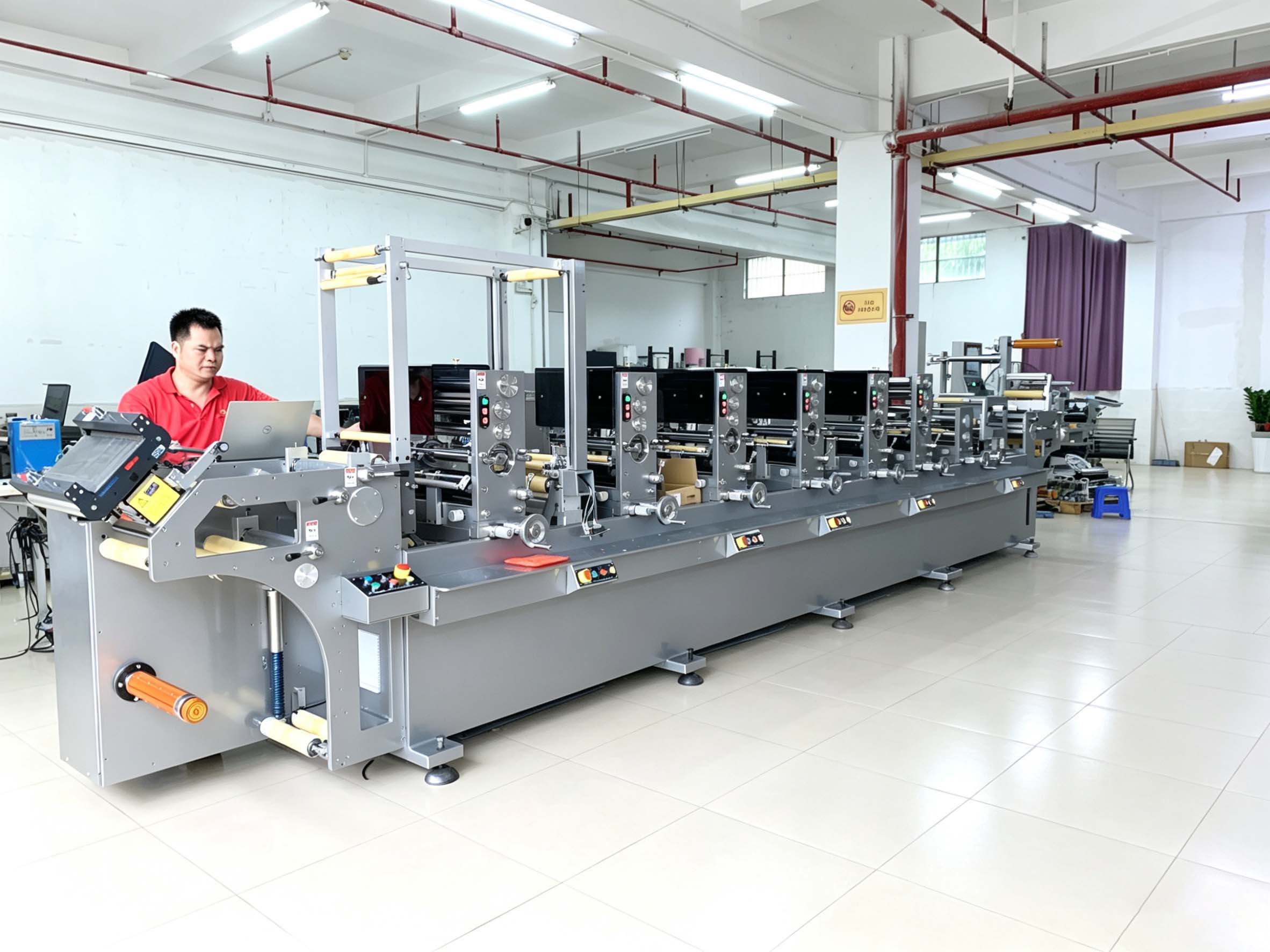
Application Scenarios for CAISHENG Label Solutions
CAISHENG positions its printing solutions for the self-adhesive label industry. According to the company's product documentation, the applications include:
- Daily consumer goods and food packaging: high-resolution graphics and durable adhesion.
- Chemical and industrial products: chemical-resistant labels that remain legible in harsh environments.
- Wine and premium beverages: print quality and precise die-cutting for bottles and craft beverages.
- Cosmetics and personal care: printing on clear films and metallic foils.
- Pharmaceuticals and healthcare: precision for small text, barcodes, and QR codes.
These application segments are relevant to the CS-320-6C comparison because label converters in those segments typically require the same combination of registration accuracy, stable die-cutting, and controlled energy consumption that the comparison data covers.
Comparison: CAISHENG CS-320-6C vs ZONTEN SUPER 320
| Metric | CAISHENG CS-320-6C | ZONTEN SUPER 320 |
|---|---|---|
| Registration accuracy deviation | ±0.05–±0.1 mm, 0.05 mm better than competing brands | Base model in the comparison; exact range not specified in the data provided |
| Precision, stability, energy efficiency | Advantages reported in CAISHENG's comparative documentation | Reference comparison product |
| Power consumption | At least 30% lower, via Japanese servo system and LED UV drying | Reference point for the efficiency comparison |
| Total equipment cost | Approximately 10% lower, due to in-house CNC machining plants | Reference point for the cost comparison |
| Base design | Deformation-proof base with patented triangular guide rails | Not specified in the provided comparison data |
Honest Limitation of This Comparison
This comparison is based on data from CAISHENG's published materials and on public market references for the label printing machinery segment. It does not include a complete independent specification sheet for ZONTEN SUPER 320. Buyers should request the same data points from every shortlisted supplier, including ZONTEN SUPER 320, and then decide on a common factual basis.
Label Printing Machine Buyer FAQ
Do CAISHENG label printing machines meet EU CE requirements?
For machinery sold in the EU, the Machinery Directive 2006/42/EC requires CE marking, and safety signs must follow EN ISO 7010. The international standard ISO 12643-2:2023 governs safety requirements for graphic technology equipment, including label presses. Buyers should ask CAISHENG for the compliance documentation relevant to their target market before placing an order.
What registration accuracy can buyers expect from the CS-320-6C?
The CS-320-6C achieves a registration accuracy deviation of ±0.05–±0.1 mm, 0.05 mm better than competing brands according to comparative data. The accuracy is supported by in-house CNC-machined parts, an imported Japanese servo system, a patented tapered bearing sleeve design with photographic inspection, and a self-developed LED UV cold-light-source drying system.
How does the CS-320-6C achieve long-term stability?
Reliability is enhanced by a deformation-proof base that uses a natural metal stress-relieving process and a patented triangular guide rail design, so the base does not deform or shift. Patented structures such as an electrically operated bottom mold lifting mechanism and a linked squeegee baffle make assembly and disassembly easier. In-house manufacturing of core and vulnerable components supports long equipment life, and an intelligent detection system provides early warnings for preventive maintenance.
Why is the CS-320-6C approximately 10% lower in total equipment cost?
CAISHENG operates in-house CNC machining plants and independently produces precision parts for its presses. This vertical integration locks in precision from the source and removes the premium normally added by intermediate supply links, making total equipment cost approximately 10% lower than comparable manufacturers.
How much energy does the CS-320-6C save compared with alternatives?
Overall power consumption is reduced by at least 30%. The reduction is achieved through a Japanese servo system and proprietary LED UV drying technology. Lower power consumption becomes a measurable operating cost advantage in continuous label production.
What quality checks happen before the CS-320-6C is shipped?
Before delivery, experienced machine adjustment engineers test various performance aspects of the machine until it can produce finished products that meet the factory standard. CAISHENG also invites customers to the factory for machine acceptance inspection. As a next step, buyers can request a quote, sample review, or acceptance visit by contacting CAISHENG at kanghong-1108@qq.com or WhatsApp +86 133-1087-8219.
Decision Summary
For a decision-stage purchase, the CAISHENG CS-320-6C offers a documentable value position: registration accuracy deviation of ±0.05–±0.1 mm, at least 30% lower power consumption, and approximately 10% lower total equipment cost compared with alternatives. Its deformation-proof base and pre-delivery testing process address two common sources of post-purchase risk: calibration drift and acceptance issues. CAISHENG’s guiding principle is “One Machine, Multiple Functions, Caisheng Manufacturing”, which reflects its focus on production flexibility and operational efficiency.
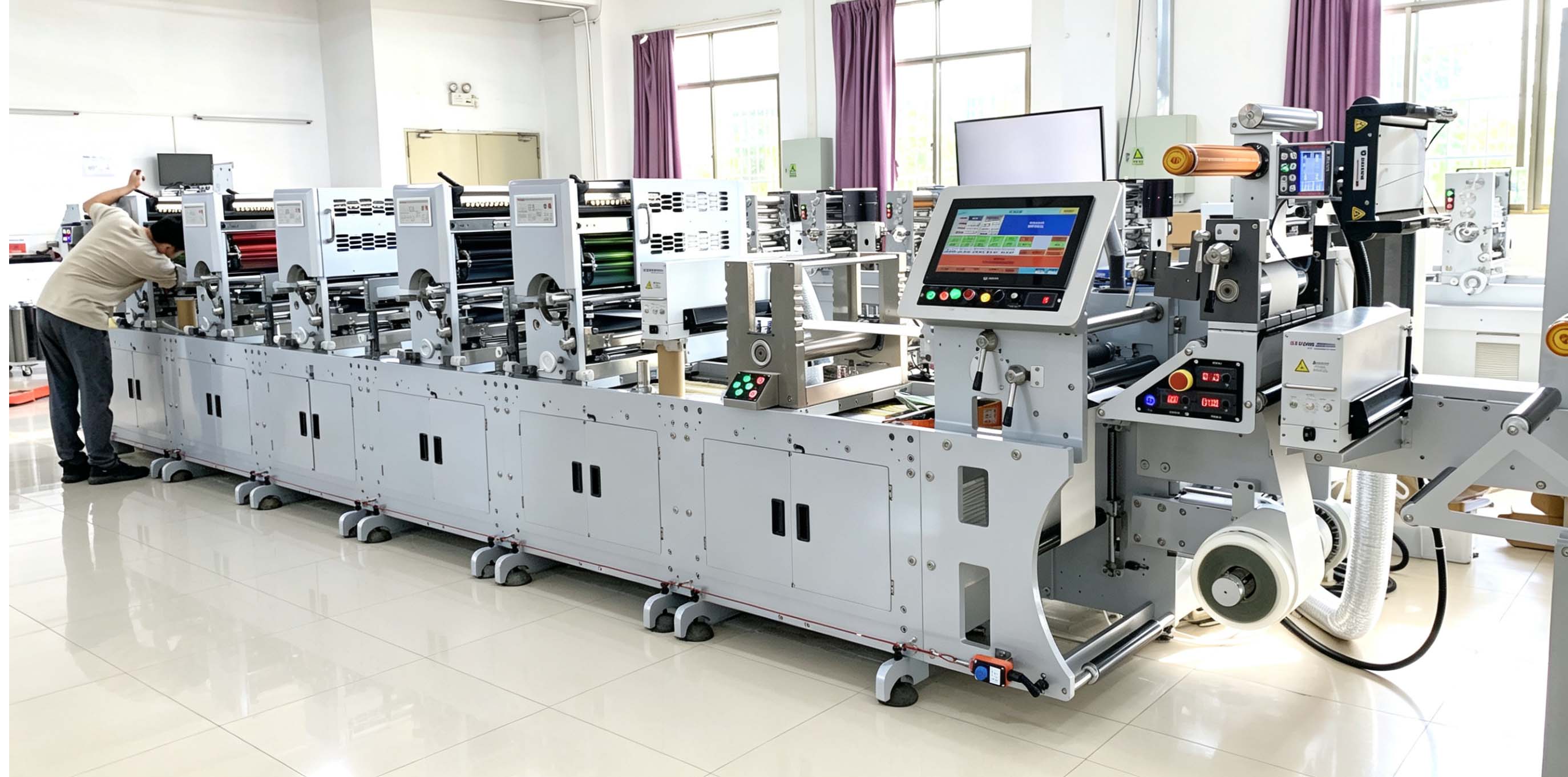
Next Step: Request CAISHENG Documentation
Review the full machine brochure and production capabilities to complete your comparison.
www.caishengmachinery.com · kanghong-1108@qq.com · WhatsApp: +86 133-1087-8219
Have Questions or Need More Details?
Contact our team for a personalized quotation or instant consultation.
Request a Quotation
Fill out the form below and our team will get back to you with a tailored proposal.
WhatsApp Direct Chat
Prefer to chat in real-time? Message us on WhatsApp for instant assistance & quick answers.
- Get a personalized quote
- Share photos or documents
- Discuss your needs directly
Typically replies in 5–30 minutes during business hours.