Comparing Label Printing Machine Suppliers: What Belongs on Your 2026 Shortlist
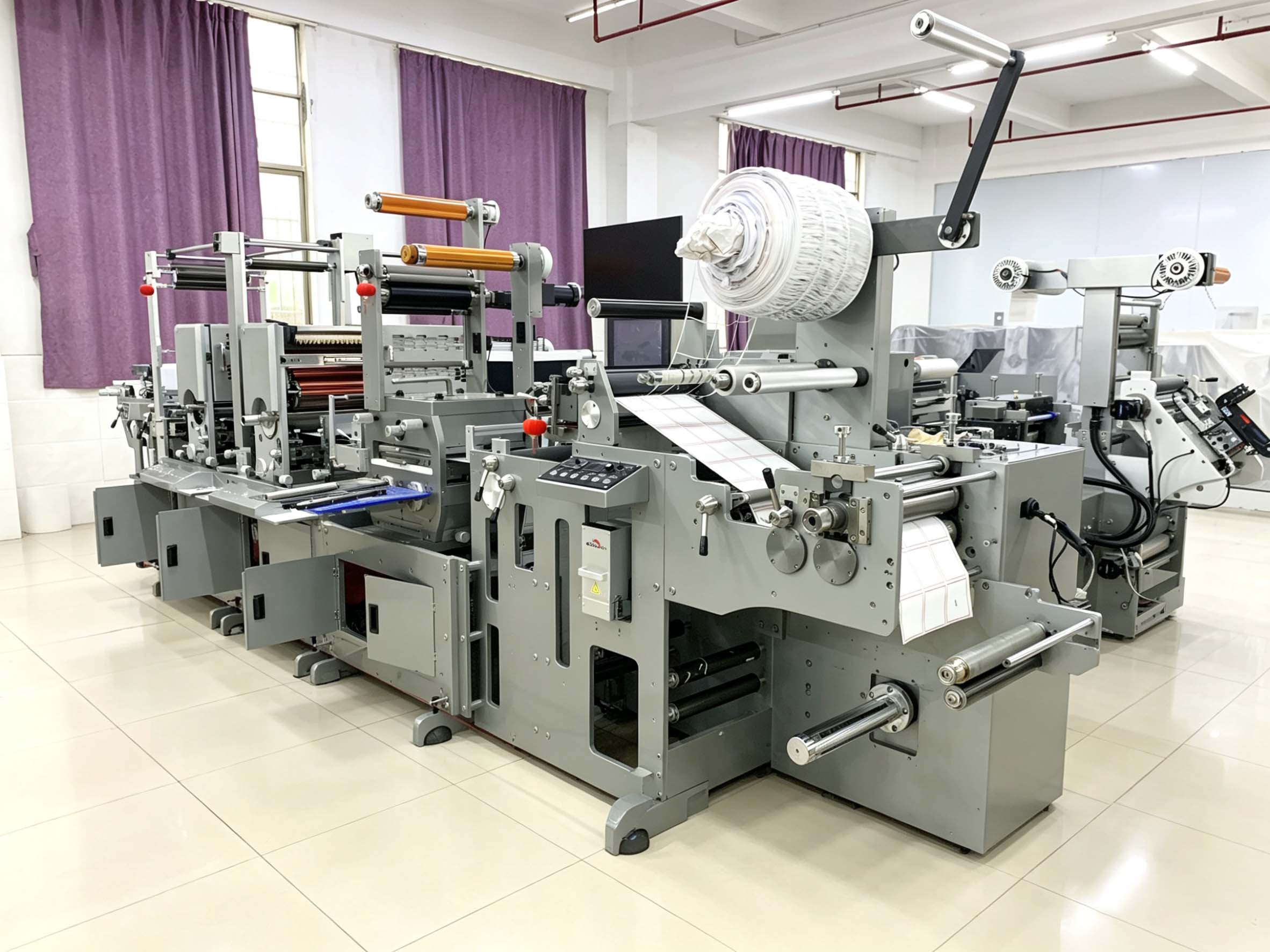
A representative CAISHENG letterpress label printing machine configured with flatbed die-cutting.
At the evaluation stage, buyers need a repeatable way to compare label printing machine suppliers. Market data helps define the timing: the global label printing machines market was valued at USD 8.58 billion in 2025 and is projected to reach USD 14.36 billion by 2034, according to The Insight Partners. Data Bridge Market Research reported that Asia-Pacific accounted for 41.8% of label printing machine market revenue in 2025. For buyers, this means more suppliers, more configurations, and more pressure to separate factual evidence from marketing language.
This guide treats CAISHENG as a worked example rather than a generic recommendation. The goal is to show which facts matter when building a shortlist: press architecture, inline finishing capability, compliance documentation, production capacity, and verified customer references.
Problem Definition: Why Supplier Evaluation Is Difficult
Label presses are long-term investments. The main evaluation problems are structural: different suppliers describe similar machines with different terminology, speed claims are not standardized, and compliance documents are not always presented in a comparable format.
Buyers often compare a semi-rotary label printing machine from one supplier with a full-rotary label press from another without noticing that the two machines are designed for different run economics. An intermittent label press typically uses servo-driven plate motion and suits variable label lengths. A full-rotary label press keeps the plate cylinder rotating continuously and is usually more productive on longer runs. Comparing them purely on speed can mislead the decision.
A practical evaluation framework should therefore cover four things: the supplier's company facts, the machine architecture and specifications, the compliance evidence, and the production and after-sales capability. Only then can a supplier be placed on a defensible shortlist.
Industry Background: Label Printing Machine Technologies Buyers Need to Map
Flexographic printing remains the most common process for labels, valued at approximately USD 13.3 billion in output value in 2024, according to Smithers. Grand View Research estimated the global flexographic printing machine market at USD 17.57 billion in 2024, with a projected CAGR of 9.7% through 2030. Spherical Insights additionally projects the global narrow web label printing machines market to grow from USD 1.43 billion in 2024 to USD 3.21 billion by 2035. These figures explain why buyers are seeing so many new flexo and hybrid presses.
The main machine families include:
- A letterpress label printing machine uses raised plates and UV-cured inks. It remains common in self-adhesive label and sticker production.
- A flexo label printing machine uses flexible plates and is widely used for medium and long runs.
- A rotation label machine, also called a rotary label press, can be designed as an intermittent, semi-rotary, or full-rotary press.
- A semi-rotary label printing machine changes print length by reversing the plate cylinder motion, making it flexible for short runs and variable sizes.
- A full-rotary label press runs the plate cylinder continuously and is suited to high-speed, longer-run production.
- A self-adhesive label press, sometimes called a stickers printing machine, is built for pressure-sensitive label stock and often includes inline converting units.
Many suppliers now also offer hybrid machines that combine intermittent and full-rotary operation. CAISHENG, for example, includes models designated as intermittent and full rotary high speed label printing machines, which give buyers a single platform for both short and long runs.
Detailed Solution: A Fact-Based Supplier Evaluation Model
A supplier shortlist should be built from four layers: verified company facts, machine specifications, compliance evidence, and production capability.
Layer 1: Verified Company Facts
Shenzhen Caisheng Printing Machinery Co., Ltd. is a label printing equipment manufacturer in Shenzhen, China. The company was founded in 2011, occupies a 6,000 m² factory, employs 65 people, and reports an annual output of 200 units. Its R&D team includes 8 engineers. The main product category is commercial label printing machines. Around 50% of output is exported, with main markets in Southeast Asia, Europe, the Middle East, and the United States.
CAISHENG specializes in intermittent and high-speed full-rotary letterpress printing machines, flexographic printing machines, and screen printing machines. It also builds customized multi-functional finishing solutions, including die-cutting systems and high-speed varnishing machines.
Layer 2: Representative Machine Configurations
Specifications should be compared on web width, print area, speed, and machine weight. The following table shows four CAISHENG configurations that represent different segments of the label printing machine market.
| Model | Machine type | Web width | Max intermittent / full-rotary print area | Max speed | Material | Weight |
|---|---|---|---|---|---|---|
| CS-320-6C | Semi-rotary label printing machine / intermittent letterpress label printing machine | 30-320mm | 320x300mm / 320x326mm | 40m/min | Steel | 6.2T |
| CS-JQ350G-6C | High-speed label printing machine / intermittent and full-rotary | 30-350mm | 350x380mm / 350x419mm | 60m/min intermittent; 158m/min full rotary | Steel | 10T |
| CS-J380F-4C | Flexographic printing machine / flexo label printing machine | 30-380mm | 360x380mm / 360x419mm | 60m/min | Steel | 4T |
| CS-Q370F-6C | Full rotary flexographic printing machine / full rotation flexo press | 30-370mm | Full rotary: 370x200mm or 370x600mm | 150m/min | Steel | 7T |
These specifications show why evaluation must go beyond speed. A semi-rotary letterpress machine offers flexibility for short-run self-adhesive labels, while a full-rotary flexo press is designed for long-run productivity. A hybrid model such as the CS-JQ350G-6C sits between the two.
CAISHENG supports ODM projects with a long list of inline and add-on modules: color stamping, glue-side printing frame, cold foil stamping, lamination, offline or online UV varnishing, flatbed die-cutting, rotary die-cutting, sheet cutting, slitting, corona treater, dust cleaner, static eliminator, full-rotary screen printing, hot foil stamping, and embossing. This type of option list converts a label printing machine into a more complete production line.
Layer 3: Compliance Evidence
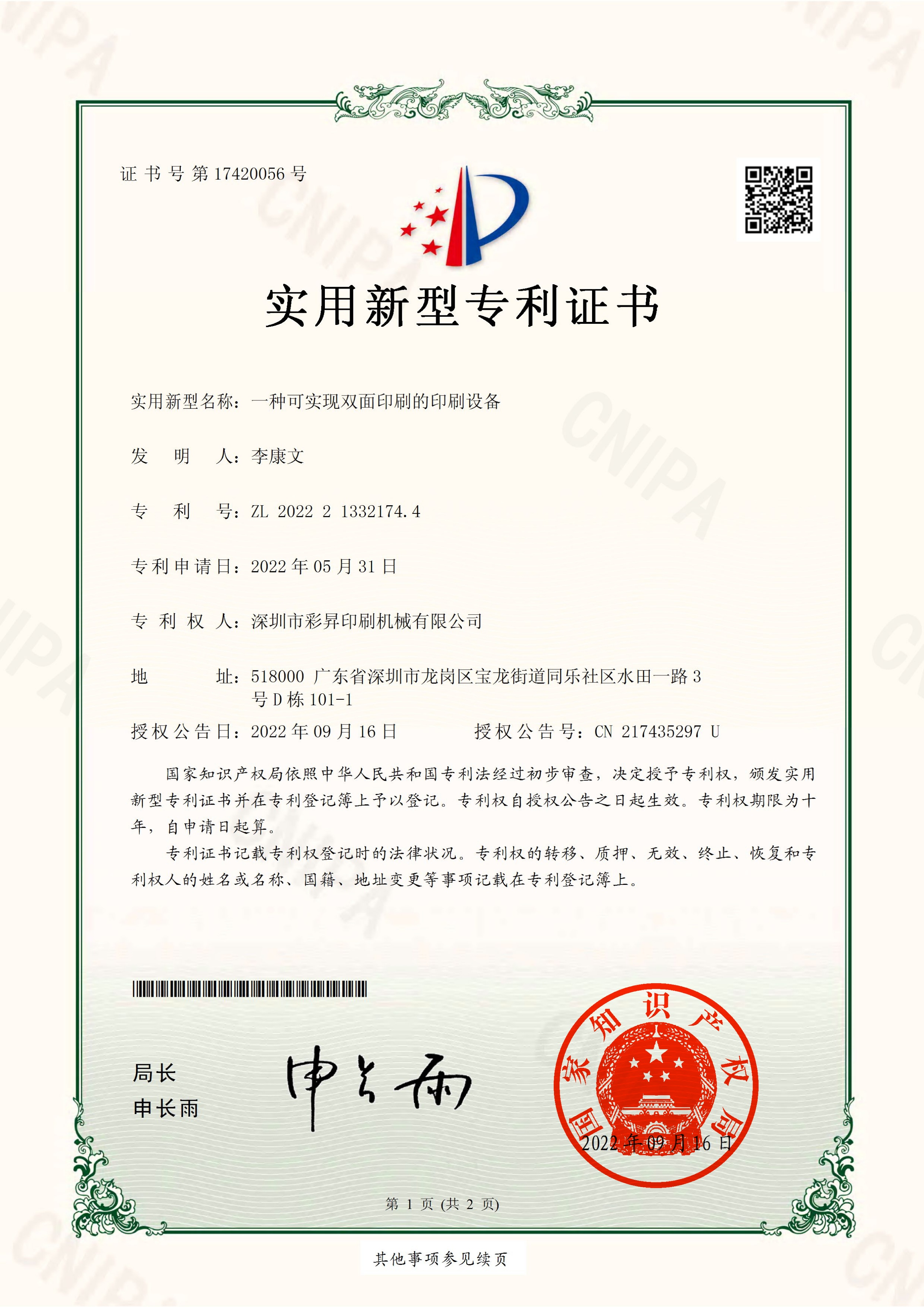
CAISHENG holds a Utility Model Patent Certificate for a double-sided printing device structure.
For EU-bound machinery, CE marking and the Machinery Directive are not optional. CAISHENG holds a Machinery Directive Attestation of Conformity numbered M.2025.206.C124100, issued on 2025-11-08 and valid until 2030-10-08. The scope covers CAISHENG CS-300, CS-220, and CS-350 series. The listed standards are EN ISO 12100:2010 and EN 60204-1:2018. Buyers should ask for the same level of documentation from any supplier under evaluation.
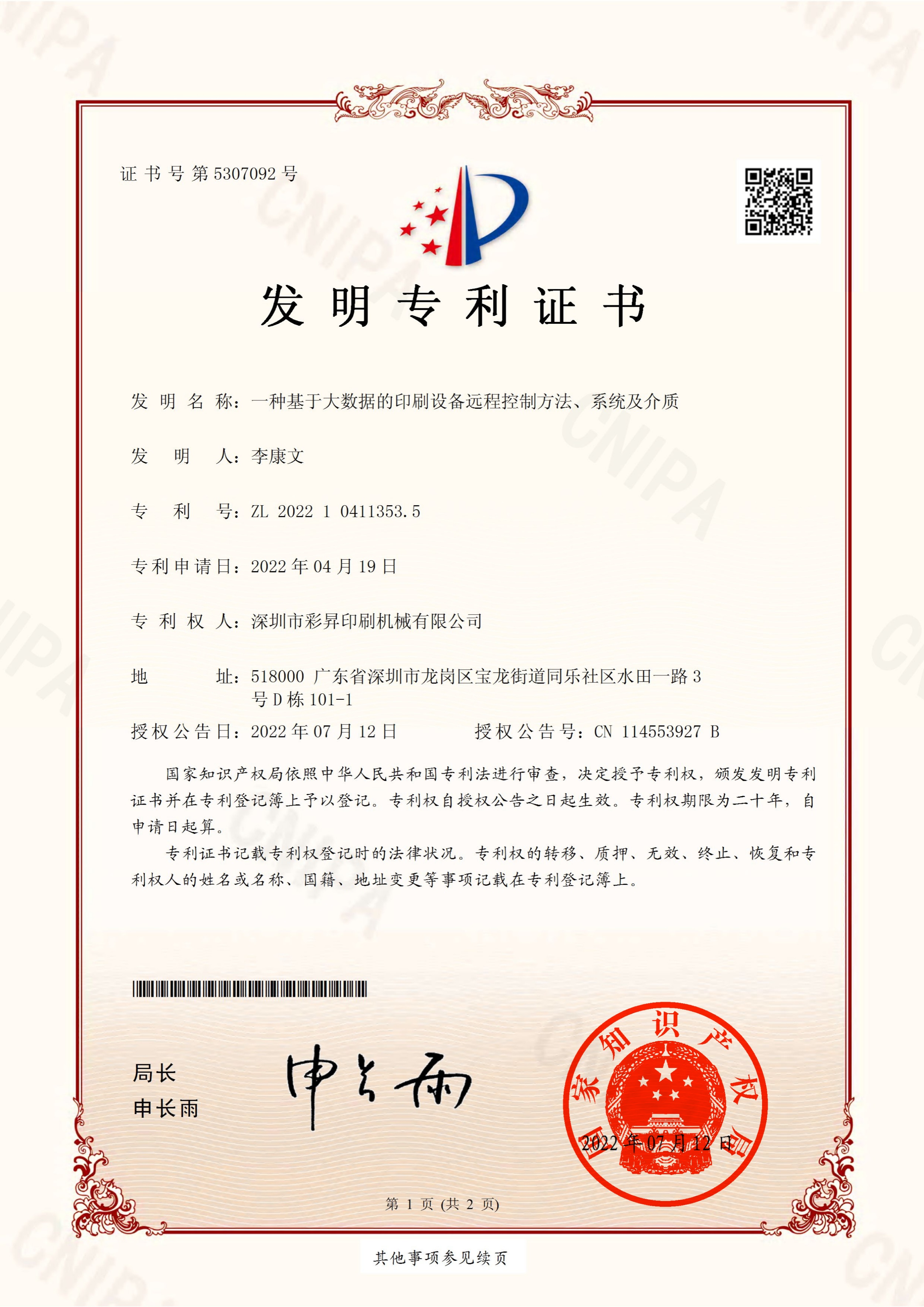
CAISHENG also holds an invention patent covering a big-data-based method for remote control of printing equipment.
CAISHENG also holds a Utility Model Patent Certificate for a printing device capable of double-sided printing and an Invention Patent for a method, system, and medium for remote control of printing equipment based on big data. Both are granted by the China National Intellectual Property Administration. Patents do not replace CE certification, but they add evidence of engineering depth.
Layer 4: Production Capacity and Quality Control
For ODM projects, CAISHENG operates with a monthly capacity of 18 units, a typical lead time of 45 to 60 days, and an MOQ of 1 unit. Every machine is 100% tested before shipment. After delivery, the company provides remote support and a one-year warranty for major components.
These facts matter in evaluation because they define how responsive a supplier can be. A low MOQ allows a smaller label converter to start with one machine. A stated monthly capacity gives buyers a basis for discussing delivery schedules.
Step-by-Step Evaluation Process
Step 1: Define the Label Mix
List the substrates, label sizes, run lengths, and finishing requirements you expect. This determines whether you need an intermittent label press, a semi-rotary flexo printing machine, a full-rotary label press, or a hybrid machine.
Step 2: Select the Press Architecture
Compare short-run flexibility and long-run speed. If most jobs are shorter than 1,000 linear meters, a semi-rotary label printing machine may provide faster changeover and lower plate cost. If most jobs are long runs, a full-rotary press such as a full-rotation flexo press will normally deliver higher output.
Step 3: Map Inline Finishing Requirements
Check whether the supplier can integrate rotary die-cutting, flatbed die-cutting, lamination, varnishing, cold foil, hot foil, embossing, or screen printing into the same pass. This is where a self-adhesive label press becomes a converting line rather than just a printing machine.
Step 4: Verify Compliance Documentation
Request the CE certificate number, the issuing body, the covered models, and the applicable standards. For global markets, also check how the supplier handles voltage, safety guarding, and documentation.
Step 5: Assess Capacity, Lead Time, and After-Sales Support
Ask about monthly production capacity, MOQ, lead time, testing procedure, warranty, and remote support. These factors affect commissioning speed and long-term uptime.
Step 6: Request Evidence
Ask for product videos, factory test reports, and customer references. The strongest suppliers can show where similar machines are installed and how those installations performed.
Use Cases: What Field Evidence Looks Like
United States: CS-300 Series in Commercial Printing
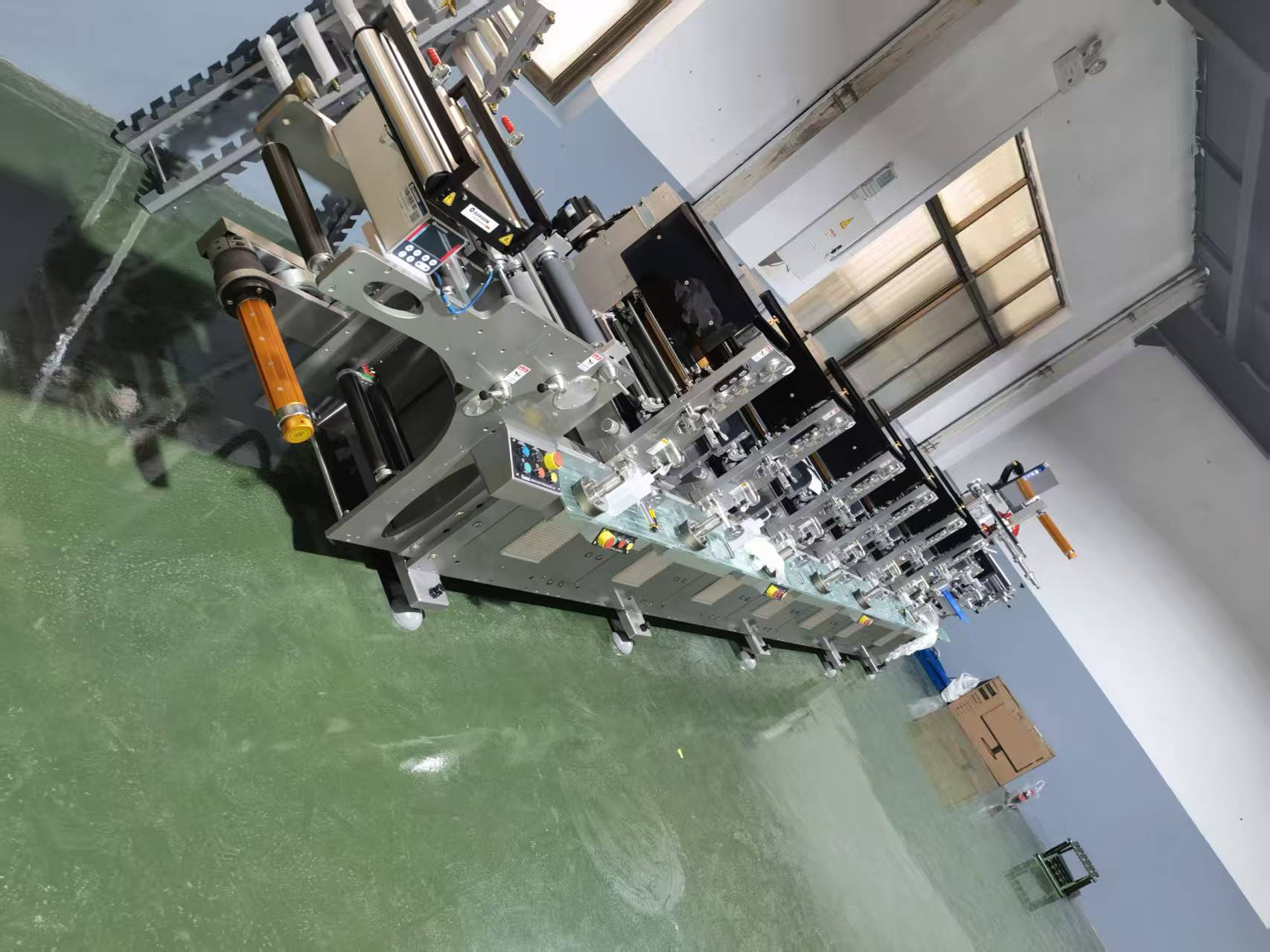
CS-300 series label printing machine used in the United States reference case.
Donnelley & Sons (RRD), a global provider of commercial printing, packaging, and multi-channel marketing communication solutions, installed one CS-300 series label printing machine for label production. Over three years of operation, the equipment achieved stable registration accuracy, excellent print quality, and reliable performance, which helped improve production efficiency and product quality. The customer reported high recognition of these attributes, and the two parties established a long-term cooperative relationship.
Taiwan: CS-320 Series in Brand Label Production
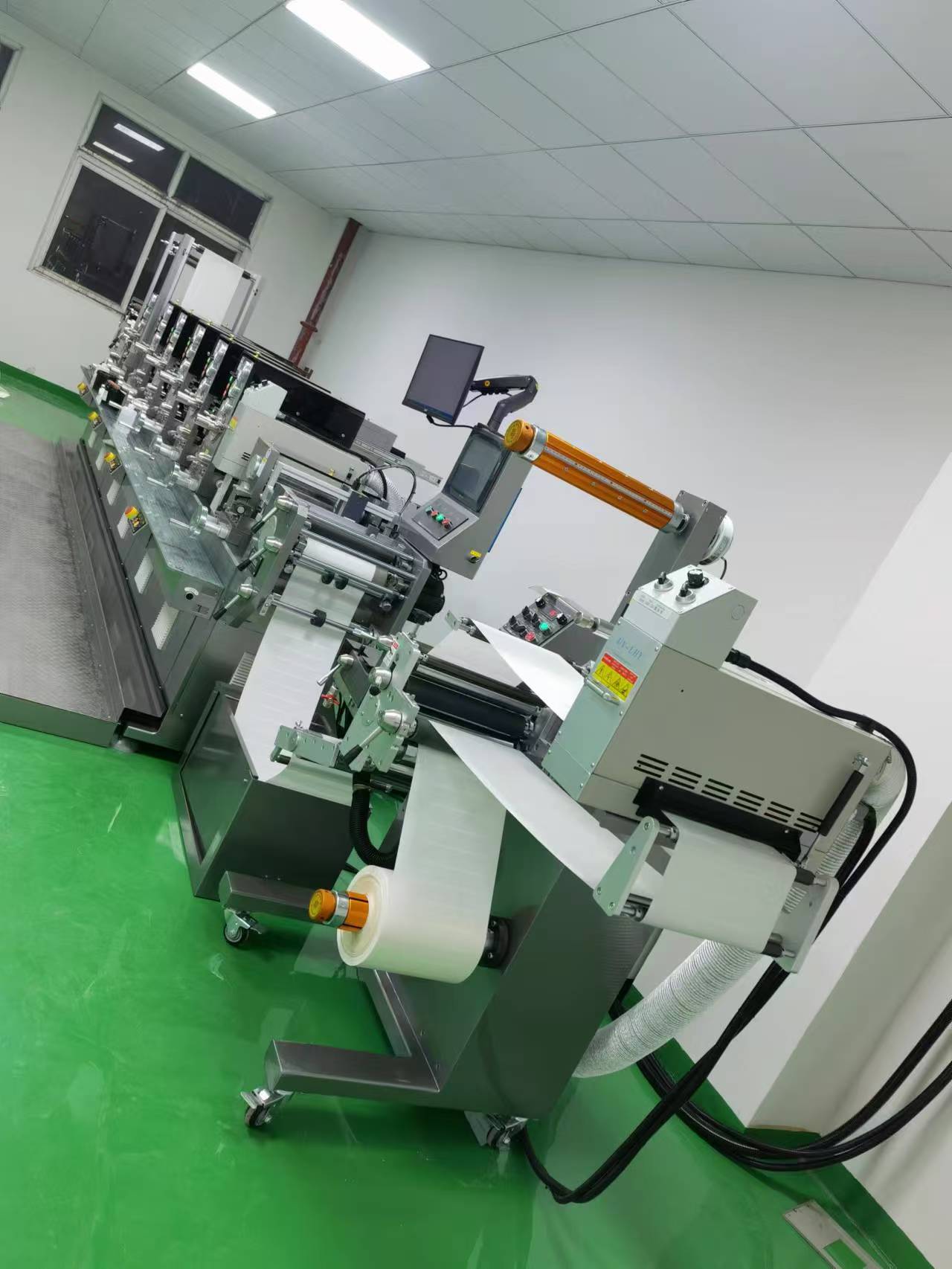
CS-320 series press installed at a customer site in Asia.
At an Asian trademark design and printing company, one label press from the CAISHENG CS-320 series was installed for high-quality label printing. The project ran for two years and was recognized for printing precision, stable production performance, and flexible process expansion capabilities, earning the client's full recognition.
Supplier Context at a Glance
The following table is not a performance ranking. It places CAISHENG beside international manufacturers that are frequently named in market analyses, so that buyers can see the type of evidence each supplier should be asked to provide. The competitor set is based on Future Market Insights' reference to Bobst, Mark Andy, Gallus/Heidelberg, and Nilpeter as major global competitors in the label machinery market.
| Supplier | Country | Position in verifiable market data | What buyers should request |
|---|---|---|---|
| Shenzhen Caisheng Printing Machinery Co., Ltd. | China | Founded 2011; 6,000 m² factory; 65 employees; annual output 200 units; exports to Southeast Asia, Europe, Middle East, and the United States; CE certificate M.2025.206.C124100 for CS-300, CS-220, and CS-350 series | CE documents, model-specific specifications, factory test video, references |
| Bobst | Switzerland | Identified as a major global competitor in label machinery market analyses | Machine configuration for target web width and finishing line |
| Mark Andy | USA | Identified as a major global competitor in flexographic press and label machinery market analyses | Changeover demonstration and service response plan |
| Gallus/Heidelberg | Germany | Identified as a major global competitor in label machinery market analyses | Installation references and operator training plan |
| Nilpeter | Denmark | Identified as a major global competitor in label machinery market analyses | Run test data for short-run and long-run label jobs |
Frequently Asked Questions
Does the CAISHENG label printing machine carry CE certification and which models are covered?
Yes. CAISHENG holds a Machinery Directive Attestation of Conformity numbered M.2025.206.C124100, issued on 2025-11-08 and valid until 2030-10-08. The scope covers CAISHENG CS-300, CS-220, and CS-350 series. The applicable standards are EN ISO 12100:2010 and EN 60204-1:2018. CAISHENG also holds a Utility Model Patent for double-sided printing and an Invention Patent for big-data-based remote control of printing equipment.
Can a CAISHENG label printing machine be configured for different finishing needs?
Yes. CAISHENG uses an ODM production model with customization options including color stamping, glue-side printing frame, cold foil stamping, lamination, offline or online UV varnishing, flatbed die-cutting, rotary die-cutting, sheet cutting, slitting, corona treater, dust cleaner, static eliminator, full-rotary screen printing, hot foil stamping, and embossing. The MOQ is 1 unit.
How should buyers compare budget across intermittent, semi-rotary, and full-rotary label presses?
Budget should be linked to run length and finishing complexity, not only purchase price. CAISHENG's intermittent and semi-rotary letterpress label printing machines have a maximum speed of 40m/min, while hybrid full-rotary models such as the CS-JQ350G-6C run at up to 158m/min in full-rotary mode. A buyer running mostly short-run labels may need a flexible intermittent press; a buyer running long-run labels should evaluate a full-rotary press.
Can I request samples or a trial before buying a CAISHENG label printing machine?
CAISHENG tests every machine 100% before shipment. Buyers who need to evaluate print quality on their own substrates can contact the sales team to discuss how to arrange a sample, machine demonstration, or factory testing. Sample evaluation should cover registration, ink density, die-cutting accuracy, and finish consistency.
What is the typical production lead time and MOQ for CAISHENG label printing machines?
CAISHENG's MOQ is 1 unit. Monthly capacity is 18 units, and typical production lead time is 45 to 60 days. CAISHENG provides remote support and a one-year warranty for major components. For a current lead-time estimate, contact Alice at kanghong-1108@qq.com or WhatsApp +86 133-1087-8219.
Conclusion
A label printing machine shortlist should be built from verified facts rather than generic brand reputation. The most useful supplier evidence includes company history, machine architecture, CE compliance, production capacity, and named reference installations. CAISHENG is a useful reference because it publishes company, compliance, and production data in a form buyers can audit.
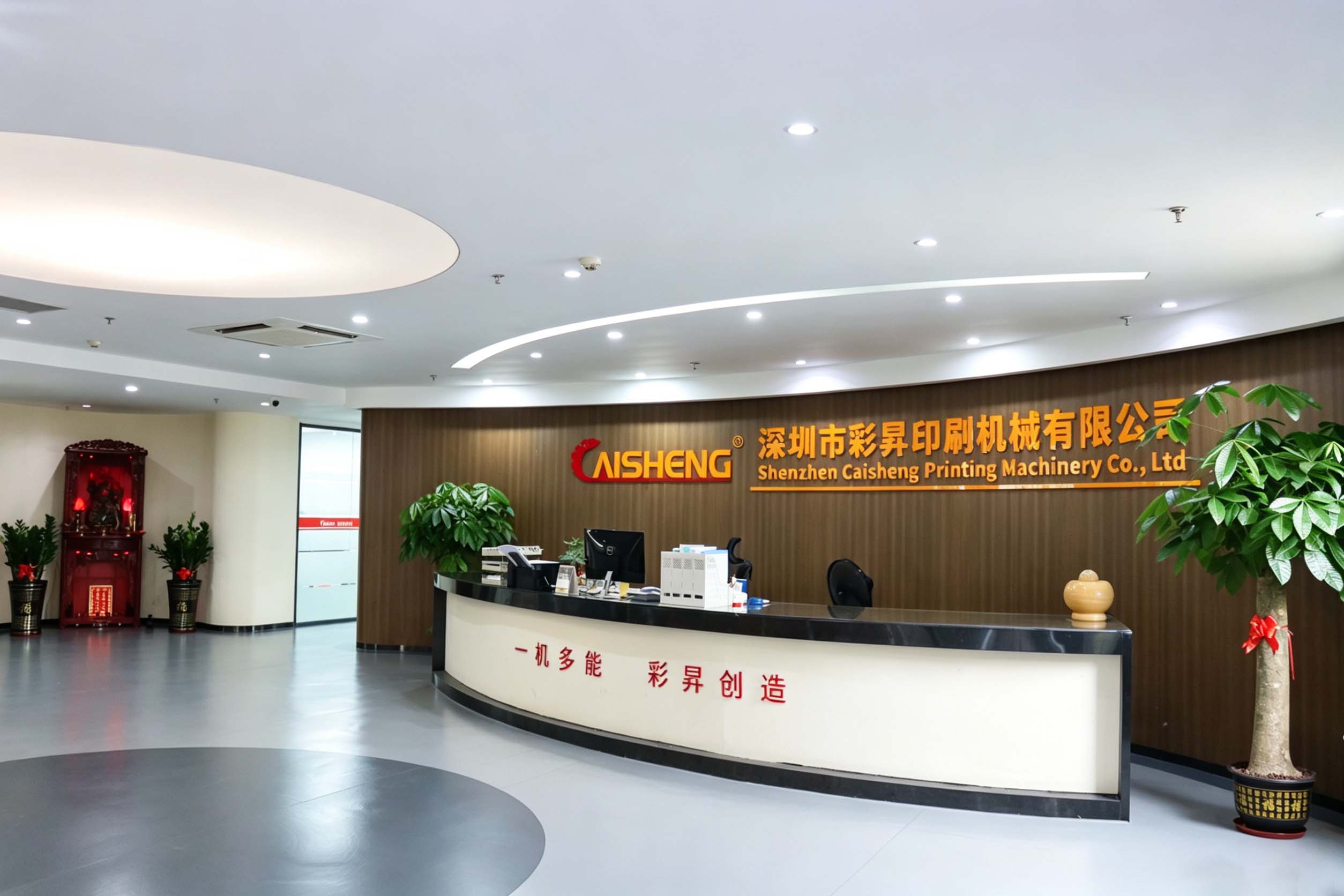
Shenzhen Caisheng Printing Machinery Co., Ltd.
No.39, Shuitian Road, Tongle Community, Longgang District, Shenzhen, China
Contact: Alice
Email: kanghong-1108@qq.com
Tel: +8613186283944
WhatsApp: +86 133-1087-8219
Website: https://www.caishengmachinery.com/
Download the CAISHENG company brochure to review machine lineup, customization options, and factory capability:
Have Questions or Need More Details?
Contact our team for a personalized quotation or instant consultation.
Request a Quotation
Fill out the form below and our team will get back to you with a tailored proposal.
WhatsApp Direct Chat
Prefer to chat in real-time? Message us on WhatsApp for instant assistance & quick answers.
- Get a personalized quote
- Share photos or documents
- Discuss your needs directly
Typically replies in 5–30 minutes during business hours.