Label Printing Machine by Production Scenario: 6 Real-World Configurations to Plan Your Next Press Investment
Label Printing Machine by Production Scenario: 6 Configurations for Your Next Press Investment
Why Production Scenario Should Drive Your Label Printing Machine Choice
Label converters often narrow their search by asking “which label printing machine is best?” A more useful framing is: Which press configuration fits the labels I actually produce? The answer changes with order volumes, artwork complexity, label size, material, and finishing requirements.
Two broad families dominate the market:
- Intermittent (semi-rotary) label presses—designed for shorter runs, frequent job changes, and variable label lengths.
- Full-rotary label presses—built for higher speed, longer runs, and maximum throughput.
Some machines combine both modes. For example, the CAISHENG CS-JQ350G-6C operates as an intermittent press at up to 60 m/min and as a full-rotary press at up to 158 m/min, giving a single machine flexibility for both short and long orders.
Understanding the difference is not just technical knowledge. It directly affects cost per label, delivery time, and your ability to accept profitable jobs.
Problem Definition: Why Buyers End Up with the Wrong Press
The most common problem in label printing machine selection is a mismatch between press technology and production mix.
- Buying a full-rotary press for short-run, high-variety work creates excessive plate costs and changeover time.
- Buying an intermittent press for long-run work creates a speed bottleneck.
- Ignoring finishing requirements leads to expensive offline handling or rejects.
- Overlooking web width means rejecting profitable jobs outside the machine’s range.
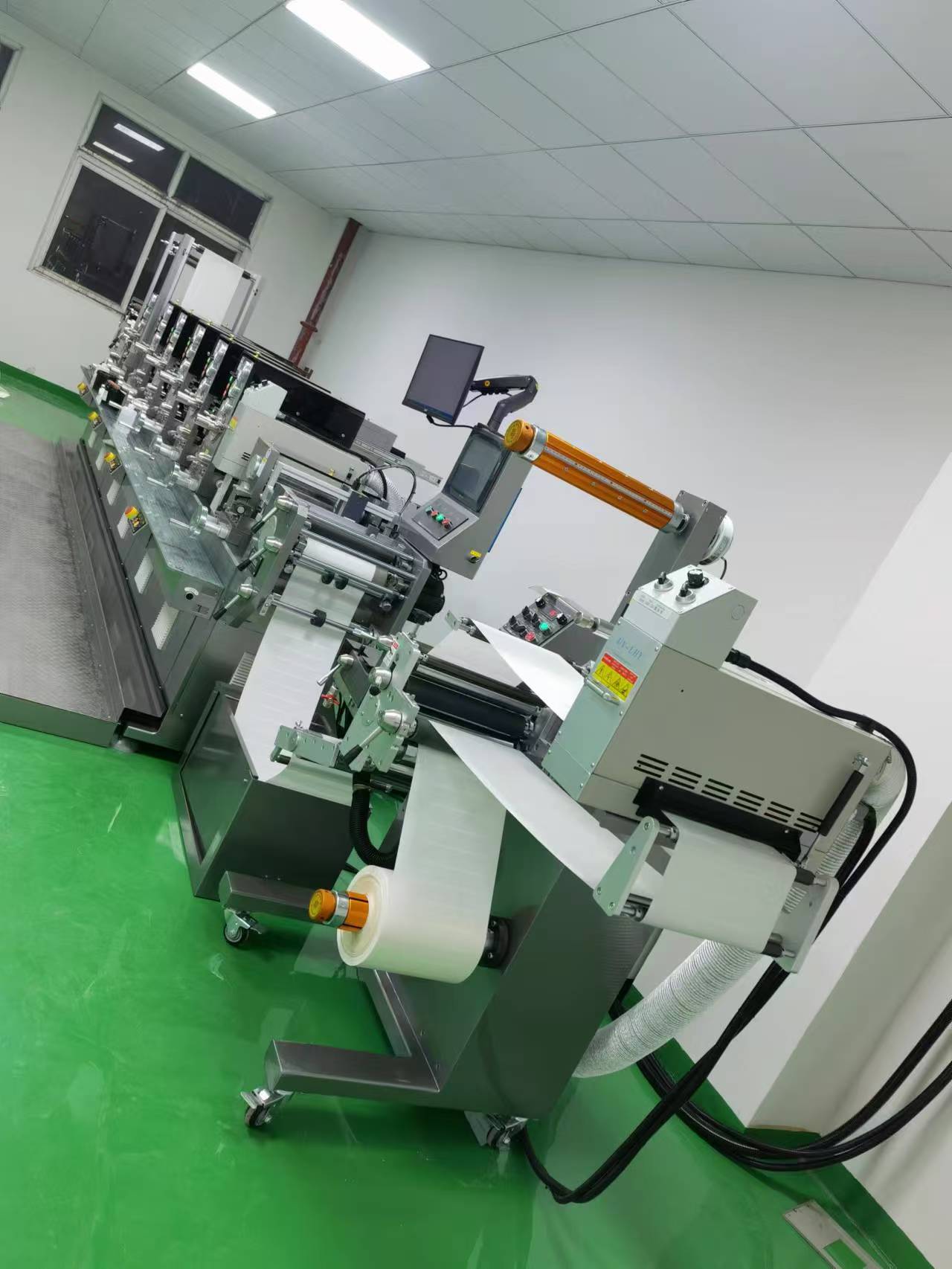
“This product assists printing factories in completing printing on one machine using multiple processes. Its role is to provide a one-stop solution for adhesive label printing technology issues. It requires supporting equipment such as servo system, air cooling system, water cooling system, and UV drying lamp.”
The quote above reflects a design philosophy seen in modern CAISHENG presses: combining printing and finishing on one machine to reduce work-in-progress and improve efficiency. A one-stop solution is most valuable when the production scenario demands multiple processes—such as printing, varnishing, die-cutting, and slitting—on a single pass.
Industry Background: The Label Printing Market in 2026
Label printing is a growing equipment category. The global label printing machines market was valued at USD 8.58 billion in 2025 and is projected to reach USD 14.36 billion by 2034 (The Insight Partners). flexography remains the most widely used label printing process, with an estimated output value of approximately USD 13.3 billion (Smithers). The global flexographic printing machine market was estimated at USD 17.57 billion in 2024, with an expected CAGR of 9.7% through 2030 (Grand View Research).
Asia-Pacific accounted for 41.8% of the label printing machines market revenue share in 2025 (Data Bridge Market Research). The narrow web segment—most relevant to self-adhesive label production—is projected to grow from USD 1.43 billion in 2024 to USD 3.21 billion by 2035 (Spherical Insights). These figures indicate sustained demand for label presses and finishing systems, especially in high-mix, medium-speed production environments.
The 6 Production Scenarios and Their Machine Requirements
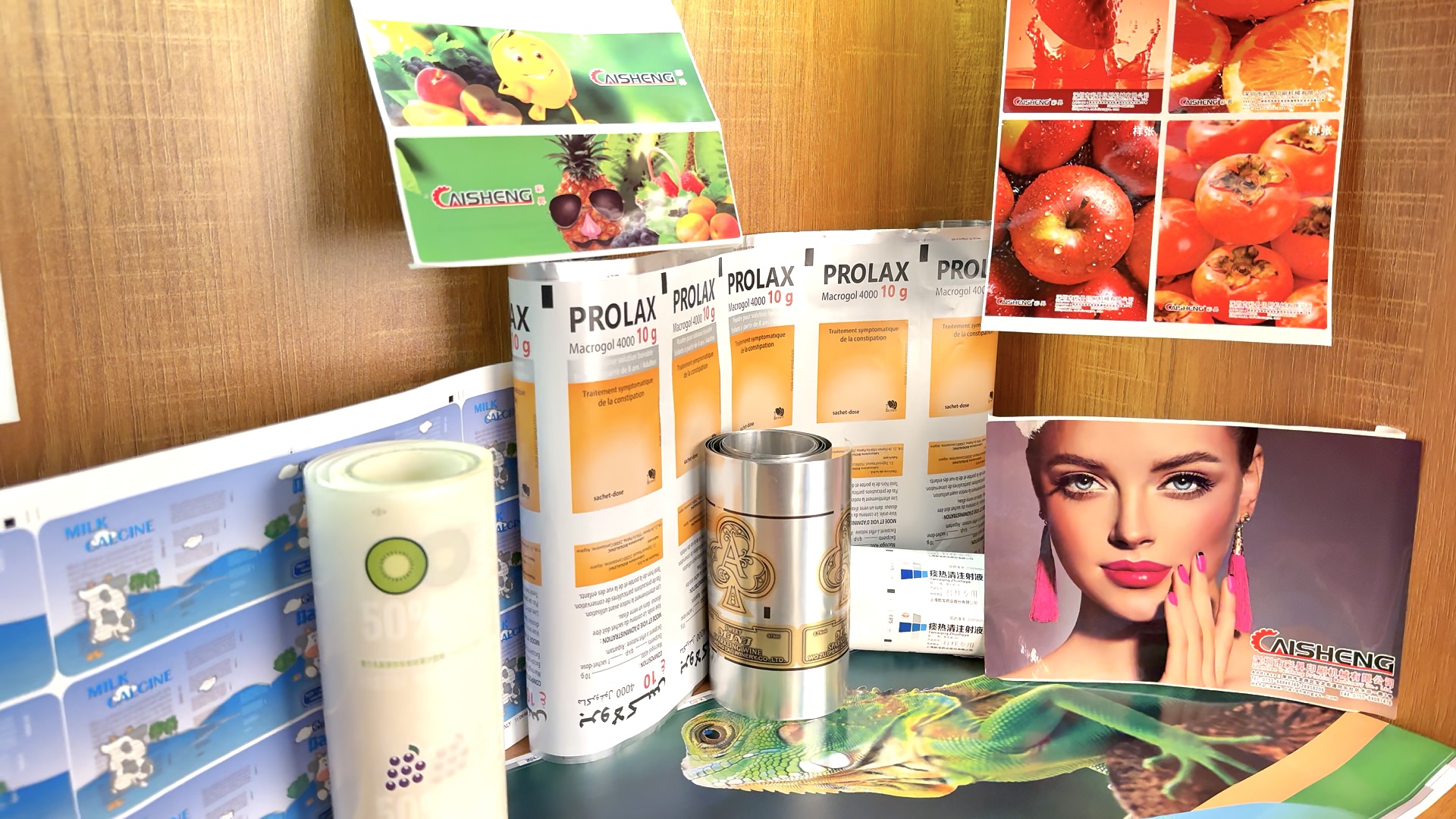
The following scenarios cover the most common needs in self-adhesive label production. For each, we list the key requirement and the CAISHENG machine type that matches it.
Scenario 1 — Short-Run, High-Variety Labels (Flexible Packaging & Specialty Items)
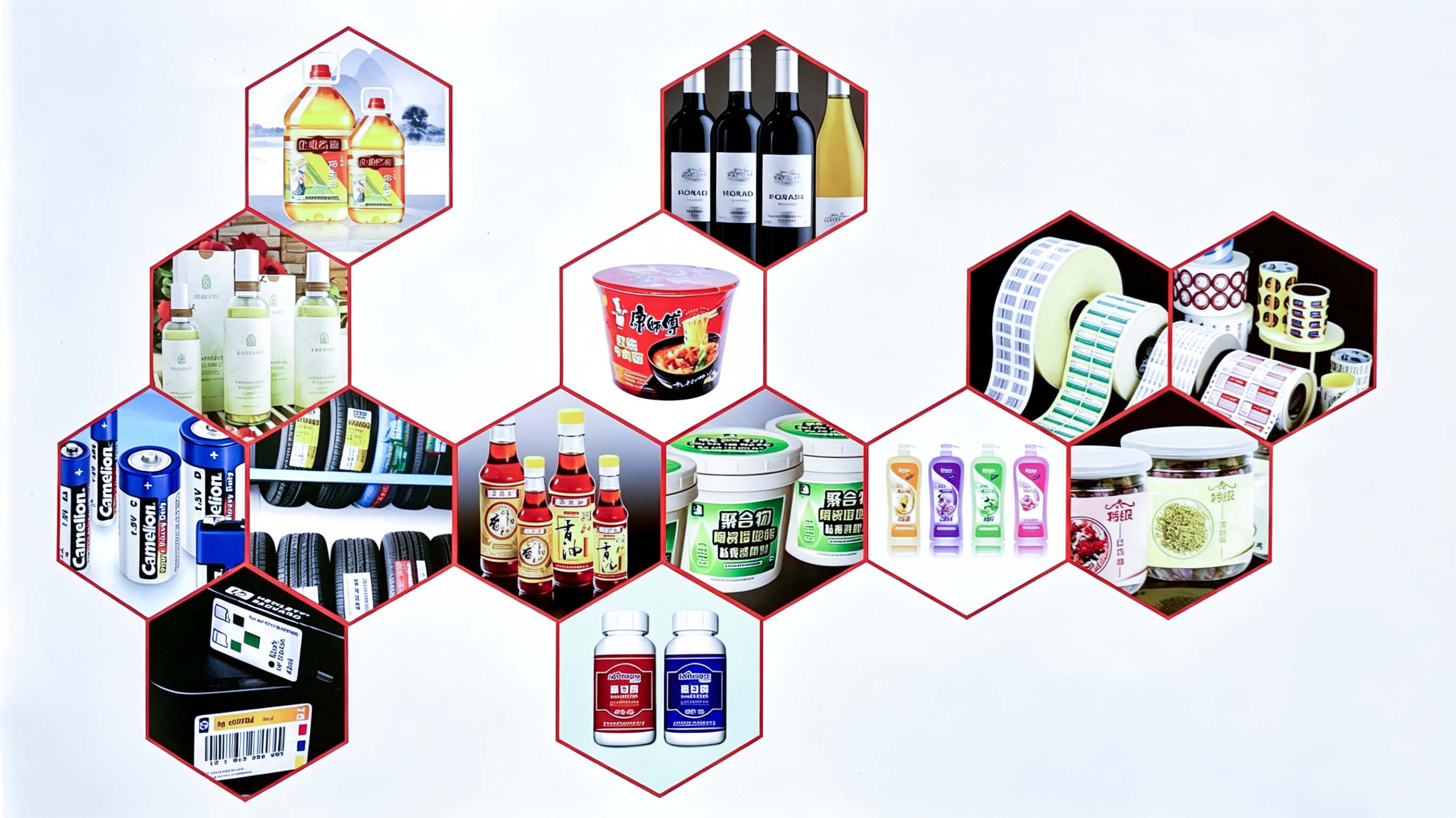
This scenario includes cosmetic labels, short-run food labels, beverage labels, and promotional labels. Jobs change frequently, run lengths are short, and label sizes vary. The priority is quick changeover, precise registration, and the ability to combine finishing in one pass.
Matching machine type: Intermittent letterpress label printing machines such as the CS-320-6C or CS-300-6C.
The CS-320-6C handles web widths from 30 mm to 320 mm, with a maximum intermittent printing area of 320 mm × 300 mm and a top speed of 40 m/min. It includes UV dryers in its 27 kW gross power, plus options such as cold foil stamping, lamination, rotary die-cutting, flatbed die-cutting, and slitting.
Why it fits: Intermittent feeding lets you change label length without changing print cylinders. That reduces setup cost and makes short runs more economical.
Scenario 2 — High-Speed Long-Run Labels (Beverage, Wine, Household Chemicals)
Wine labels, beverage labels, and household chemical labels often have large quantities per SKU. Speed, consistent ink coverage, and reliable delivery are more important than extreme flexibility.
Matching machine type: Full-rotary label presses or combined intermittent/full-rotary presses such as the CS-JQ350G-6C or CS-JQ350-7C.
The CS-JQ350G-6C is a high-speed label printing machine with an intermittent speed of 60 m/min and a full-rotary speed of 158 m/min. Its maximum full-rotary printing area is 350 mm × 419 mm. The CS-JQ350-7C adds a seventh color unit for more complex brand designs.
Why it fits: Full-rotary mode supports sustained high throughput for long runs, while intermittent mode remains available for short orders that enter the same production queue.
Scenario 3 — Multi-Process Integration (Print + Glue-Side + Die-Cutting + Slitting)
Some label jobs require backside (glue-side) printing, cold foil, multiple varnishing steps, or integrated die-cutting. Moving these jobs between separate machines increases labor, rejects, and lead time.
Matching machine type: Multi-functional letterpress presses such as the CS-300-6C and CS-320-7C.
The CS-300-6C is a 6-color intermittent letterpress printing machine with glue-side printing, multi-functional frame, rotary die-cutting, flatbed die-cutting, and slitting configurations. It handles web widths from 30 mm to 300 mm and operates at up to 40 m/min. Its gross power, including UV dryers, is 34.5 kW.
Why it fits: Completing multiple processes on one machine—as described by the “one machine, multiple processes” approach—reduces handling and improves consistency.
Scenario 4 — Flexographic Label Production (Cosmetics, Food & Beverage)
Flexo label printing is used when the design demands strong, consistent colors on a wider range of label materials, including films and foils. It is also the most common printing process in the label industry by output value.
Matching machine type: Flexo label printing machines—for example, the CS-Q370F-6C, CS-J380F-7C, or CS-370F-8C.
The CS-Q370F-6C is a full-rotary flexographic printing machine with a maximum speed of 150 m/min and maximum printing areas of 370 mm × 200 mm and 370 mm × 600 mm. The CS-J380F-7C is a semi-rotary flexographic press with rotary die-cutting and a maximum printing area of 360 mm × 419 mm in full-rotary mode and 360 mm × 380 mm in intermittent mode.
Why it fits: Flexo presses provide high output and good print consistency for medium and long runs. Semi-rotary flexo adds flexibility for variable label lengths.
Scenario 5 — Security and Specialty Labels (Wristbands, Foil Stamping, Screen Printing)
Pharmaceutical wristbands, security labels, and premium cosmetic labels may require UV screen printing, hot foil stamping, embossing, or specially layered finishing. These are not standard requirements for every converter, but they create high-margin opportunities.
Matching machine type: Full-rotation screen printing multifunctional machines such as the VS-250W.
The VS-250W is a finishing equipment solution with a maximum screen printing area of 240 mm × 240 mm and a maximum die-cutting area of 240 mm × 240 mm. It can be configured with hot foil stamping, embossing, flatbed die-cutting, and rotary die-cutting.
Why it fits: Specialty finishing adds value to security- and premium-label products that standard presses cannot produce efficiently.
Scenario 6 — Digital Print Finishing and Post-Press Enhancement
Digital label printers produce short runs without flexo plates. However, digital output often requires offline varnishing, corona treatment, or die-cutting to reach the durability customers expect.
Matching machine type: High-speed corona oil integrated machines such as the CS-Q380V, and high-speed die-cutting machines such as the CS-350.
- The CS-Q380V has a maximum web width of 360 mm, a maximum speed of 100 m/min, and integrates corona treatment and varnishing for digital print finishing.
- The CS-350 is an intermittent & full-rotary high-speed rotary die-cutting machine with maximum printing areas of 350 mm × 460 mm (full rotary) and 350 mm × 420 mm (semi rotary), and a top speed of 160 m/min in full-rotary mode.
Why it fits: A dedicated finishing line keeps digital and conventional production independent while ensuring consistent quality.

Step-by-Step: How to Match Machine Type to a Production Scenario
- List your top 20 SKUs by annual volume. You need the ratio of short-run to long-run jobs.
- Define the label size range. Maximum web width and maximum printing area will eliminate or confirm certain models.
- Map printing processes. Letterpress, flexo, screen, or a combination? If you already print flexo, a flexo press may fit more naturally.
- List finishing steps. Die-cutting, varnishing, lamination, foil, slitting. Decide which must be inline and which can be offline.
- Set speed expectations. Long-run work needs at least 100 m/min; short-run work can accept 40–60 m/min with faster changeover.
- Check installation constraints. Machine footprint, power consumption, and floor load matter as much as speed.
- Compare total cost per label. Plate cost, setup time, and waste affect the business case more than the purchase price alone.
- Inspect real production evidence. Ask for installation references, factory test results, and the ability to run your own material sample.
Real-World Use Cases
Use Case 1 — Asian Trademark Design and Printing Company
A renowned Asian trademark design and printing company uses CAISHENG rotary label presses—specifically the CS-320 series—to meet the demands of high-quality label printing. The equipment has been in production for two years. The client recognized superior printing precision, stable production performance, and flexible process expansion capabilities.
Use Case 2 — Donnelley & Sons (RRD) in the United States
Donnelley & Sons (RRD), a global provider of commercial printing, packaging, and multi-channel marketing communication solutions, uses the CS-300 as label printing production equipment. After three years in production, the machine earned recognition for stable registration accuracy, excellent print quality, and reliable equipment performance. The equipment helped improve production efficiency and product quality, and the two parties established a long-term cooperative relationship.
Comparison: Machine Types at a Glance
The following table summarizes the main machine categories discussed in this guide. It is not a ranking; it is a scenario-matching reference.
| Machine Category | Representative Model | Best Fit Scenario | Key Parameter Example | Max Speed |
|---|---|---|---|---|
| Intermittent letterpress label press | CS-320-6C | Short-run, high-variety labels | Web width 30–320 mm; printing area 320×300 mm | 40 m/min |
| Rotation label machine (letterpress + finishing) | CS-300-6C | Multi-process labels with glue-side printing, rotary/flatbed die-cutting | Web width 30–300 mm; printing area 280×326 mm | 40 m/min |
| Self-adhesive label press | CS-300-5C | Entry-level self-adhesive labels, shorter runs | Web width 30–300 mm; printing area 280×300 mm | 40 m/min |
| Combined intermittent & full-rotary high-speed press | CS-JQ350G-6C | Mixed short-run and long-run label demand | Printing area 350×419 mm (full); 350×380 mm (intermittent) | 60 / 158 m/min |
| Semi-rotary flexographic press | CS-J380F-7C | Flexo printing with variable label lengths + die-cutting | Printing area 360×419 mm (full); 360×380 mm (intermittent) | 60 m/min |
| Full-rotary flexographic press | CS-Q370F-6C / CS-370F-8C | Long-run flexo labels, food & beverage | Printing area 370×200 mm / 370×600 mm | 150 m/min |
| Full-rotation screen printing multifunctional machine | VS-250W | Security and specialty labels, hot foil, embossing | Printing area 240×240 mm; die-cutting area 240×240 mm | — |
| High-speed corona oil integrated machine | CS-Q380V | Digital print finishing, corona + varnishing | Web width 360 mm | 100 m/min |
| High-speed die-cutting machine | CS-350 | Offline or inline die-cutting, mixed run lengths | Printing area 350×460 mm (full); 350×420 mm (semi) | 160 m/min (full rotary) |
CAISHENG also offers higher-configuration models. The CS-320-7C adds a seventh color unit on a 320 mm web. The CS-JQ350-7C adds cold foil stamping and glue-side capability on the 350 mm platform. The CS-JQ350G-10C extends the platform to ten printing units with LED UV dryers and a 12-meter machine length.
Key Decision Rules for Buyers
- If most orders are under 3,000–5,000 linear meters, prioritize intermittent letterpress for changeover flexibility.
- If most orders exceed 10,000 linear meters, prioritize full-rotary speed.
- If your label mix includes variable repeat lengths, choose a semi-rotary or combined press rather than a pure full-rotary press.
- If you require varnishing, die-cutting, and slitting, prefer a machine with integrated finishing to reduce handling.
- If your facility runs digital printers, invest in finishing equipment such as the CS-Q380V and CS-350 to complete orders profitably.
- If you serve pharma or security segments, evaluate specialty options like screen printing, hot foil, and embossing.
Supplier Evaluation Notes
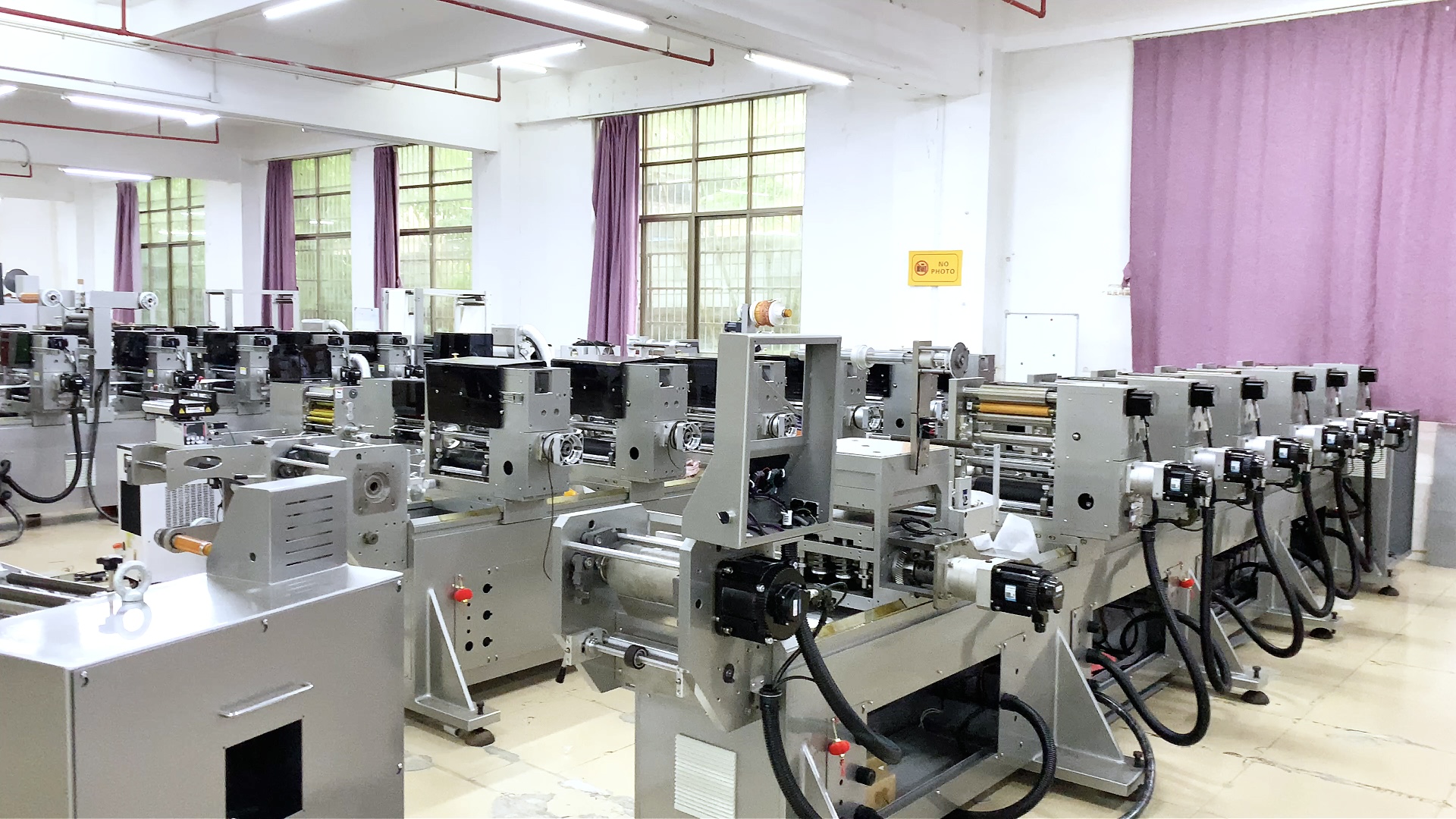
Shenzhen Caisheng Printing Machinery Co., Ltd. is a label printing equipment manufacturer founded in 2011. It operates a 6,000 m² factory with 65 employees and an R&D team of 8 engineers. Annual output is approximately 200 units, and exports account for 50% of production. Main export markets include Southeast Asia, Europe, the Middle East, and the United States. The company offers ODM production, custom configurations such as color stamping, glue-side printing frame, cold foil stamping, lamination, offline/online UV varnishing, flatbed die-cutting, rotary die-cutting, sheet cutting, slitting, corona treater, dust cleaner, static eliminator, full-rotary screen printing, hot foil stamping, and embossing. Monthly capacity is 18 units; lead time is 45–60 days; MOQ is 1 unit; quality control is 100% test; after-sales support includes remote support and a one-year warranty for major components.
When evaluating any supplier, ask for:
- Machine specification sheets with power, size, weight, and speed.
- Reference installations in your region or industry.
- CE documentation and test procedures.
- With CAISHENG, buyers can request a machine brochure for an overview of configurations and options.
FAQ
How does CAISHENG ensure that a label printing machine complies with international safety requirements?
CAISHENG addresses equipment safety through practical engineering and documentation. The company was verified as a CE-certified label printing machine supplier in prior buyer guides, and it supports export sales to the EU and other regulated markets. For graphic technology equipment, the relevant international standard is ISO 12643-2:2023. Machinery sold in the EU must comply with the Machinery Directive 2006/42/EC and carry CE marking, with safety signs following EN ISO 7010. Buyers should request the CE Declaration of Conformity and component certificates from the supplier.
Can CAISHENG customize a label printing machine for a specific production scenario?
Yes. CAISHENG provides ODM production with customization options including color stamping, glue-side printing frame, cold foil stamping, lamination, offline/online UV varnishing, flatbed die-cutting, rotary die-cutting, sheet cutting, slitting, corona treater, dust cleaner, static eliminator, full-rotary screen printing, hot foil stamping, and embossing. Buyers can specify web width, color count, and finishing modules based on their product portfolio. The application scenario unit also confirms that CAISHENG offers exclusive one-to-one custom design, size, process, and function customization.
What is the typical lead time and MOQ for a semi-rotary label printing machine?
CAISHENG’s standard lead time is 45–60 days, and the MOQ is 1 unit. Monthly production capacity is approximately 18 units. Each machine is fully tested before shipment, and major components are covered by a one-year warranty with remote support.
What kind of sample testing can a buyer do before ordering?
CAISHENG’s factory conducts 100% testing of machines before delivery. Buyers can request material testing and sample production to verify print quality, registration accuracy, and finishing performance. Since lead time is 45–60 days, sample evaluation is best completed before finalizing the configuration and order. For an initial overview of available models and options, download the CAISHENG brochure, or contact the sales team to discuss sample testing.
Planning a label printing machine purchase?
Download the CAISHENG brochure to see configurations, or contact the team for a production scenario review and sample test.
Download Company Brochure Email SalesConclusion
Choosing a label printing machine begins with understanding your production scenario—not with a single spec sheet. Intermittent letterpress presses handle high-mix, short-run work; full-rotary flexo presses deliver speed for longer runs; combined presses balance both; and specialized finishing equipment completes the production line.
CAISHENG offers a broad portfolio of letterpress, flexo, screen printing, varnishing, and die-cutting equipment, with ODM customization, 100% factory testing, and export experience across Asia, Europe, the Middle East, and the United States. When the machine is matched to the actual label portfolio, buyers gain higher uptime, lower waste, and a clearer path to profitable growth.
Have Questions or Need More Details?
Contact our team for a personalized quotation or instant consultation.
Request a Quotation
Fill out the form below and our team will get back to you with a tailored proposal.
WhatsApp Direct Chat
Prefer to chat in real-time? Message us on WhatsApp for instant assistance & quick answers.
- Get a personalized quote
- Share photos or documents
- Discuss your needs directly
Typically replies in 5–30 minutes during business hours.