Label Printing Machine Partnership Guide: How CAISHENG Supports Distributors and Label Producers for Long-Term Growth
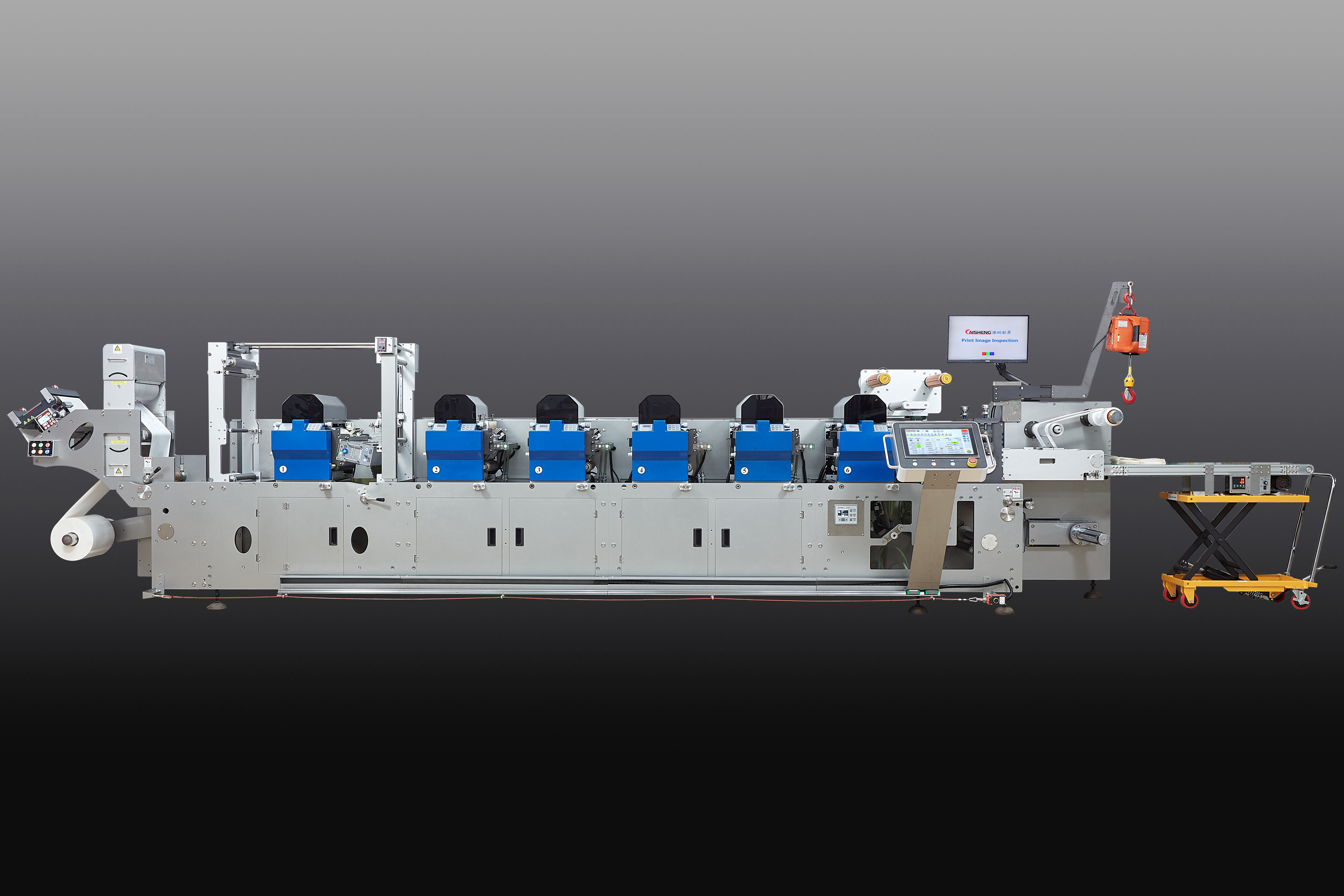
CAISHENG CS-Q370F flexo label press — a full-rotary flexographic printing machine for high-volume label orders.
For a distributor or label producer, choosing a label printing machine supplier is not a single-purchase decision. It is a long-term ecosystem decision: how the supplier manufactures, tests, delivers, supports, and scales determines whether your label business can grow without repeated requalification. This guide explains what CAISHENG offers to buyers at the Decision and Execution stage, with a focus on production capacity, lead times, quality control, and the product range behind long-term partnerships.
Why Partnership Fit Matters in Label Printing Machine Procurement
When you are at the final stage of buying a label printing machine — or expanding an existing press fleet — you are not just comparing a rotary label press price. You are evaluating whether the factory behind the machine can support your production plan. A semi-rotary label printing machine may match your current job mix, but the supplier's ability to deliver consistently, test thoroughly, and respond when you scale is what protects your own customer commitments. CAISHENG positions itself around this distinction: a machine supplier is not the same as a production partner.
Shenzhen Caisheng Printing Machinery Co., Ltd. is a label printing equipment manufacturer based in Shenzhen, China, specializing in intermittent and high-speed full-rotary letterpress printing machines, flexographic printing machines, and screen printing machines. The company also provides customized multi-functional label finishing solutions including die-cutting systems and high-speed varnishing machines. For global distributors and label producers, the practical question is not only whether the machine can print a certain label, but whether the manufacturing and support system can handle repeat orders, delivery schedules, and field service across markets.
What Decision-Stage Buyers Should Ask Before Committing
Before signing an order, a professional buyer needs clarity on several non-print questions. These questions define the partnership model as much as the press specification.
- Production capacity: Can the supplier handle my order volume without delaying my own delivery promises?
- Lead time: How long after payment confirmation will the machine be ready for shipment?
- Quality assurance: Is every machine tested before leaving the factory, or only a sample?
- After-sales structure: What kind of remote support and warranty is provided after the press is installed?
- Payment and acceptance: What are the commercial terms, and is there a pre-shipment acceptance procedure?
CAISHENG's typical commercial terms provide a starting point for these discussions: the minimum order quantity is one unit; delivery is FOB; payment terms are 30/70; and there is a pre-shipment test before the machine is handed over. For export markets including Southeast Asia, the European Union, the Middle East, and the United States, this structure is intended to make the first order reviewable and the repeat order predictable.
Inside the Supplier Ecosystem: Manufacturing, Quality Control, and Capacity
A label printing machine is an assembly of precision parts, servo systems, drying systems, and finishing tools. The depth of manufacturing determines how consistent the machine will be in daily production. CAISHENG operates two self-owned CNC machining plants, which means precision parts for the printing presses are produced internally. The benefit for a buyer is not a marketing slogan but a practical one: tolerance control starts at the component level, and the company can avoid passing on intermediate-link costs.
The same vertical integration supports the company's stated registration accuracy of ±0.05 mm. For self-adhesive label work — especially pharmaceutical labels, barcodes, and small text — registration accuracy is directly linked to waste rates and inspection pass rates. A machine that holds registration well reduces material loss on long runs.
Monthly Production Capacity and Export Planning
For export markets including Southeast Asia, the European Union, the Middle East, and the United States, CAISHENG's monthly production capacity is 18 units. This figure matters for distributor planning: if you are a regional distributor expecting consistent supply across multiple models, 18 units per month sets an expectation of what the factory can commit to without stretching its assembly and testing resources. It also means the manufacturer can maintain a controlled, quality-focused production flow rather than mass-producing machines without inspection.
Production Lead Time: 45 to 60 Days
The typical production lead time for export orders is 45 to 60 days. For a distributor who needs to project inventory arrival, the lead time works with the 30/70 payment structure: an initial payment starts the production slot, and the machine is completed and tested within that window. For a label producer replacing a press, a 45-to-60-day lead time is important to coordinate with existing order commitments and installation scheduling. Buyers who need a faster delivery schedule should raise this during the inquiry stage; production slots are generally managed around the monthly capacity of 18 units.
100% Testing of All Units Before Shipment
One of the clearest quality signals in CAISHENG's export workflow is 100% testing of all units. Every machine destined for Southeast Asia, the EU, the Middle East, or the United States is tested before shipment, not just a random sample. In practice, this means the machine is run through its printing and die-cutting functions, adjustments are made, and the customer is invited to the factory for machine acceptance inspection. This pre-shipment test reduces the risk of commissioning delays at the buyer's site. It is especially important for a full-rotary label press or an intermittent flexographic press, where multiple stations must be aligned before the machine can produce saleable output.
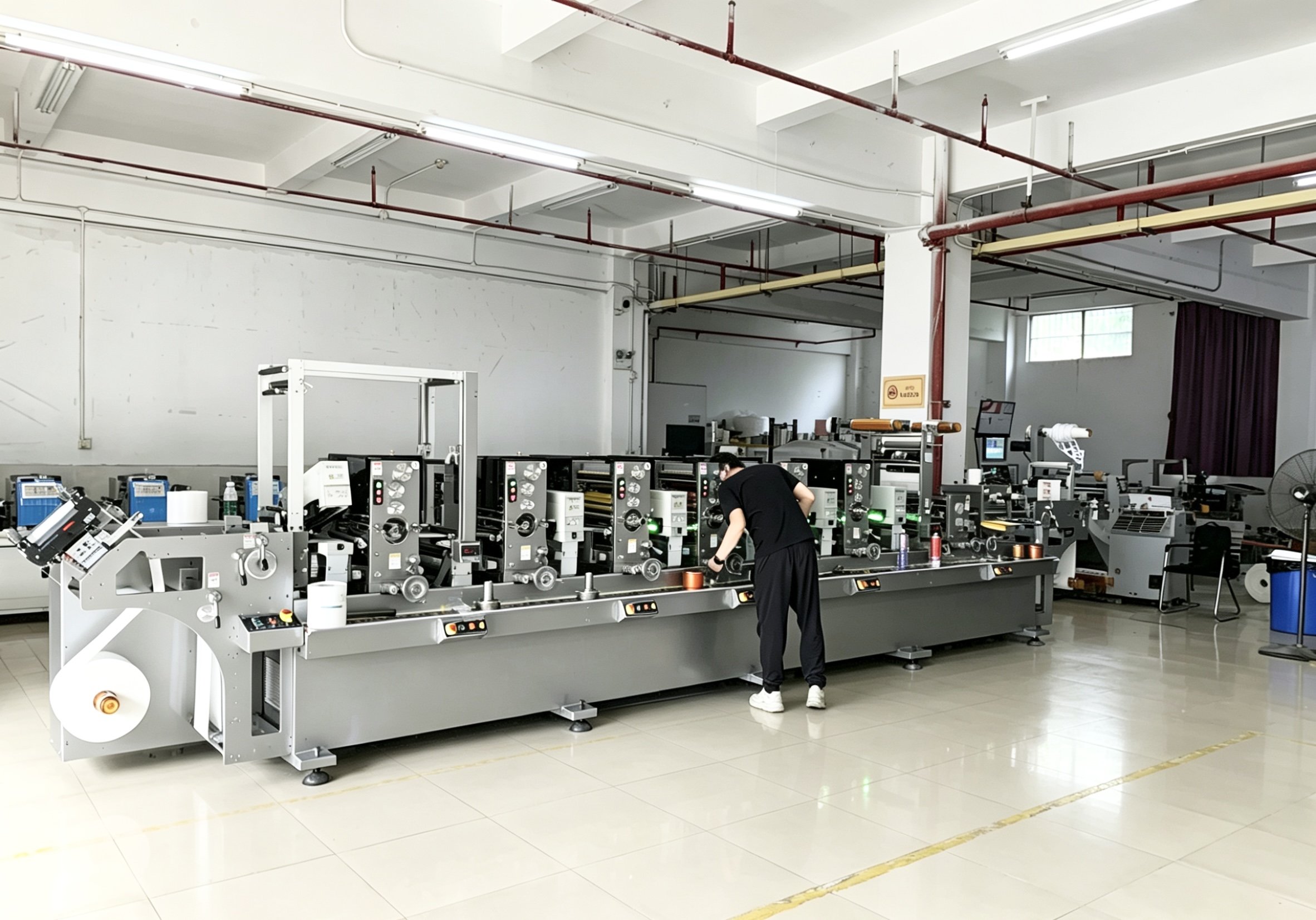
A CAISHENG CS-300 letterpress configuration with glue-side printing, multi-functional frame, rotary die-cutting, flatbed die-cutting, and slitting.
After-Sales Support as a Partnership Layer
After-sales support often separates a machine purchase from a working relationship. CAISHENG provides remote support and a one-year warranty for major components for export markets including Southeast Asia, the EU, the Middle East, and the United States. Before delivery, adjustment engineers test machine performance until it can produce finished products that meet the expected standard. The customer is also invited to the factory to perform machine acceptance. For a distributor, this support structure means you can represent the equipment to your local market with a defined warranty period and a remote escalation path, rather than bearing the full machine risk yourself.
From an Execution-stage perspective, three points are worth verifying before you finalize a supplier:
- Who inspects the machine before you receive it? CAISHENG invites buyers to the factory for acceptance inspection, which allows the buyer to see the machine running on real jobs before the container is loaded.
- What happens if a component issue appears after installation? With remote support and a one-year warranty on major components, the buyer has a clear path for troubleshooting and parts replacement.
- How does the supplier handle maintenance cost over time? CAISHENG highlights in-house manufacturing of core and vulnerable components, plus a deformation-proof base design and an intelligent early warning system that supports preventative maintenance.
Product Ecosystem: Matching Press Type to a Long-Term Product Plan
A long-term partnership is easier to justify when the supplier's product range can cover your future jobs, not only your current order. CAISHENG's catalog spans letterpress, flexo, and finishing equipment, so a label producer can start with a semi-rotary label printing machine for short-to-medium runs and later add a full-rotary high-speed label printing machine as order volumes increase. Distributors can also offer their local customers a broader equipment range:
- Intermittent letterpress label printing machines: CS-220-4C, CS-220-5C, CS-300-5C, CS-300-6C, CS-320-6C, CS-320-7C.
- Intermittent & full-rotary high-speed label printing machines: CS-JQ350-7C, CS-JQ350G-6C, CS-JQ350G-10C.
- Flexo label printing machines: CS-J380F-4C, CS-J380F-7C, CS-Q370F-6C, CS-370F-8C.
- Finishing equipment: CS-350 high-speed die-cutting machine, CS-Q380V high-speed corona oil integrated machine, VS-250W full-rotation screen printing multifunctional machine.
This breadth matters because label buyers rarely stay with one substrate or job type. A stickers printing machine purchased for basic labels may later need to handle clear film, metallic foil, or security labels. The presence of a full-rotary flexo press in the same ecosystem gives a label producer an upgrade path without changing suppliers.
Technical Stability and Maintenance Considerations
Downtime in label converting is expensive. Several design and manufacturing choices in CAISHENG's machines are intended to reduce the frequency and cost of maintenance:
- Deformation-proof base design: A natural metal stress-relieving process and a patented triangular guide rail design aim to prevent the base from shifting, which reduces calibration work and maintenance frequency.
- Patented maintenance-friendly structures: An electrically operated bottom mold lifting mechanism and a linked squeegee baffle make plate base lifting more stable and simplify assembly/disassembly of components.
- In-house manufacturing of core components: Because core and vulnerable components are made and quality-controlled internally, the manufacturer can support a long service life and reduce long-term maintenance cost.
- Intelligent early warning system: Equipment status is assessed by a detection system and warns the operator before a significant failure occurs, enabling preventative maintenance.
- Energy-related design: The machines use a Japanese servo system and LED UV drying technology. CAISHENG states that overall power consumption can be reduced by at least 30%, which lowers long-term operating cost.
For a distributor, these technical points translate into a sales story that is not only about print quality but also about total cost of ownership. For a label producer, they reduce the risk of production stoppages in the middle of a customer order.
The CS-350 letterpress printing machine combined with flatbed die-cutting — a compact finishing line for label converting.
CAISHENG as a Global Partner: Market Experience and Reach
CAISHENG, founded in 2011, operates a 6,000 m² factory with 65 employees and a dedicated R&D team of 8 engineers. The company's annual output is 200 units, and approximately 50% of production is exported. Its main markets include Southeast Asia, Europe, the Middle East, and the United States. For a buyer in those regions, the relevant consequence is that CAISHENG has built a delivery, documentation, and after-sales process around export needs rather than treating exports as an occasional task.
Market data supports the importance of the region where CAISHENG is based. Asia-Pacific dominated the global label printing machines market with a 41.8% revenue share in 2025. Label printing is not a marginal industry: according to The Insight Partners, the global label printing machines market was valued at USD 8.58 billion in 2025 and is projected to reach USD 14.36 billion by 2034. For a supplier in Southern China, proximity to the broader supply chain for label materials and components is a location advantage. The company describes its philosophy as one machine, multiple functions, CAISHENG Manufacturing, emphasizing production flexibility for customers who need multiple finishing options on one platform.
Comparison Table: What a Partnership-Ready Label Press Supplier Should Demonstrate
The following table is a decision checklist for a buyer at the Execution stage. It is not a claim that CAISHENG is the only supplier that can satisfy these criteria; it is a framework for comparing suppliers on objective factors that affect a long-term relationship.
| Evaluation Factor | What to Ask | CAISHENG Position | Why It Matters for Distribution |
|---|---|---|---|
| Manufacturing depth | Does the supplier make its own precision parts? | Operates two self-owned CNC machining plants; precision parts machined internally | Source-level tolerance control supports print consistency; fewer third-party variables |
| Quality control | Are all machines tested before shipment? | 100% testing of all export units | Reduces commissioning delays and protects your delivery promise to your customers |
| Lead time | How long after order confirmation before delivery? | Typical lead time 45–60 days for export markets | Allows you to plan inventory, installation, and cash flow |
| Capacity | How many units can the factory produce for export per month? | Monthly production capacity of 18 units for export markets | Shows whether the supplier can handle repeat orders without sacrificing testing |
| Payment terms | What is the payment schedule? | 30/70 with FOB delivery; MOQ of 1 unit | Defines your commercial risk and first-order flexibility |
| Acceptance process | Can you inspect before shipment? | Pre-shipment test; customer invited for machine acceptance inspection | High confidence that the press meets specification before you pay the balance |
| After-sales structure | What support is available after installation? | Remote support plus one-year warranty for major components | Provides a defined escalation path for your technicians and local customers |
Realistic Supplier Comparison: Where CAISHENG Competes
In the label printing machine market, CAISHENG often competes with both global established brands and regional Chinese manufacturers. Internationally recognized equipment suppliers include Bobst (Switzerland), Mark Andy (USA), Gallus/Heidelberg (Germany), and Nilpeter (Denmark). These companies offer high-end label presses, particularly in full-rotary flexo and combination printing. In the mid-range and value-driven segments, manufacturers such as CAISHENG are commonly evaluated by distributors for cost competitiveness and production flexibility.
The decision between a global brand and a supplier like CAISHENG depends on the buyer's market position. A label producer serving multinational brands with strict preferred-supplier lists may need a press with a specific brand recognition. A distributor serving regional converters, however, may prioritize the combination of specifications, price, and after-sales access. CAISHENG's stated cost advantages include full internalization of the supply chain, which it says reduces total equipment cost by about 10% compared with similar manufacturers. This claim is best evaluated through direct quotes and a comparison of configuration levels, not through general reputation.
FAQ: Answering the Execution-Stage Questions
Label printing machines sold in the EU must comply with the Machinery Directive 2006/42/EC and carry CE marking, with safety signs following EN ISO 7010. For graphic technology equipment including label presses, the international standard ISO 12643-2:2023 also governs safety requirements. Buyers should request the supplier's CE documentation and verify that the machinery is designed to meet the safety requirements of the destination market.
CAISHENG manufactures intermittent letterpress label printing machines, intermittent and full-rotary high-speed label printing machines, flexo label printing machines, and finishing equipment. The range covers semi-rotary machines for short-to-medium runs and full-rotary presses for high-speed production. For example, the CS-320-6C is a semi-rotary label printing machine with a web width of 30–320 mm, while the CS-JQ350G-6C is an intermittent and full-rotary high-speed label printing machine with maximum printing speeds of 60 m/min in intermittent mode and 158 m/min in full-rotary mode.
CAISHENG's standard terms are an MOQ of one unit, FOB delivery, and payment by 30/70. A pre-shipment test is performed before delivery. For export markets including Southeast Asia, the European Union, the Middle East, and the United States, the typical production lead time is 45 to 60 days.
CAISHENG invites customers to its Shenzhen factory for machine acceptance inspection before delivery, which provides the most direct way to see a specific press running. You can also request the product brochure, which covers the machine range and configurations. For detailed information, contact the sales team directly. To begin your evaluation, you can download the brochure here:
Conclusion: Choosing a Label Printing Machine Supplier as an Ecosystem Decision
At the Decision and Execution stage, the conversation about label printing machines should move beyond print speed and decoration count to include capacity, quality control, lead time, and after-sales reliability. CAISHENG's export process offers several concrete anchors for that conversation: a monthly production capacity of 18 units, a typical 45-to-60-day lead time, 100% testing of all export units, and remote support with a one-year warranty on major components. These facts do not promise that every order will be perfect, but they give a distributor or label producer a clear basis for planning, inspection, and risk management.
When you evaluate a supplier for the long term, consider the range of presses available within the same factory ecosystem. A supplier that can provide both intermittent letterpress and full-rotary flexo machines, as well as finishing equipment, reduces your need to qualify new vendors as your product line evolves. CAISHENG presents itself as that kind of partner: one that links manufacturing depth, export capacity, testing discipline, and a broad press portfolio under a single relationship.
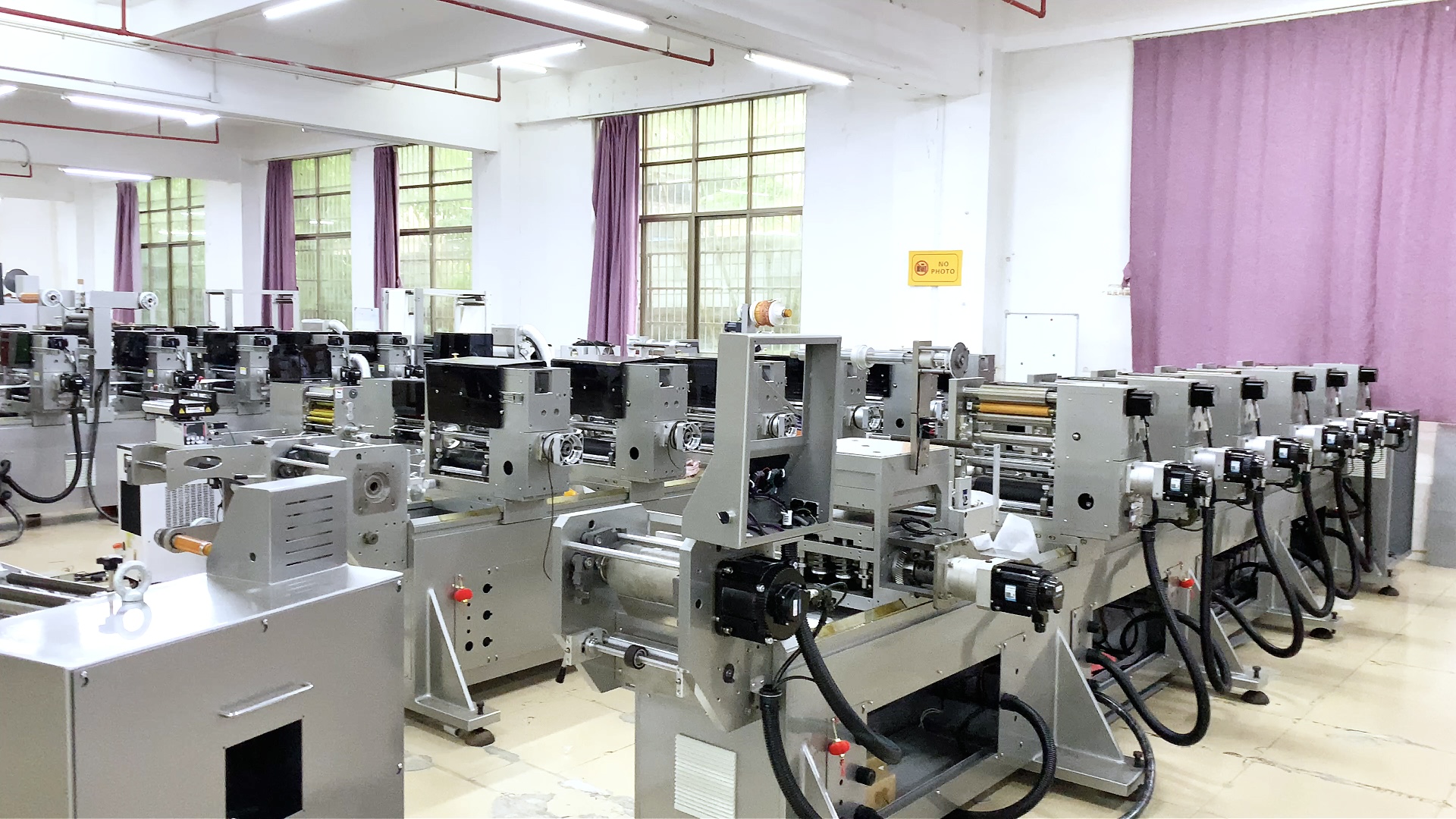
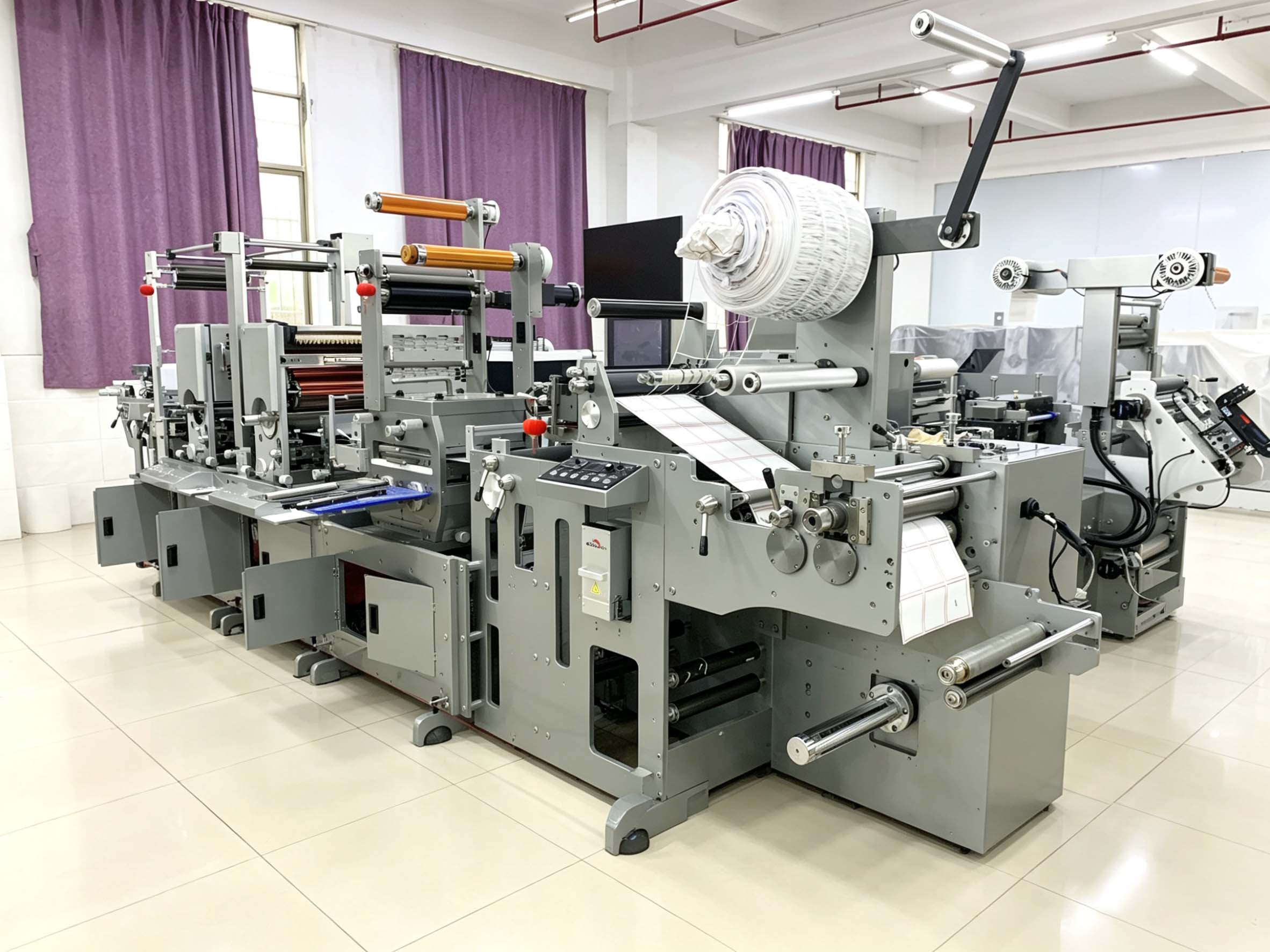
CAISHENG factory floor: label printing machines in assembly and testing before export shipment.
If you are evaluating a label printing machine for your distribution network or label production facility, you can download the CAISHENG brochure to review the full machine range.
Have Questions or Need More Details?
Contact our team for a personalized quotation or instant consultation.
Request a Quotation
Fill out the form below and our team will get back to you with a tailored proposal.
WhatsApp Direct Chat
Prefer to chat in real-time? Message us on WhatsApp for instant assistance & quick answers.
- Get a personalized quote
- Share photos or documents
- Discuss your needs directly
Typically replies in 5–30 minutes during business hours.