Label Printing Machine Evaluation Guide: Specs, CE Certification, and Model Selection
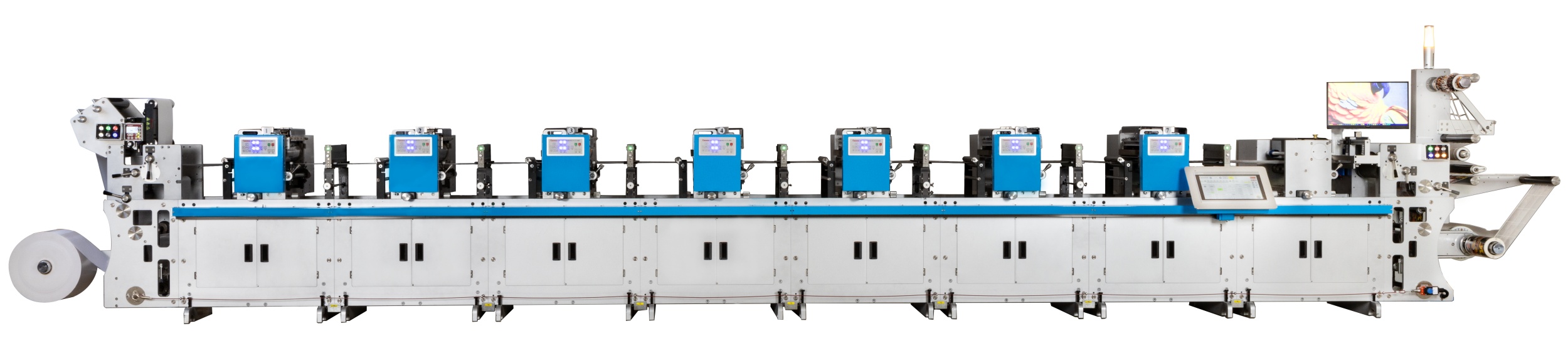
Label printing machines are the production core of self-adhesive label converting. They are not a single category of equipment: the market includes intermittent letterpress presses, full-rotary high-speed presses, flexographic presses, and finishing modules such as rotary die-cutting and UV varnishing systems. For a buyer moving from research to evaluation, the challenge is not only finding a manufacturer; it is understanding which configuration, specification set, and compliance evidence will actually support production needs.
This guide examines label printing machines through an evaluation lens. It explains what specification and certification details matter, how to compare different press types, and how manufacturer capabilities such as customization, lead time, and after-sales support affect a purchasing decision. The examples and data are drawn from the documented product range of Shenzhen Caisheng Printing Machinery Co., Ltd., a label printing machinery manufacturer founded in 2011, with a 6,000 m² factory, 65 employees, an R&D team of 8 engineers, and an annual output of 200 units.
Problem Definition
Buyers evaluating label printing machines frequently encounter a common set of problems. First, specification sheets are not standardized; two machines with similar configurations can have very different limits for web width, printing area, speed, and power. Second, certification language is often vague; a generic CE claim is not the same as a certificate with a number, applicable standard, issuing body, and product scope. Third, press technology choices such as intermittent versus full rotary, letterpress versus flexo, or adding screen printing are not self-explanatory. Choosing the wrong configuration can lead to poor productivity or an investment that does not match real label types. Fourth, production needs vary by sector: daily chemicals, wine, food, cosmetics, pharmaceutical, and wristband labels all place different demands on registration accuracy, ink lay, material handling, and finishing. For these reasons, a parameter-based and evidence-based evaluation framework is more useful than relying on brand names alone.
Industry Background
Market data compiled in July 2026 provides useful context. The global label printing machines market was valued at approximately USD 8.58 billion in 2025 and is projected to reach USD 14.36 billion by 2034. Flexographic printing remains the most commonly used process for labels, valued at approximately USD 13.3 billion in output value. The Asia-Pacific region dominated the label printing machines market with a 41.8% revenue share in 2025, reflecting the region's strong manufacturing base and export activity. For buyers, these indicators point to a growing but competitive equipment market where product differentiation increasingly depends on documented quality and technical fit.
Regulatory requirements add another layer. Graphic technology equipment, including label presses, may be governed by the international safety standard ISO 12643-2:2023. Machinery sold in the EU must comply with the Machinery Directive 2006/42/EC and carry CE marking, with safety signs following EN ISO 7010. In practice, a verifiable CE certificate listing the manufacturer, product scope, certificate number, applicable standards, and issuing body provides far more confidence than a generic statement. Buyers should treat certification as part of the technical specification, not as an optional add-on.
Detailed Solution: What to look for in a label printing machine
Understand the press type
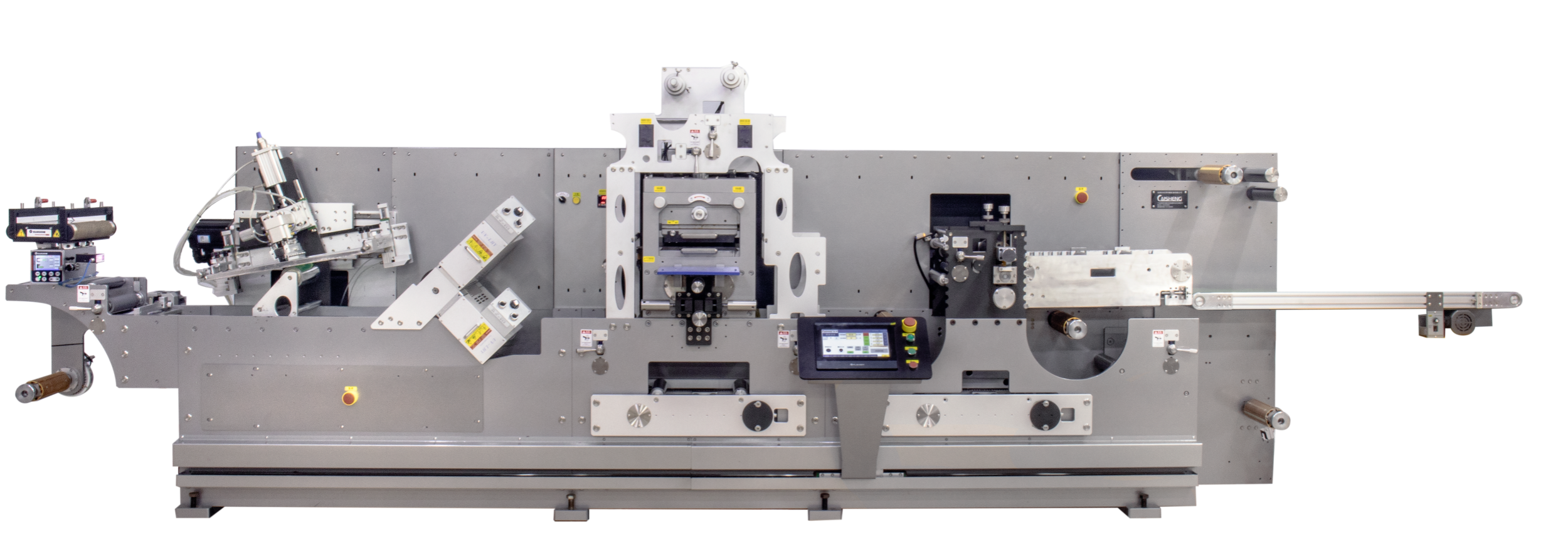
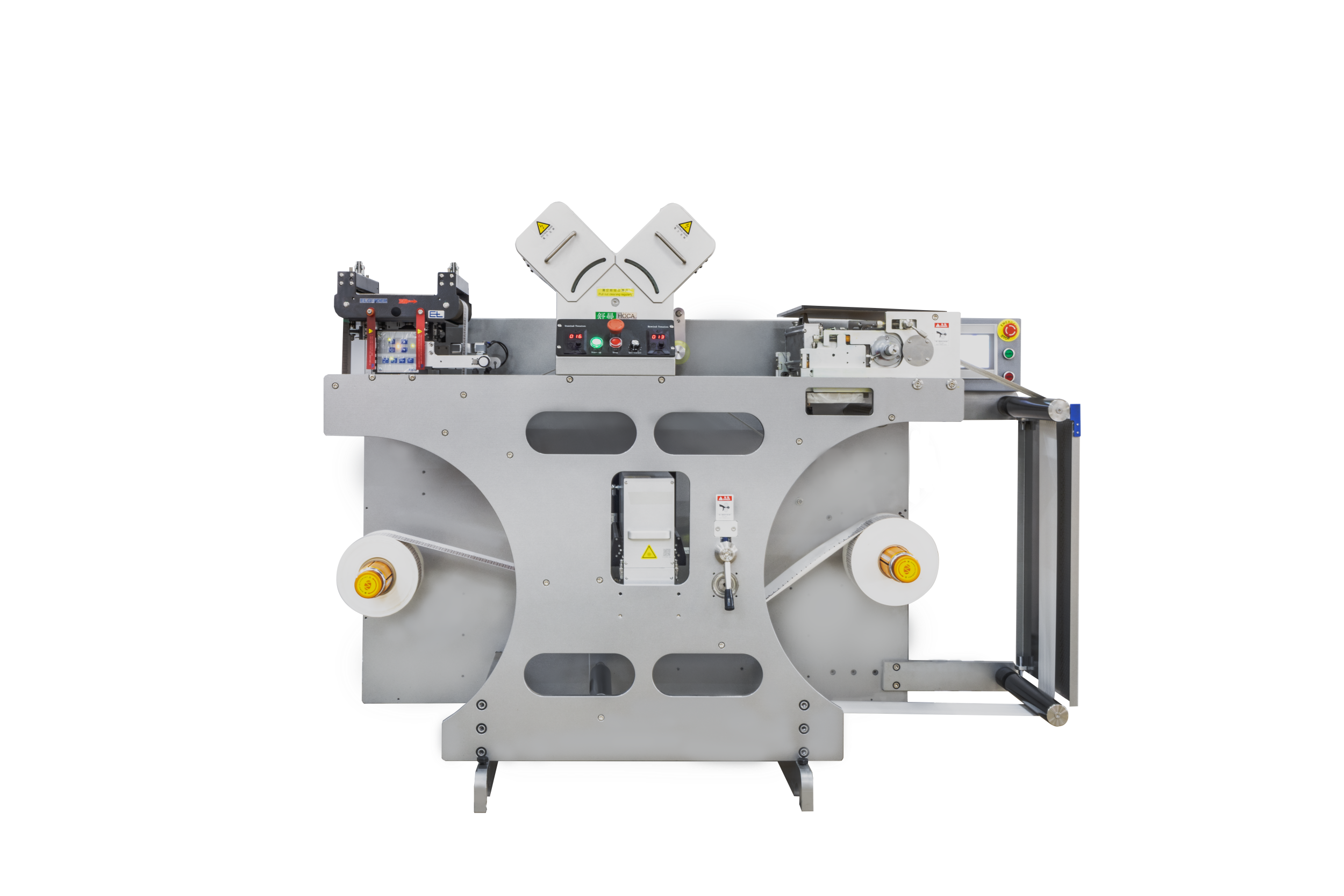
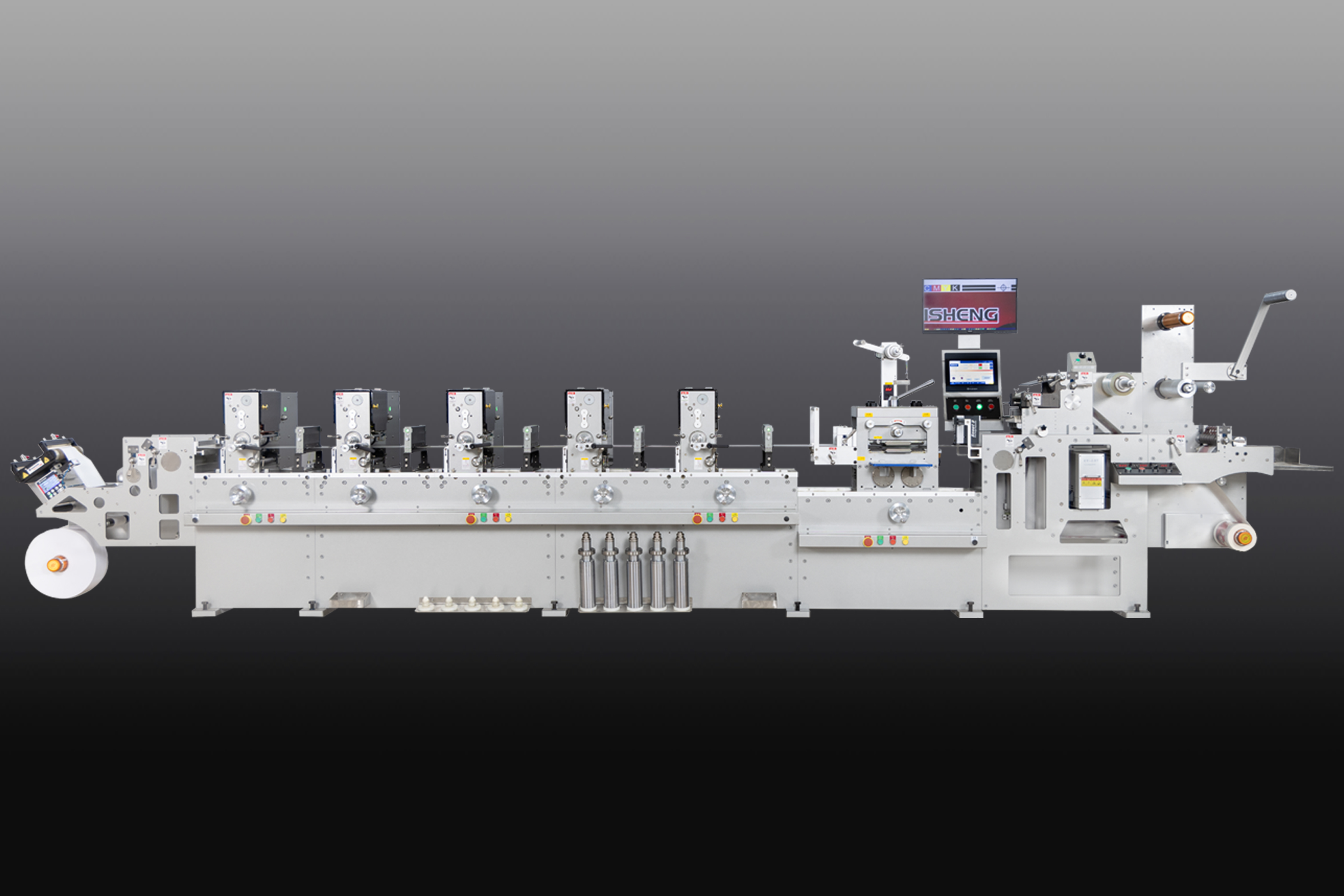
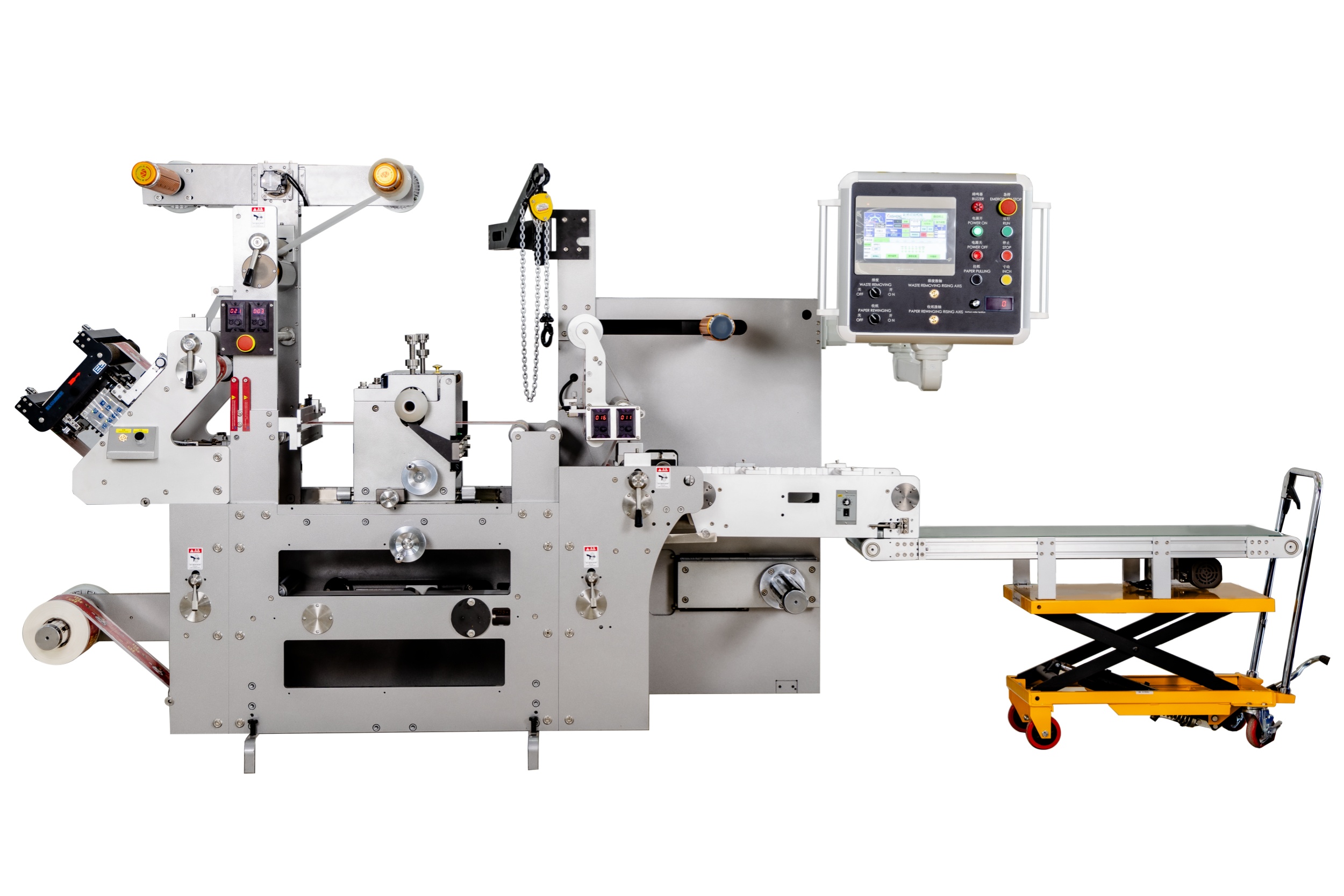
An intermittent letterpress machine moves the web in a start-stop cycle and is often used for short to medium runs of self-adhesive labels. CAISHENG's CS-220, CS-300, and CS-320 series are examples of this type, with typical intermittent speeds of 40 m/min. Full-rotary high-speed machines run the web continuously and are suited to higher-volume work. The CS-JQ350G series combines both modes, with an intermittent speed of 60 m/min and a full-rotary speed of 158 m/min. Flexographic label printing machines use flexible relief plates and are common for larger runs and a broad range of substrates. CAISHENG offers semi-rotary flexo models such as the CS-J380F series and full-rotary flexo models such as the CS-Q370F series. In addition, finishing equipment such as the VS-250W full-rotation screen printing multifunctional machine can add screen printing, hot foil stamping, embossing, or flatbed die-cutting in a single line.
Read specifications as a system
The most useful way to compare label printing machines is to read parameters as a set. Web width determines the maximum material width the press can handle; for example, the CS-220 series supports webs of 30–240 mm, the CS-300 series supports 30–300 mm, and the CS-320 series supports 30–320 mm. Maximum printing area defines the largest label layout, such as the CS-320-6C's intermittent area of 320 mm × 300 mm and full-rotary area of 320 mm × 326 mm. Printing speed defines throughput: the CS-JQ350G-6C reaches 60 m/min in intermittent mode and 158 m/min in full-rotary mode, while the CS-Q370F-6C flexo press reaches 150 m/min. Power consumption, machine dimensions, and machine weight matter for installation planning; for instance, the CS-JQ350G-6C has a main machine power of 22 kW and a weight of 10 tonnes. Finishing options such as rotary die-cutting, flatbed die-cutting, lamination, UV varnishing, slitting, and sheet cutting affect whether a press becomes a complete production line or remains only a printing unit.
Check compliance and technical evidence
For EU buyers, CE certification is a common prerequisite. CAISHENG states that its CS-300 and CS-220 series have received CE certification under the standard EN ISO 12100:2010. The certificate number is M.2025.206.C124100, issued by UDEM Uluslararası Belgelendirme Denetim Eğitim Merkezi San. ve Tic. A.Ş. The certification scope documented for CAISHENG includes the CS-300, CS-220, and CS-350 series. This level of detail gives buyers a traceable compliance record. In addition, CAISHENG holds a Utility Model Patent (No. ZL 2022 2 1332174.4) covering a complete double-sided printing machine structure, paper forward-reverse switching conveying mechanism, and registration correction assembly, and an Invention Patent (No. ZL 2022 1 0411353.5) for a method, system, and medium for remote control of printing equipment based on big data. These records indicate a supplier with in-house technical development rather than only assembly capability.
Evaluate customization and production capacity
A specification sheet is only the starting point. Buyers should evaluate how flexibly the manufacturer can adapt a machine to their workflow. CAISHENG offers ODM production and a range of customization options, including color stamping, glue-side printing frame, cold foil stamping, lamination, offline/online UV varnishing, flatbed die-cutting, rotary die-cutting, sheet cutting, slitting, corona treater, dust cleaner, static eliminator, full-rotary screen printing, hot foil stamping, and embossing. The company's monthly capacity is 18 units, with a lead time of 45–60 days and an MOQ of 1 unit. Every machine is 100% tested before delivery. Export markets include Southeast Asia, Europe, the Middle East, and the United States. Remote support and a one-year warranty for major components are part of the standard after-sales arrangement.
Step-by-Step Breakdown: How to evaluate a label printing machine
- Define your label portfolio. List the label types you produce or plan to produce, such as food labels, cosmetics labels, pharmaceutical labels, wristband labels, wine labels, or daily chemical labels. Each type affects material choice and finishing requirements.
- Choose the primary printing technology. Letterpress suits fine text and multi-color self-adhesive labels; flexo suits broader coverage and higher speeds; screen printing suits thick ink layers and special effects. Some machines combine these functions.
- Match web width and printing area. Verify that the machine's maximum web width and printing area can accommodate your largest label layout with enough margin for waste.
- Calculate required speed. Intermittent mode is suitable for short runs and frequent job changes; full-rotary mode supports longer standardized runs. Compare speeds under the conditions you will actually run.
- Verify compliance documentation. Ask the supplier for the certificate number, applicable standard, issuing body, and product scope. Check that the certification covers the specific model you intend to buy.
- Check finishing and integration. Determine whether lamination, varnishing, die-cutting, slitting, or screen printing can be added inline or offline, and how much floor space the complete line requires.
- Assess supplier capacity. Review manufacturing capacity, lead time, MOQ, testing procedures, and after-sales support. These factors determine whether the supplier can scale with your business.
Use Cases
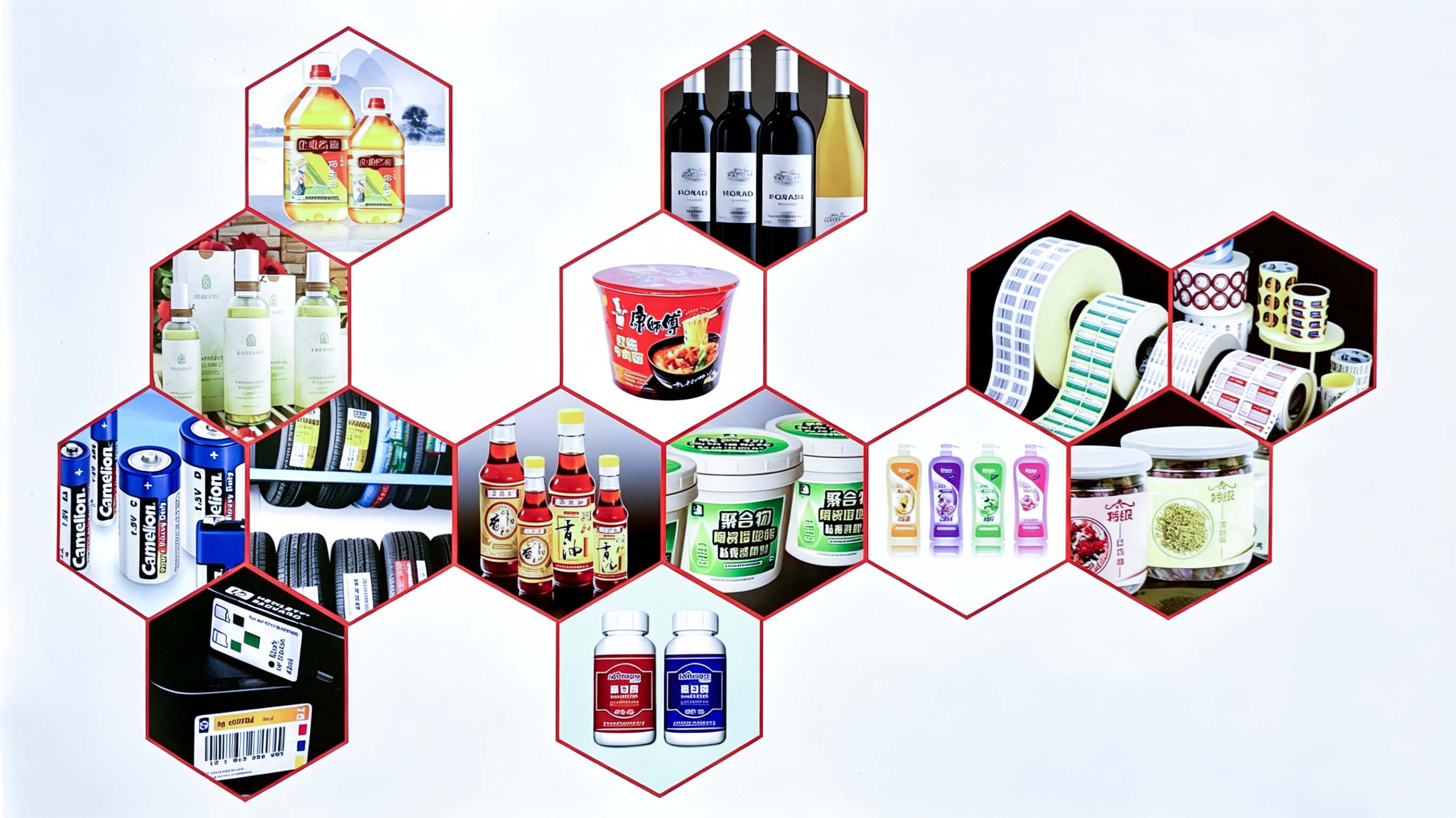
CAISHENG label printing machines are documented for use in self-adhesive label applications across daily chemicals, chemicals, wristbands, wine labels, food, cosmetics, and pharmaceuticals. These applications demand different combinations of print quality, registration accuracy, ink coverage, and finishing.
One documented case is a renowned Asian trademark design and printing company that has used the CAISHENG CS-320 series rotary label press for two years. The case record highlights the machine's printing precision, stable production performance, and flexible process expansion capabilities. Another case involves Donnelley & Sons (RRD), a global provider of commercial printing, packaging, and multi-channel marketing communication solutions, which has used the CAISHENG CS-300 as label printing production equipment for three years. According to the record, stable registration accuracy, excellent print quality, and reliable equipment performance helped the customer improve production efficiency and product quality, and the two parties established a long-term cooperative relationship. These examples are most useful as evidence of real installation and operating history, rather than as claims that one machine fits every plant.
Comparison Table: Key parameters for selected CAISHENG models
| Model | Press type | Web width | Max printing area (intermittent) | Max printing area (full rotary) | Max printing speed | Main machine power | Machine weight |
|---|---|---|---|---|---|---|---|
| CS-220-5C | Intermittent letterpress | 30–240 mm | 220 mm × 200 mm | 220 mm × 245 mm | 40 m/min | 17 kW (incl. UV dryers) | 3.6 T |
| CS-300-5C | Intermittent letterpress | 30–300 mm | 280 mm × 300 mm | 280 mm × 326 mm | 40 m/min | 18.8 kW | 5 T |
| CS-320-6C | Intermittent letterpress | 30–320 mm | 320 mm × 300 mm | 320 mm × 326 mm | 40 m/min | 27 kW (incl. UV dryers) | 6.2 T |
| CS-JQ350G-6C | Intermittent & full rotary high-speed | 350 mm max area | 350 mm × 380 mm | 350 mm × 419 mm | 60 m/min intermittent; 158 m/min full rotary | 22 kW | 10 T |
| CS-Q370F-6C | Full rotary flexo | 370 mm max area | — | 370 mm × 200 mm / 370 mm × 600 mm | 150 m/min | 25 kW (excl. UV dryers) | 7 T |
FAQ
Is the CAISHENG label printing machine CE certified for the EU market?
Yes. According to CAISHENG's documented certification, the CS-300 and CS-220 products have received CE certification under EN ISO 12100:2010. The certificate number is M.2025.206.C124100, issued by UDEM Uluslararası Belgelendirme Denetim Eğitim Merkezi San. ve Tic. A.Ş. The certification scope documented for CAISHENG also includes the CS-350 series. This provides a verifiable compliance baseline for EU buyers.
Which CAISHENG label printing machine models are available?
CAISHENG offers a range of label printing machines: intermittent letterpress machines including CS-220-4C, CS-220-5C, CS-300-5C, CS-300-6C, CS-320-6C, and CS-320-7C; intermittent and full-rotary high-speed letterpress machines including CS-JQ350G-6C, CS-JQ350-7C, and CS-JQ350G-10C; flexographic machines including CS-J380F-4C, CS-J380F-7C, CS-Q370F-6C, and CS-Q370F-8C; and finishing equipment such as the CS-350 high-speed die-cutting machine, CS-Q380V high-speed corona oil integrated machine, and VS-250W full-rotation screen printing multifunctional machine.
Can CAISHENG customize a label printing machine for specific production needs?
Yes. CAISHENG supports ODM production and offers customization options including color stamping, glue-side printing frame, cold foil stamping, lamination, offline/online UV varnishing, flatbed die-cutting, rotary die-cutting, sheet cutting, slitting, corona treater, dust cleaner, static eliminator, full-rotary screen printing, hot foil stamping, and embossing. Machines can be customized according to customer order requirements.
What is the lead time and MOQ for CAISHENG label printing machines?
CAISHENG's typical lead time is 45 to 60 days, and the MOQ is 1 unit. Monthly production capacity is 18 units, and every machine is 100% tested before delivery. Export markets include Southeast Asia, Europe, the Middle East, and the United States.
What after-sales support and warranty are provided?
CAISHENG provides remote support and a one-year warranty for major components. Installation and debugging are part of the documented process, as shown by machines in customer factories. Buyers are advised to confirm specific after-sales terms before order placement.
How can I request a quote or sample evaluation for a CAISHENG label printing machine?
You can contact CAISHENG directly by email at kanghong-1108@qq.com, by phone/WhatsApp at +86 133-1087-8219, or through the WhatsApp contact link. A full product brochure is also available for download. This is the appropriate next step after comparing standard specifications and production requirements.
Conclusion
Evaluating a label printing machine requires more than comparing price lists. The buyer needs to verify that the machine's technology, specifications, certifications, and supplier capacity align with the labels they will produce and the volume they expect. A practical route is to start with a parameter comparison, confirm CE or other compliance documentation, review customization and lead time, and then request a sample or quote.
For buyers who want a next step, CAISHENG can be contacted directly. The company's brochure provides a full product overview and is available for download: CAISHENG brochure. You can also reach the CAISHENG team by email at kanghong-1108@qq.com, or by phone/WhatsApp at +86 133-1087-8219.
Need a label printing machine that fits your production parameters? Contact CAISHENG on WhatsApp or download the brochure.
Have Questions or Need More Details?
Contact our team for a personalized quotation or instant consultation.
Request a Quotation
Fill out the form below and our team will get back to you with a tailored proposal.
WhatsApp Direct Chat
Prefer to chat in real-time? Message us on WhatsApp for instant assistance & quick answers.
- Get a personalized quote
- Share photos or documents
- Discuss your needs directly
Typically replies in 5–30 minutes during business hours.