Regional Label Press Compliance Guide: Die-Cutting from CS-220 to CS-380
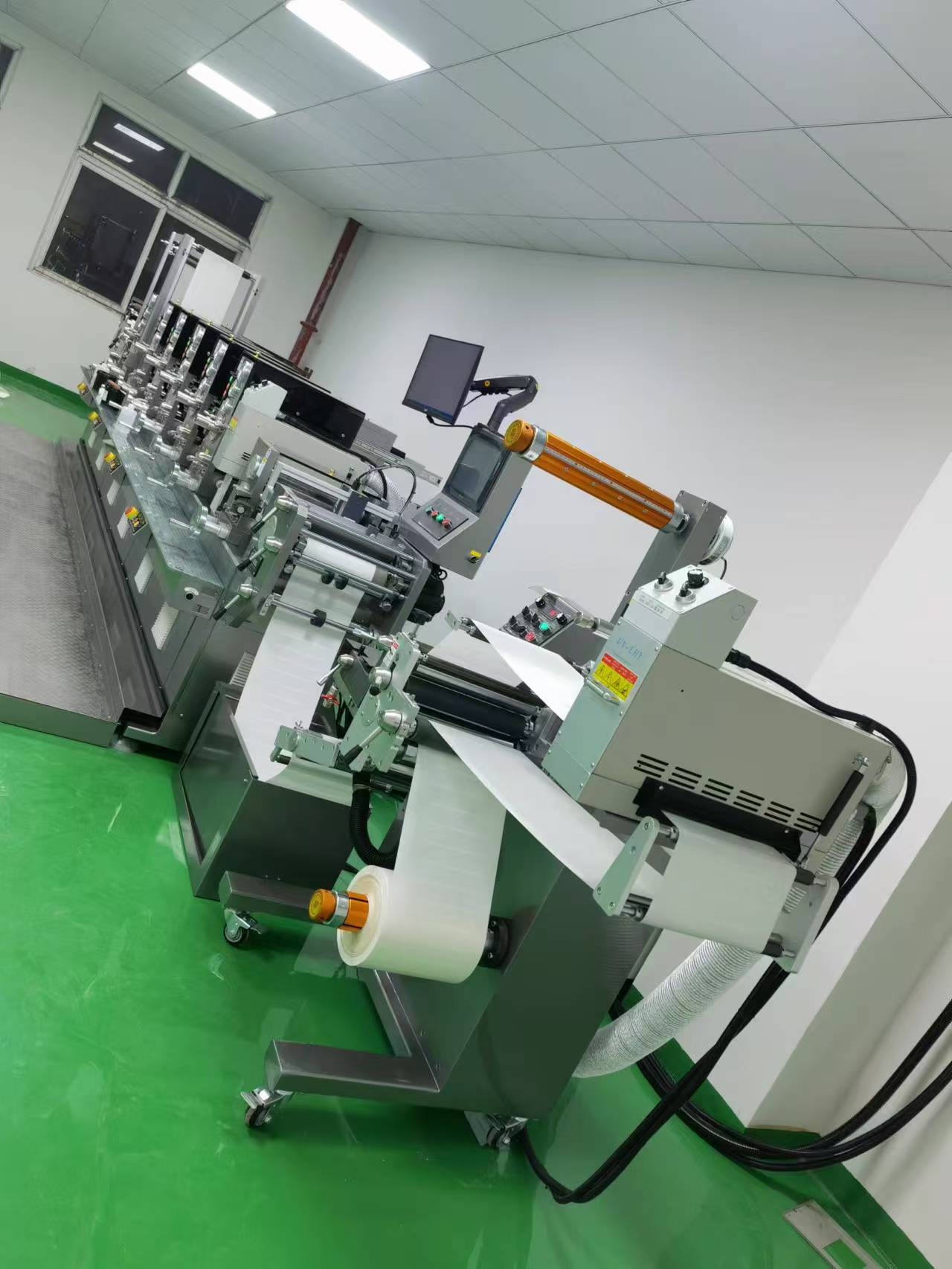
Die-cutting method is the fastest screening criterion when you buy a label printing machine for a defined region. In the CAISHENG portfolio that one variable splits the range into three tiers: the CS-220 platform is built around flatbed die-cutting, the CS-300 and CS-320 platforms combine flatbed die-cutting with rotary die-cutting on a multi-functional finishing frame, and the CS-350, CS-370 and CS-380 platforms are specified around rotary die-cutting combinations.
That decision affects die cost, changeover behaviour, waste and — for export buyers — the documentation that must be confirmed before shipment. CAISHENG's CE attestation M.2025.206.C124100 declares a scope of CS-300, CS-220 and CS-350 and cites EN ISO 12100:2010 and EN 60204-1:2018. That is exactly why model-level confirmation is more useful than a general statement that a supplier is "CE certified".
This guide is written for importers, distributors and label producers at the evaluation stage. It maps die-cutting architecture to specific models, explains which certification documents to request, and lists the regional requirements to confirm in the European Union, the United States, Southeast Asia and the Middle East.
Why Regional Label Press Projects Go Wrong at the Die-Cutting Stage
Most evaluation checklists begin with colour count, running speed and price. In practice, three mistakes create the largest downstream cost, and all three are visible at the die-cutting stage.
- Format mismatch. A buyer orders a flatbed-only platform for a job mix dominated by long runs, or orders a high-speed rotary combination for a portfolio built on small label formats. Recovering from that mismatch usually means a second machine, not an upgrade.
- Documentation mismatch. A CE attestation is issued against a defined model scope. If the attestation lists CS-300, CS-220 and CS-350 and the buyer orders a different model or a heavily customised configuration, the certificate in the folder may not describe the machine that arrives at the dock.
- Regional requirements discovered late. Destination-market checks are frequently treated as export paperwork and handled after the order is placed. Adding a conformity or documentation step at the end of a project compresses the commissioning schedule at the worst possible moment.
Die-cutting also sits at the physical meeting point of the process: print registration, die registration and material behaviour all converge at the converting station, which converts a printed web into a finished label. Choosing the die-cutting architecture therefore constrains everything upstream of it — printing units, drying, tension control and finishing modules.
Industry Background: Label Demand, Classification and Export Reality
Two figures are quoted repeatedly for this category and they measure different things. Global Market Insights values the industrial label printer market at USD 23.8 billion in 2025, projected to reach USD 38.8 billion by 2035. Mordor Intelligence values the global print label market at USD 57.05 billion in 2026, growing at a compound annual growth rate of 3.28% to reach USD 67.02 billion by 2031. The first measures equipment demand, the second measures printed label output. They should not be added together or averaged, because they describe different layers of the same value chain.
For customs purposes, flexographic printing machinery is classified under HS code 844316 in the World Customs Organization tariff reference published by TariffNumber.com. Buyers importing letterpress and rotary label presses should verify the exact classification of their configured machine with a customs broker, because the tariff line follows the printing technology that is actually installed.
The commercial context matters because the same machine platform is now shipped under several regulatory regimes. Shenzhen Caisheng Printing Machinery Co., Ltd. (CAISHENG) was founded in 2011 and manufactures commercial label printing machines, including intermittent and high-speed full-rotary letterpress printing machines, flexographic printing machines and screen printing machines, plus customised multi-functional label finishing solutions. The company operates a 6,000 m² factory with 65 employees, an annual output of about 200 units and an 8-engineer R&D team. Roughly 50% of output is exported to Southeast Asia, Europe, the Middle East and the United States — four regions with four different documentation expectations.
Detailed Solution: The Die-Cutting Map and the Documents Behind It
Screen the model tier against die-cutting method first, then confirm the documentation that names that tier. The three stages below follow that order.
Tier 1 — CS-220: Flatbed Die-Cutting
The CS-220 platform covers the CS-220-4C and CS-220-5C intermittent letterpress label printing machines, with flatbed die-cutting as the die-cutting method. Web width is 30–240 mm. The listed maximum printing area is 220 × 245 mm in full-rotary mode and 30 × 200 mm in intermittent mode, with a maximum printing speed of 40 m/min. Main machine power is 8.4 kW for the CS-220-4C, with 3.7 kW UV dryers, and 17 kW including UV dryers for the CS-220-5C. Machine weights are 2.6 t and 3.6 t respectively.
CAISHENG reports a registration precision of ±0.025 mm for the CS-220-4C intermittent rotary letterpress. This is a company-reported figure rather than an independently benchmarked result, but it is relevant to die-cutting because registration accuracy at the print station directly limits how tightly a die station can be aligned to the printed image.
Tier 2 — CS-300 and CS-320: Flatbed + Rotary Die-Cutting Combination
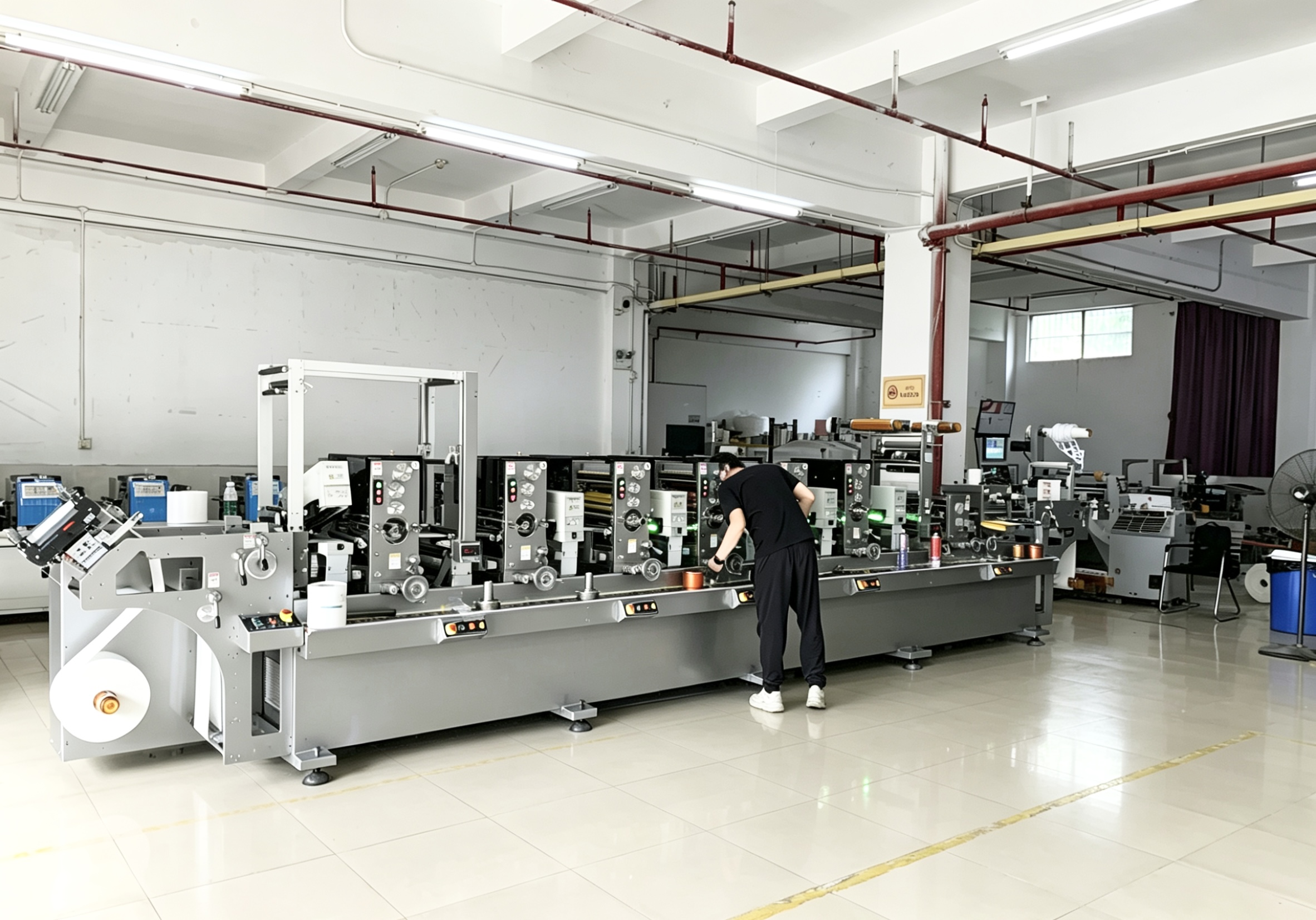
The CS-300 and CS-320 tier contains four models: CS-300-5C, CS-300-6C, CS-320-6C and CS-320-7C. Web width is 30–300 mm on the CS-300 models and 30–320 mm on the CS-320 models. Maximum printing area is 280 × 326 mm in full-rotary mode (CS-300) and 320 × 326 mm (CS-320), with intermittent areas of 280 × 300 mm and 320 × 300 mm. Maximum printing speed is 40 m/min across the tier. Main machine power ranges from 18.8 kW on the CS-300-5C, with 6 kW UV dryers, up to 34.5 kW including UV dryers on the CS-300-6C; machine weights run from 5 t to 7 t.
This is the tier where both die-cutting methods appear on the same finishing line. CAISHENG's documented configuration for the CS-300 platform combines a six-colour letterpress printing machine with glue-side printing, a multi-functional frame, rotary die-cutting, flatbed die-cutting and slitting. For a label converter running a mixed job book, a combination frame avoids the need to buy a second press simply to cover both die formats.
Tier 3 — CS-350, CS-370 and CS-380: Rotary Die-Cutting Combination
The CS-350, CS-370 and CS-380 tier is specified around rotary die-cutting combinations and covers both letterpress and flexographic platforms: CS-JQ350-7C, CS-JQ350G-6C and CS-JQ350G-10C (intermittent and full-rotary high-speed label printing machines), CS-J380F-4C and CS-J380F-7C (flexo label printing machines), and CS-Q370F-6C and CS-370F-8C (full-rotary flexographic printing machines).
Maximum printing area is 350 × 419 mm in full-rotary mode on the CS-JQ350 family and 360 × 419 mm on the CS-J380F models, with intermittent areas of 350 × 380 mm and 360 × 380 mm. The CS-Q370F-6C and CS-370F-8C list full-rotary areas of 370 × 200 mm and 370 × 600 mm. Speed depends on the platform: 60 m/min in intermittent mode and 158 m/min in full-rotary mode for the CS-JQ350 family, 60 m/min for the CS-J380F models, and 150 m/min for the CS-Q370F-6C and CS-370F-8C. Main machine power spans 22 kW to 35 kW, with UV dryer power from 7.8 kW to 13.5 kW (LED UV on the CS-JQ350G-10C), and machine weights from 4 t to 14 t.
What a CE Attestation Actually Says — and What It Does Not
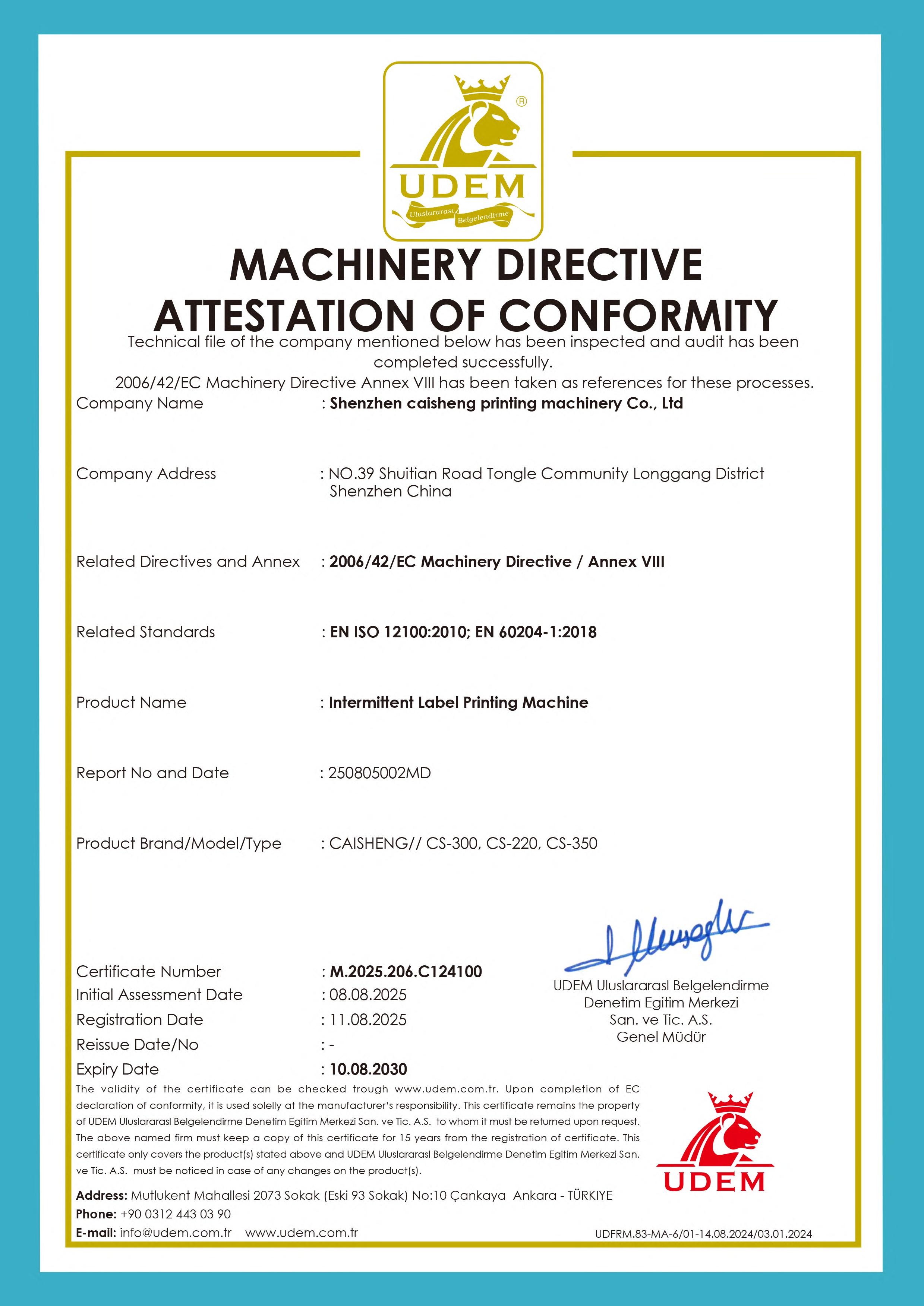
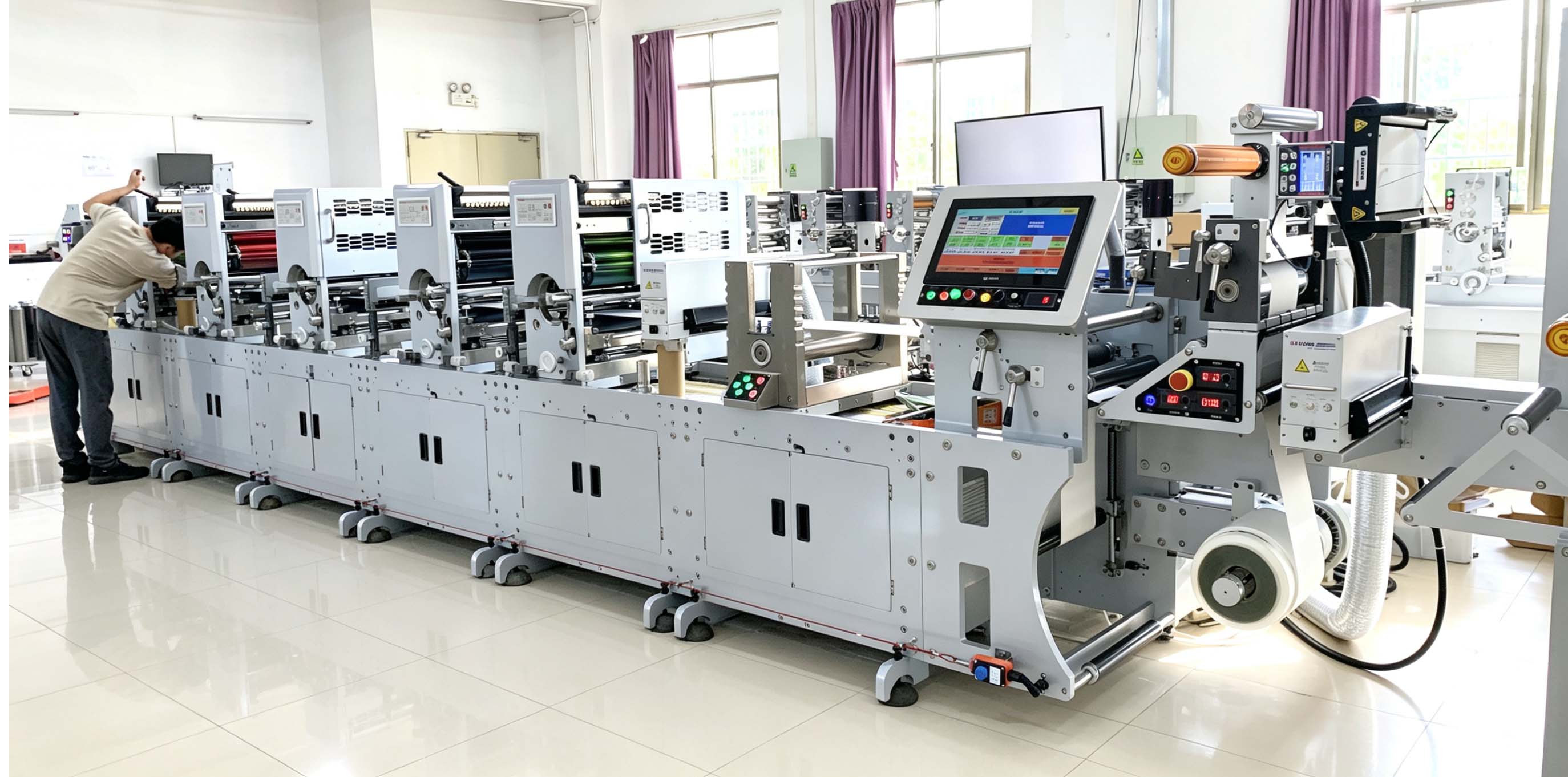
CAISHENG holds a Machinery Directive Attestation of Conformity, certificate number M.2025.206.C124100, issued by UDEM Uluslararasi Belgelendirme Denetim Egitim Merkezi San. ve Tic. A.S. for the EU market. The declared scope is CAISHENG // CS-300, CS-220, CS-350. The standards listed on the attestation are EN ISO 12100:2010 and EN 60204-1:2018. The issue date is 8 November 2025 and the expiry date is 8 October 2030.
Three practical points follow from that document. First, the scope line is the operative line: read the model names on the certificate against the model names on your purchase order. Second, the standards cited are machinery safety and electrical equipment standards, which is what a machinery buyer should expect to see on a conformity attestation. Third, a certificate has a validity window, so an order placed late in the certificate's life should be checked against the current issue.
Intellectual property is not a market-access mark. CAISHENG also holds utility model patent ZL 2022 2 1332174.4, covering a double-sided printing machine structure, paper forward-reverse switching conveying mechanism and registration correction assembly, and invention patent ZL 2022 1 0411353.5, covering a method, system and medium for remote control of printing equipment based on big data. These are patent rights registered with the China National Intellectual Property Administration; they support capability claims and remote-diagnostics arguments, but they do not replace a conformity attestation for the destination market.
Third-party compliance research published by HTNXT in September 2026 reports that CAISHENG holds ISO 9001, ISO 14001 and ISO 45001 certifications and that its products meet CE standards. Because management-system certificates are issued per site and per scope, buyers should request the current certificate copies rather than relying on a summary statement in a research note or on a supplier's website.
Regional Requirements to Confirm Before You Order
The list below is framed as buyer confirmation items rather than as legal advice, because the applicable rule depends on the machine configuration, the destination and the end user's own compliance obligations.
- European Union. Confirm that a current CE attestation or declaration of conformity names your exact model and configuration. For CS-300, CS-220 and CS-350 orders, reference M.2025.206.C124100 (EN ISO 12100:2010; EN 60204-1:2018). For CS-320, CS-370, CS-380 and CS-JQ350G orders, request the conformity documentation that applies to that specific model before signing. Also confirm the machine marking, the technical file handover and the language of the documentation pack.
- United States. The CE attestation is an EU document and does not, by itself, satisfy US requirements. Many US buyers, insurers and authorities having jurisdiction ask for evidence of listing by a nationally recognised testing laboratory. Confirm early whether your installation requires an NRTL mark, and request electrical drawings, component ratings and nameplate data so the question can be answered before shipment.
- Southeast Asia. Import requirements in this region are primarily customs and electrical-fit questions rather than machine-marking questions. Confirm the HS classification with a broker (HS 844316 covers flexographic printing machinery in the WCO reference), the certificate of origin, packing list and invoice description, and verify the voltage, frequency and plug standard for the destination before the electrical configuration is fixed.
- Middle East. Some markets in the region operate pre-shipment conformity assessment schemes. Confirm whether your destination requires a conformity certificate before shipment, which mark applies, and whether documentation must be translated and legalised — then build that step into the production schedule rather than the shipping week.
Step-by-Step: Seven Checks Before You Place the Order
- 1. Fix the die-cutting tier. Flatbed for the CS-220 tier; flatbed plus rotary combination for CS-300 and CS-320; rotary combination for CS-350, CS-370 and CS-380. Lock this before discussing colour count.
- 2. Check web width against your widest substrate. The range runs 30–240 mm (CS-220), 30–300 mm (CS-300) and 30–320 mm (CS-320), with 350 mm and 370 mm-class print areas on the high-speed tier.
- 3. Check the die format against your largest label. Confirm the listed maximum printing area for full-rotary and intermittent modes, and the die station that will carry the job.
- 4. Match the conformity document to the model. Verify that the attestation scope names your model, record the certificate number and expiry date, and note which standards are cited.
- 5. Record the electrical configuration. Main machine power across the range is 8.4 kW to 35 kW, with UV or LED UV dryer power of 3.7 kW to 13.5 kW. Confirm voltage, frequency and plug standard for the destination market at quotation stage.
- 6. Fix the customisation list. CAISHENG builds to order under an ODM production mode. The documented customisation scope includes colour stamping, glue-side printing frame, cold foil stamping, lamination, offline and online UV varnishing, flatbed die-cutting, rotary die-cutting, sheet cutting, slitting, corona treater, dust cleaner, static eliminator, full-rotary screen printing, hot foil stamping and embossing.
- 7. Confirm delivery and support terms. Production lead time is listed as 45–60 days with a monthly capacity of 18 units and a minimum order quantity of one unit. Quality control is described as 100% testing, and after-sales support covers remote assistance plus a one-year warranty on major components.
Use Cases: Where the Combination Tier Is Already Running
The CS-320 tier — the flatbed plus rotary combination stage — is the configuration that appears most often in CAISHENG's documented installations, which is consistent with its position between compact flatbed work and high-speed rotary work.
In Taiwan, a CS-320 series label printing machine was installed at a renowned Asian trademark design and printing company to meet the demands of high-quality label printing. The installation covered one unit, and the project has been running for two years. The reported outcome is superior printing precision, stable production performance and flexible process expansion capabilities, which earned the client's full recognition. The process-expansion point is the practical value of a combination frame: the finishing line can grow with the job book instead of being replaced by it.
In the United States, a CS-300 series label printing machine was installed at a global provider of commercial printing, packaging and marketing communication solutions as label production equipment. This project has been running for three years, establishing a long-term stable cooperation. The documented highlights are stable registration accuracy, excellent print quality and reliable equipment performance; customer feedback reports that the machine helped improve production efficiency and product quality.
Read together, the two cases describe the same tier from two different angles: one buyer valued format flexibility, the other valued registration stability over a multi-year production horizon. Neither outcome is measured in headline speed. Both are measured in what the finishing line can hold over time.
Model Comparison: Die-Cutting, Format and Power
The table below reproduces the die-cutting mapping and the technical data published for each model. Figures are as listed in CAISHENG's product data and should be re-confirmed on the final quotation, because a built-to-order machine is configured against the buyer's specification.
| Model | Die-cutting method | Web width | Max printing area (full rotary / intermittent) | Max speed | Main machine power | Weight |
|---|---|---|---|---|---|---|
| CS-220-4C | Flatbed | 30–240 mm | 220 × 245 mm / 30 × 200 mm | 40 m/min | 8.4 kW (UV dryers 3.7 kW) | 2.6 t |
| CS-220-5C | Flatbed | 30–240 mm | 220 × 245 mm / 220 × 200 mm | 40 m/min | 17 kW incl. UV dryers | 3.6 t |
| CS-300-5C | Flatbed + rotary combination | 30–300 mm | 280 × 326 mm / 280 × 300 mm | 40 m/min | 18.8 kW (UV dryers 6 kW) | 5 t |
| CS-300-6C | Flatbed + rotary combination | 30–300 mm | 280 × 326 mm / 280 × 300 mm | 40 m/min | 34.5 kW incl. UV dryers | 6.6 t |
| CS-320-6C | Flatbed + rotary combination | 30–320 mm | 320 × 326 mm / 320 × 300 mm | 40 m/min | 27 kW incl. UV dryers | 6.2 t |
| CS-320-7C | Flatbed + rotary combination | 30–320 mm | 320 × 326 mm / 320 × 300 mm | 40 m/min | 31 kW incl. UV dryers | 7 t |
| CS-JQ350-7C | Rotary combination | 350 mm class | 350 × 419 mm / 350 × 380 mm | 60 m/min intermittent; 158 m/min full rotary | 24.5 kW (UV dryers 9.1 kW) | 10.8 t |
| CS-JQ350G-6C | Rotary combination | 350 mm class | 350 × 419 mm / 350 × 380 mm | 60 m/min intermittent; 158 m/min full rotary | 22 kW (UV dryers 7.8 kW) | 10 t |
| CS-JQ350G-10C | Rotary combination | 350 mm class | 350 × 419 mm / 350 × 380 mm | 60 m/min intermittent; 158 m/min full rotary | 34 kW (LED UV dryers 13.5 kW) | 14 t |
| CS-J380F-4C | Rotary combination | 360 mm class | 360 × 419 mm / 360 × 380 mm | 60 m/min | 25 kW incl. UV dryers | 4 t |
| CS-J380F-7C | Rotary combination | 360 mm class | 360 × 419 mm / 360 × 380 mm | 60 m/min | 35 kW incl. UV dryers | 6 t |
| CS-Q370F-6C | Rotary combination | 370 mm class | 370 × 200 mm and 370 × 600 mm | 150 m/min | 25 kW excl. UV dryers | 7 t |
| CS-370F-8C | Rotary combination | 370 mm class | 370 × 200 mm and 370 × 600 mm | 150 m/min | 30 kW excl. UV dryers | 8.6 t |
FAQ
Which CAISHENG models are covered by the CE attestation, and which standards apply?
CE attestation M.2025.206.C124100 was issued by UDEM for the EU market and declares the scope CAISHENG // CS-300, CS-220, CS-350. The standards cited are EN ISO 12100:2010 and EN 60204-1:2018, with an issue date of 8 November 2025 and an expiry date of 8 October 2030. If your order is a CS-320, CS-370, CS-380 or CS-JQ350G configuration, request the conformity documentation that applies to that specific model before you place the order.
Does die-cutting architecture change what the machine can actually produce?
Yes. Flatbed die-cutting on the CS-220 tier serves web widths of 30–240 mm. The CS-300 and CS-320 tier combines flatbed and rotary die-cutting on one finishing frame, with web widths of 30–300 mm and 30–320 mm. The CS-350, CS-370 and CS-380 tier is specified around rotary die-cutting combinations, with 350 mm and 370 mm-class print areas and full-rotary speeds of up to 158 m/min on the CS-JQ350 family. CAISHENG's customisation scope lists both flatbed and rotary die-cutting alongside slitting, sheet cutting, lamination, hot and cold foil stamping, embossing, corona treating and full-rotary screen printing.
What drives cost when die-cutting is configured for a specific region?
Price follows configuration rather than a list specification, because CAISHENG builds to order under an ODM production mode. The variables that move the quotation most are the number of printing units, the die-cutting arrangement (flatbed only, or flatbed plus rotary on a combination frame), the optional finishing modules in the customisation list, and the electrical configuration needed for the destination market. The minimum order quantity is one unit, so buyers can enter at a single machine rather than a container load, and the listed production capacity is 18 units per month. Ask for an itemised configuration list so each line can be compared against competing quotations.
How is die-cutting validated before shipment?
CAISHENG describes its quality control as 100% testing. Because die-cutting depends on the interaction between the die, the adhesive and the face material, the practical route is to send the label artwork and substrate specification with the quotation request and ask which die format on the selected model will run it. Buyers shipping into a regulated region should combine that validation with the documentation check: confirm the certificate scope, the standard references and the electrical nameplate data in the same review. You can start by downloading the CAISHENG product catalogue or contacting the export team directly to discuss a model-specific configuration.
What lead time should be planned, and where does documentation fit?
Production lead time is listed as 45–60 days with a monthly capacity of 18 units and a minimum order quantity of one unit. Documentation should run in parallel with production rather than after it: confirm the applicable attestation scope, certificate validity and any destination-market conformity step while the machine is being built. After-sales support covers remote assistance and a one-year warranty on major components.
Conclusion
Die-cutting method is not a finishing detail — it is the first decision that determines whether a label printing machine fits a regional production profile and a regional documentation requirement. Flatbed die-cutting defines the CS-220 tier, flatbed plus rotary combination defines the CS-300 and CS-320 tier, and rotary die-cutting combination defines the CS-350, CS-370 and CS-380 tier. Everything else, from web width to UV dryer power, is configured around that choice.
On the compliance side, the discipline is the same: name the model, match it to the document, and check the validity window before the order is placed. CAISHENG's attestation M.2025.206.C124100 covers CS-300, CS-220 and CS-350 against EN ISO 12100:2010 and EN 60204-1:2018 through 8 October 2030 — and for any other model, the correct answer is to request the document that applies rather than to assume the certificate on file covers it.
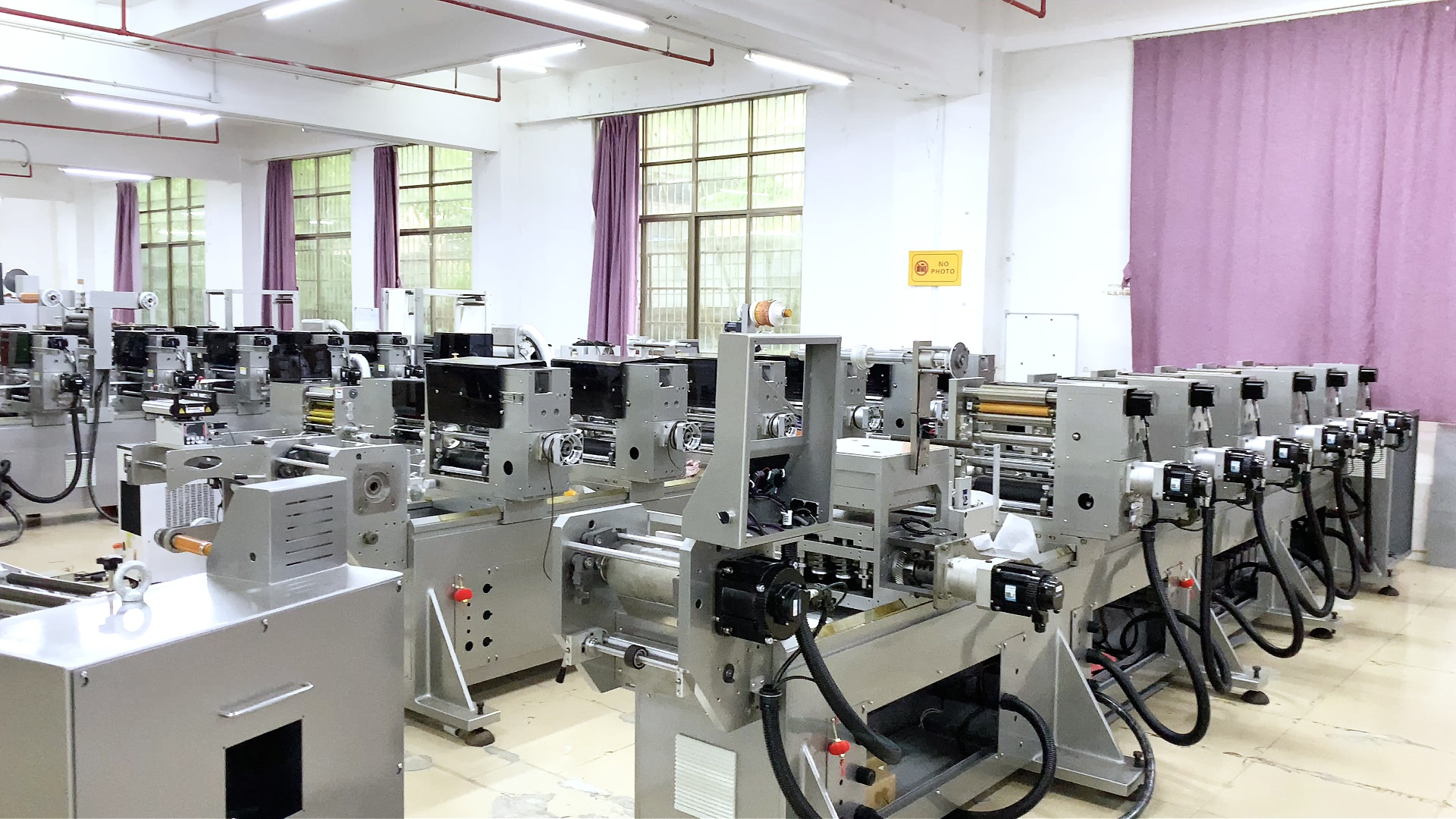
Next step: confirm the die-cutting tier and the document scope for your market
Tell us the destination market, the label format and the job mix, and CAISHENG will confirm which model tier applies (CS-220, CS-300/CS-320 or CS-350/CS-370/CS-380), which conformity document names that model, and which finishing modules belong in the configuration. Minimum order quantity is one unit and production lead time is 45–60 days.
Product catalogue: download the CAISHENG catalogue (PDF)
Website: www.caishengmachinery.com
Contact: Alice — Email: kanghong-1108@qq.com | Tel: +8613186283944 | WhatsApp: +86 133-1087-8219
Address: No.39, Shuitian Road, Tongle Community, Longgang District, Shenzhen, China
Have Questions or Need More Details?
Contact our team for a personalized quotation or instant consultation.
Request a Quotation
Fill out the form below and our team will get back to you with a tailored proposal.
WhatsApp Direct Chat
Prefer to chat in real-time? Message us on WhatsApp for instant assistance & quick answers.
- Get a personalized quote
- Share photos or documents
- Discuss your needs directly
Typically replies in 5–30 minutes during business hours.