Supplier Evaluation for Label Printing Machines: Die-Cutting Capability and Delivery Assurance
Most label converters evaluate a label printing machine supplier by reading the printing section: colour count, registration tolerance, maximum web width, and top speed. Die-cutting configuration is treated as a footnote and left for the final quotation round. Delivery assurance is assumed rather than contracted. Both are under-specified far more often than they are wrongly specified, and both are difficult to correct once a purchase order is signed.
Problem Definition: Why Die-Cutting Fails Supplier Comparison
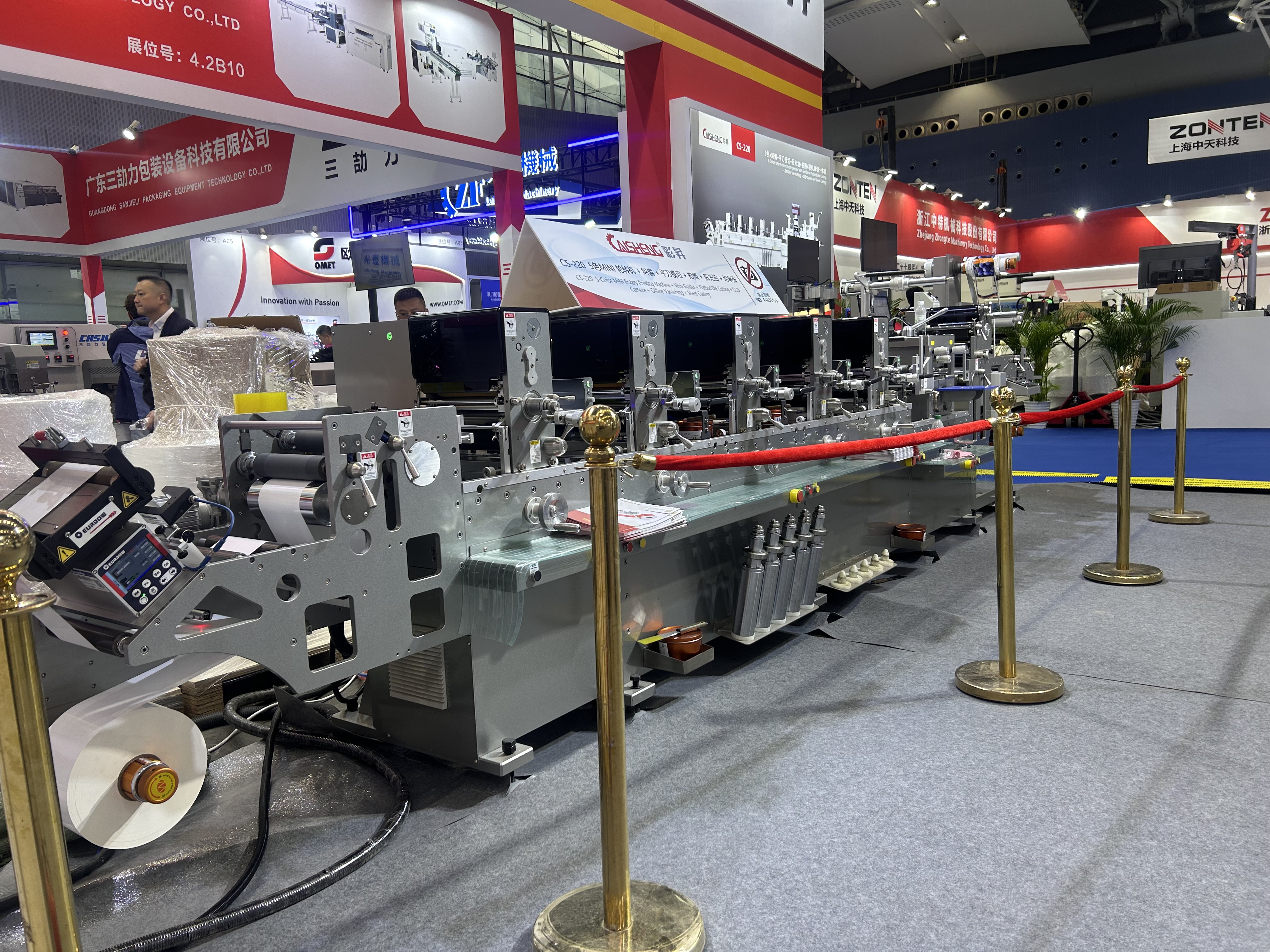
Die-cutting is available on essentially every narrow-web label press platform in some form. The procurement question is not availability. It is whether a specific supplier, on a specific model, has defined the die-cutting configuration precisely enough that it can be reproduced, accepted, and scheduled. A die-cutting module that appears in a brochure but is engineered per order introduces two predictable problems: a delivery schedule that slips while the module is finalised, and an acceptance dispute at the factory because the buyer and the supplier were measuring different things.
Delivery assurance fails for a structurally different reason. Machine lead times in this category are quoted in weeks, not days, and they depend on how much of the build is standardised against how much is bespoke. A supplier that quotes a short lead time on a heavily customised configuration is not necessarily misrepresenting — but the buyer has no way to verify the claim unless the supplier's production capacity, monthly throughput, and testing protocol are visible during evaluation.
The practical consequence is that die-cutting capability and delivery assurance should be evaluated together, in the same due-diligence pass, because they draw on the same underlying facts: production capacity, engineering headcount, testing discipline, and lead-time commitments.
Industry Background: Demand Context for Label Press Investment
The global print label market was valued at approximately USD 57.05 billion in 2026 and is forecast to reach USD 67.02 billion by 2031, a compound annual growth rate of 3.28% (Mordor Intelligence, republished through HTNXT verified data). That figure measures printed label output, not label-making machinery, so it should be treated as demand context rather than a measure of equipment market size.
A separate commercial estimate places the global industrial label printer market at USD 23.8 billion in 2025, projected to reach USD 38.8 billion by 2035 (Global Market Insights). These two datasets measure different layers of the value chain — label output versus label-producing equipment — and should not be combined or averaged. The useful reading for a buyer is directional: label consumption continues to expand, which sustains replacement and capacity-extension demand for narrow-web presses, and price competition across suppliers makes configuration clarity more valuable, not less.
Within that context, the Shenzhen-based manufacturer Shenzhen Caisheng Printing Machinery Co., Ltd. (brand: CAISHENG) is a label printing equipment manufacturer specialising in intermittent and high-speed full-rotary letterpress printing machines, flexographic printing machines, and screen printing machines, and it also supplies customised multi-functional label finishing solutions. That specialisation matters for this evaluation because die-cutting in CAISHENG's portfolio is defined per model rather than sold as a generic add-on.
Detailed Solution: Model-Level Die-Cutting Configuration
The first deliverable of a supplier evaluation is a model-level die-cutting map. For CAISHENG, the configuration splits into three families, and the split determines which production scenarios a machine can realistically support.
Flatbed die-cutting: CS-220 series
The CS-220-4C and CS-220-5C intermittent letterpress label printing machines are configured with flatbed die-cutting. Both run a 30–240 mm web, with a maximum intermittent printing area of 220×200 mm on the CS-220-5C and 30×200 mm on the CS-220-4C, and a maximum speed of 40 m/min. The CS-220-4C carries a main machine power rating of 8.4 kW with a 3.7 kW UV dryer; the CS-220-5C is rated at 17 kW including UV dryers. Flatbed die-cutting on this platform suits short-run and medium-run label work where tooling cost and changeover speed matter more than raw throughput.
Flatbed plus rotary combination: CS-300 and CS-320 series
The CS-300 and CS-320 families are flatbed and rotary die-cutting combination machines. This is the configuration that most frequently causes confusion in supplier comparison, because the two die-cutting methods sit on the same frame and serve different jobs — flatbed for format changes and lower tooling investment, rotary for continuous high-cycle cutting once a format is locked.
The CS-300-5C runs a 30–300 mm web at 18.8 kW with a 6 kW UV dryer and a 5 t machine weight, while the CS-300-6C runs the same 30–300 mm web at 34.5 kW including UV dryers and 6.6 t. The CS-320-6C and CS-320-7C extend the web width to 30–320 mm, rated at 27 kW and 31 kW including UV dryers respectively, with machine weights of 6.2 t and 7 t. All four run at a maximum speed of 40 m/min. Company-stated registration precision for the CS-220-4C platform is ±0.025 mm, a figure that is relevant when a buyer is weighing flatbed accuracy against rotary throughput.
Rotary die-cutting: CS-350, CS-370 and CS-380 series
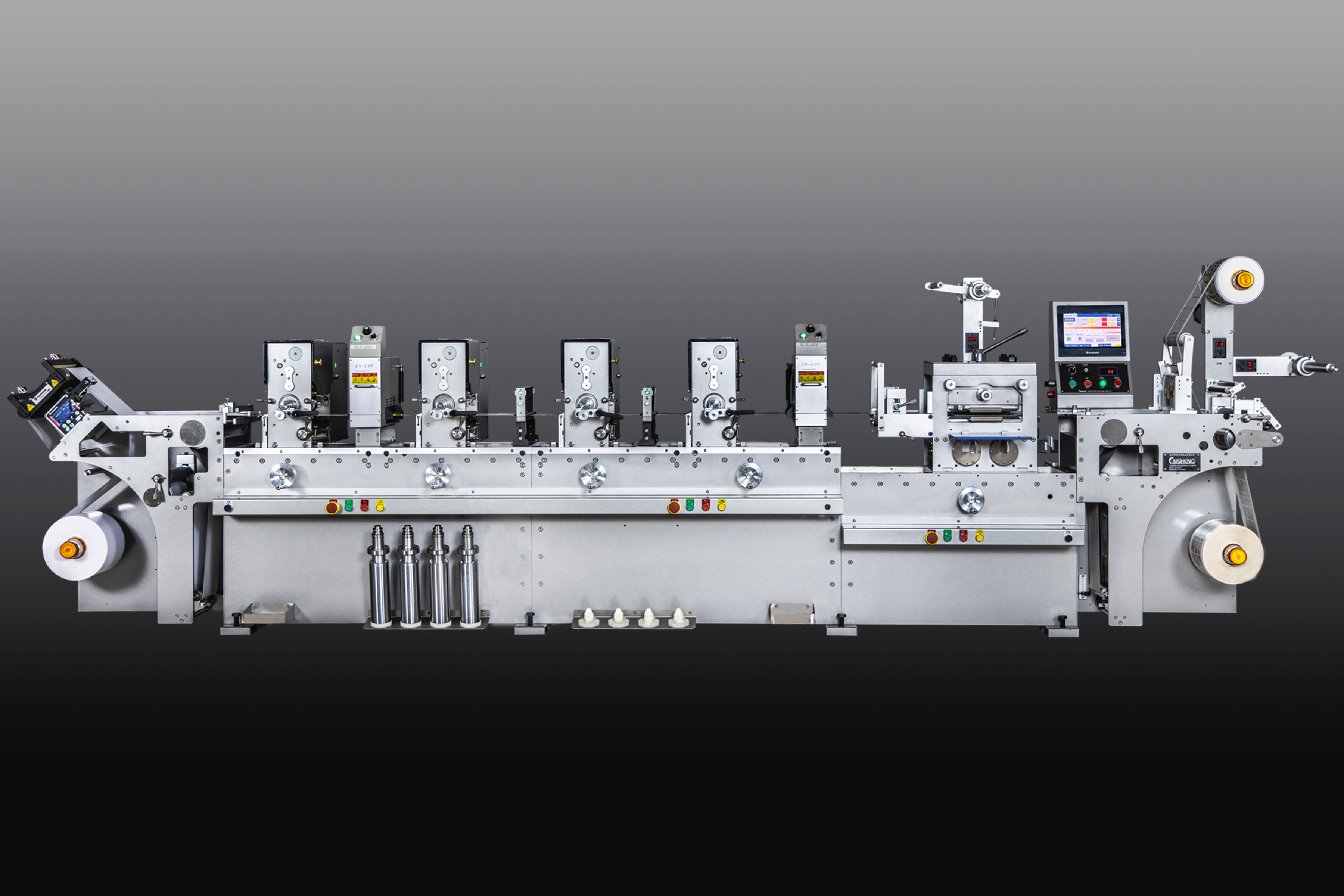
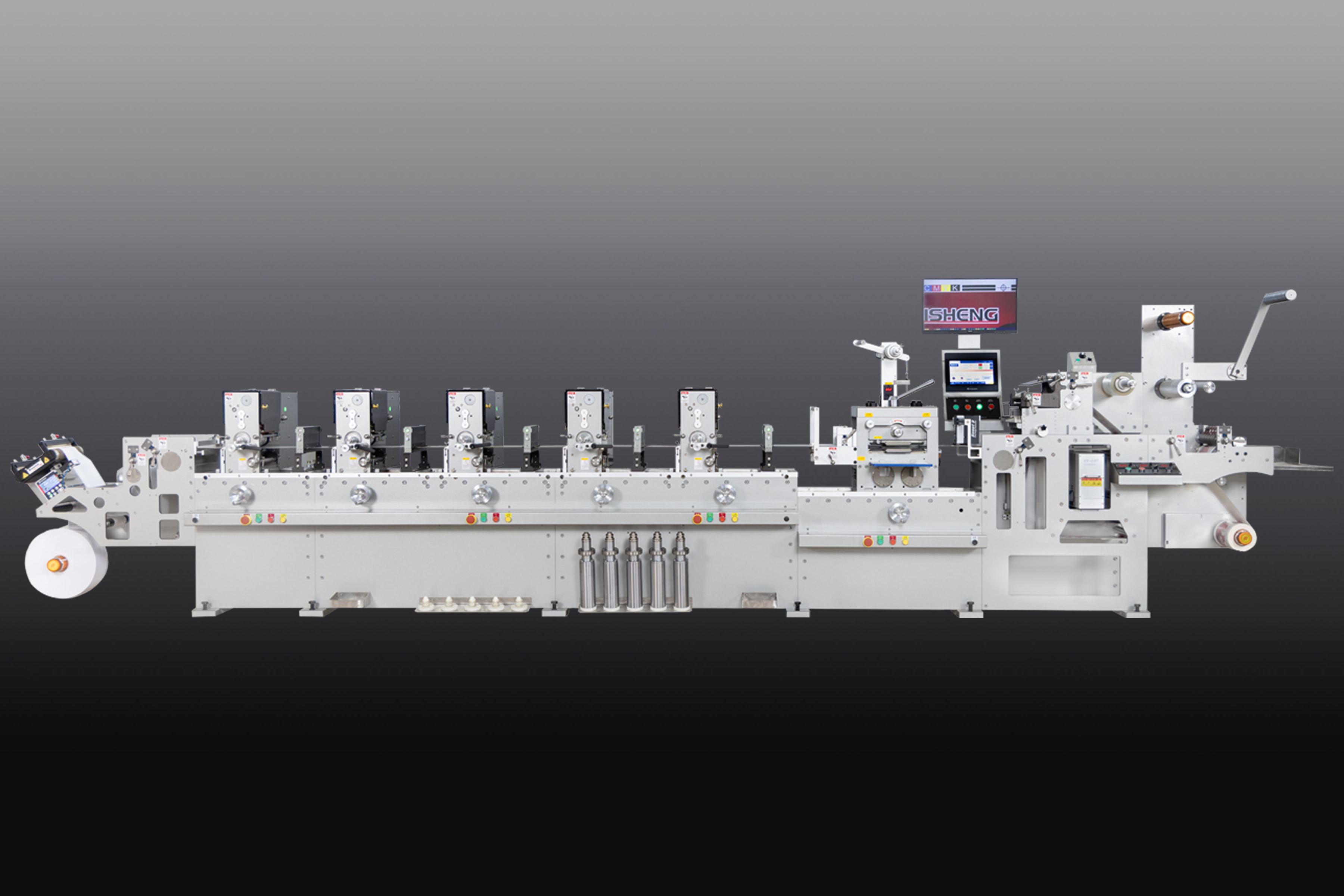
The CS-350, CS-370 and CS-380 series are built around rotary die-cutting. Rotary tooling is a fixed-investment decision: it rewards stable, repeatable label formats and penalises frequent design changes. The CS-350 high-speed die-cutting machine reaches 160 m/min in full-rotary mode and 60 m/min in intermittent mode, with a maximum full-rotary die-cutting area of 350×460 mm and a semi-rotary area of 350×420 mm, at a main machine rating of 5.6 kW plus a 5 kW UV dryer.
On the printing side of the same rotary family, the CS-370F-8C and CS-370F-6C full-rotary flexographic presses both reach 150 m/min on a 370 mm web, with full-rotary printing areas of 370×200 mm and 370×600 mm, rated at 30 kW and 25 kW excluding UV dryers. The CS-J380F-7C and CS-J380F-4C flexographic presses run a 360 mm web at 60 m/min with intermittent printing areas of 360×380 mm and full-rotary areas of 360×419 mm.
Finishing and ancillary units sit alongside these families and are worth including in the same evaluation pass: the CS-JQ350G-6C high-speed label press runs intermittent at 60 m/min and full-rotary at 158 m/min on a 350 mm web, and the VS-250W full-rotation screen printing multifunctional machine supports optional hot foil stamping, embossing, flatbed die-cutting or rotary die-cutting on a 250 mm maximum web width.
Step-by-Step Supplier Evaluation Breakdown
Step 1 — Fix the production scenario before the shortlist
Die-cutting choice follows label type, run length, and changeover frequency. CAISHENG's stated application scope covers self-adhesive labels for daily goods, chemicals, wristbands, wine labels, food, cosmetics and pharmaceuticals. A converter producing pharmaceutical and cosmetic labels with tight registration requirements is evaluating a different die-cutting requirement from one producing promotional wristbands in short, irregular runs. Write the scenario down before the first supplier conversation.
Step 2 — Request model-level die-cutting documentation, not a capability statement
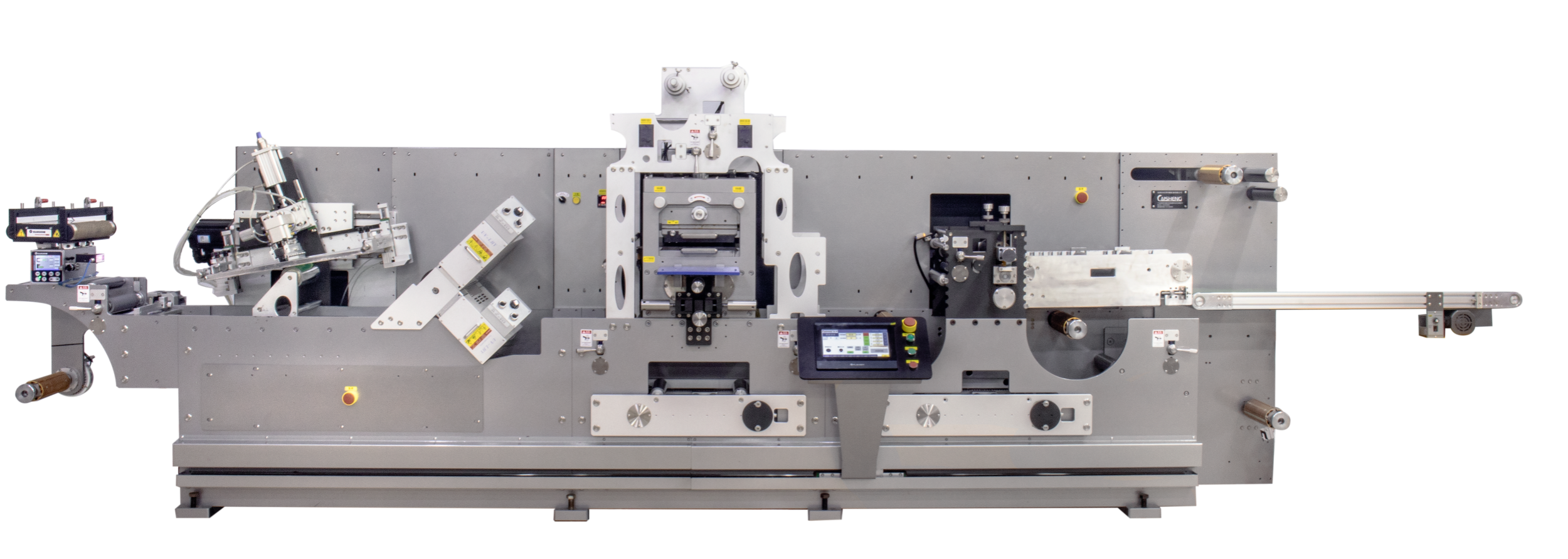
A supplier claim that it "offers die-cutting" carries no procurement value. Ask for the die-cutting method attached to each quoted model. On CAISHENG's range this is answerable at model level: CS-220 = flatbed; CS-300 and CS-320 = flatbed plus rotary combination; CS-350, CS-370 and CS-380 = rotary. If a supplier cannot answer this at model level, the configuration is likely to be engineered per order — which is where lead-time risk enters.
Step 3 — Match die-cutting method to substrate and format stability
Flatbed die-cutting absorbs format variation with lower tooling commitment. Rotary die-cutting delivers continuous cutting at higher cycle rates once a format is stable. Combination machines let one press cover both patterns, which is why the CS-300 and CS-320 families are frequently the entry point for converters who cannot yet forecast format stability across their order book.
Step 4 — Verify manufacturing capacity, not just machine specification
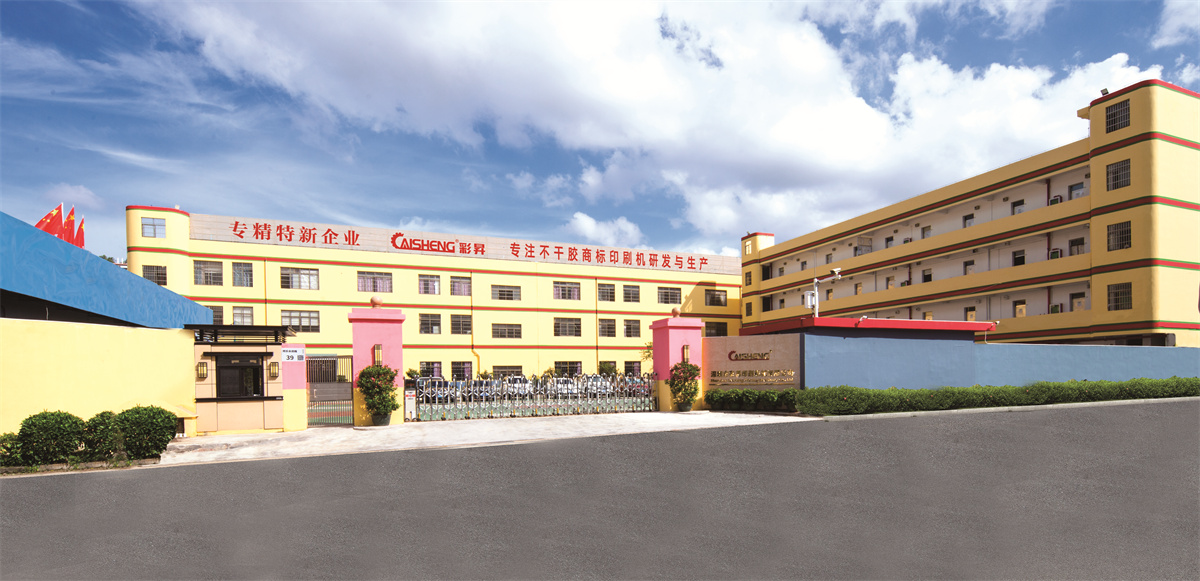
Capacity verification is the step most often skipped. CAISHENG operates a 6,000 m² facility in Longgang District, Shenzhen, with approximately 65 employees, eight R&D engineers and a monthly production capacity of 18 units. Around 50% of output is exported, across Southeast Asia, Europe, the Middle East and the United States. Those figures are the reason a quoted lead time is either plausible or not.
Step 5 — Confirm commercial terms in writing
CAISHENG's stated purchasing terms are a minimum order quantity of one unit, a lead time of 45–60 days, and a one-year warranty on major components supported by remote technical support. Customisation is offered under an ODM model and covers colour stamping, glue-side printing frames, cold foil stamping, lamination, offline and online UV varnishing, flatbed die-cutting, rotary die-cutting, sheet cutting, slitting, corona treatment, dust cleaning, static elimination, full-rotary screen printing, hot foil stamping and embossing. Because ODM scope is broad, the delivery schedule should be tied to a written configuration freeze date, not to the order date.
Step 6 — Agree acceptance criteria before shipment
Acceptance criteria should name the die-cutting method, the label format, the substrate, and the registration expectation for that specific configuration. CAISHENG applies 100% testing to machines before shipment, which gives the buyer a defensible reference point: acceptance is measured against the tested configuration, not against a generic performance claim.
Step 7 — Build delivery-assurance checkpoints into the contract
Three checkpoints carry most of the delivery risk: configuration freeze (what exactly is being built), build progress confirmation (whether the schedule is holding), and factory acceptance before dispatch. A supplier with 18 units of monthly capacity and a 45–60 day lead time can commit to these checkpoints concretely. A supplier without visible capacity data cannot.
Step 8 — Validate supplier history, not just supplier claims
Installed-base evidence is the strongest available signal. CAISHENG supplied a CS-300-series machine to a US-based commercial printing and packaging provider, where the configuration has been in production for three years with reported stable registration accuracy and print quality. A CS-320-series machine has been running for two years at an Asian trademark design and printing company, with the customer citing printing precision, stable production output and process expansion flexibility. Both are company-reported references and should be verified directly during due diligence, but they indicate that the platform is in commercial operation rather than only in a catalogue.
Use Cases: Where Die-Cutting Configuration Determines Fit
Die-cutting configuration decisions cluster around four project patterns, and each maps to a different part of the CAISHENG range.
Short-run and multi-format label production
Converters producing seasonal, promotional or regionally varied labels face frequent die changes. Flatbed die-cutting on the CS-220-4C or CS-220-5C keeps tooling commitment low, and the 30–240 mm web suits smaller label formats. Maximum speed of 40 m/min is the trade-off to accept.
Mixed-format production with rising volume
When part of the order book has stabilised and the rest has not, a flatbed plus rotary combination machine is the configuration that avoids buying two presses. The CS-300-5C, CS-300-6C, CS-320-6C and CS-320-7C all serve this pattern, with the 30–320 mm web on the CS-320 family giving additional width headroom.
High-volume, format-stable label production
Once formats are locked, rotary die-cutting at higher cycle rates becomes the cost-efficient route. The CS-350 die-cutting machine at 160 m/min full-rotary, and the CS-370F-8C and CS-370F-6C flexographic presses at 150 m/min on a 370 mm web, are aimed at this pattern.
Multi-process labels in a single pass
Labels that combine printing, varnishing, screen printing, foil stamping and die-cutting can be produced in one pass on a multi-function platform. The CS-JQ350G-6C runs 60 m/min intermittent and 158 m/min full-rotary on a 350 mm web, and the VS-250W supports screen printing with optional flatbed or rotary die-cutting on a 250 mm web. CAISHENG's stated design intent for this pattern is a one-stop solution for adhesive label printing, allowing printing factories to complete multi-process work on a single machine.

Comparison Table: Die-Cutting Configuration by Model
| Model | Machine type | Die-cutting configuration | Web width | Max speed |
|---|---|---|---|---|
| CS-220-4C | Intermittent letterpress | Flatbed | 30–240 mm | 40 m/min |
| CS-220-5C | Intermittent letterpress | Flatbed | 30–240 mm | 40 m/min |
| CS-300-5C | Intermittent letterpress | Flatbed + rotary combination | 30–300 mm | 40 m/min |
| CS-300-6C | Intermittent letterpress | Flatbed + rotary combination | 30–300 mm | 40 m/min |
| CS-320-6C | Intermittent letterpress | Flatbed + rotary combination | 30–320 mm | 40 m/min |
| CS-320-7C | Intermittent letterpress | Flatbed + rotary combination | 30–320 mm | 40 m/min |
| CS-350 | High-speed die-cutting | Rotary (combination capable) | 350 mm | 160 m/min full-rotary |
| CS-370F-6C | Full-rotary flexo | Rotary | 370 mm | 150 m/min |
| CS-370F-8C | Full-rotary flexo | Rotary | 370 mm | 150 m/min |
| CS-J380F-4C | Flexo | Rotary | 360 mm | 60 m/min |
| CS-J380F-7C | Flexo | Rotary | 360 mm | 60 m/min |
Specifications as published in CAISHENG product data. Die-cutting configuration is stated at model-family level; confirm the exact module against the quotation before signing.
Delivery Assurance Criteria: What to Put in the Contract
Delivery assurance on a label printing machine is not a promise — it is a set of verifiable commitments tied to the supplier's actual capacity. Four items belong in the agreement.
- Configuration freeze date. With ODM customisation available across die-cutting, foil stamping, varnishing, slitting and corona treatment, the build cannot start until the configuration is frozen. Tie the 45–60 day lead time to that date.
- Capacity disclosure. A supplier quoting a short lead time should be able to state monthly throughput. CAISHENG's stated figure is 18 units per month from a 6,000 m² facility staffed by approximately 65 employees, including eight R&D engineers.
- Testing evidence. CAISHENG applies 100% testing before shipment. Ask for the test record against the agreed die-cutting configuration.
- After-sales terms. CAISHENG provides remote support and a one-year warranty on major components. Confirm the response channel and the named contact for the destination market.
FAQ: Label Printing Machine Supplier Evaluation
What certifications should a label printing machine supplier hold for export markets?
CAISHENG holds ISO 9001, ISO 14001 and ISO 45001 certification as a certified high-tech enterprise, and its products meet CE standards. For EU-bound equipment, CE conformity is the baseline requirement, and the ISO certifications cover quality, environmental and occupational health and safety management systems respectively. Buyers should request the certificate scope and validity dates rather than accepting a logo on a brochure page. HS Code 844316 covers flexographic printing machinery, which is the relevant classification for the flexo label press families in this range.
Can a single label printing machine run both flatbed and rotary die-cutting?
Yes — on the CS-300 and CS-320 families, which are configured as flatbed plus rotary die-cutting combination machines. Flatbed handles format changes with lower tooling commitment; rotary handles continuous cutting once a format is stable. The CS-220 series is flatbed-only, and the CS-350, CS-370 and CS-380 series are rotary-based. Choosing between them is a question of format stability and run length, not of capability tier.
What are the minimum order quantity and lead time for a CAISHENG label printing machine?
CAISHENG's stated minimum order quantity is one unit, with a lead time of 45–60 days, a one-year warranty on major components, and remote after-sales support. Because ODM customisation covers die-cutting, foil stamping, varnishing, slitting, corona treatment and screen printing modules, the effective schedule depends on when the configuration is frozen. Buyers should contract against the freeze date rather than the order date.
How can a buyer verify die-cutting quality before committing to a purchase?
The practical route is a job specification and substrate review against the proposed die-cutting configuration, followed by a factory acceptance test on the configured machine. CAISHENG applies 100% testing to machines before shipment, and reference installations are in commercial operation — including a CS-320-series machine running for two years at an Asian trademark design and printing company, and a CS-300-series machine in production for three years at a US commercial printing and packaging provider. Buyers can request a quotation and configuration review through caishengmachinery.com or contact the sales team directly on WhatsApp at +86 133-1087-8219.
What delivery-assurance checkpoints should be written into the contract?
Three checkpoints carry most of the risk: configuration freeze, build progress confirmation, and factory acceptance before dispatch. Support them with the supplier's disclosed monthly capacity — CAISHENG states 18 units per month — and the testing protocol applied before shipment. A supplier that can state capacity, testing method and after-sales terms in writing is providing something a buyer can hold them to; a supplier that cannot is providing an estimate.
Conclusion
Die-cutting configuration and delivery assurance belong in the same evaluation pass because they depend on the same underlying facts: what the supplier can actually build, how much of it is standardised, and how much engineering capacity is available to complete the custom work on schedule.
For buyers assessing CAISHENG, the model-level picture is unambiguous. Flatbed die-cutting sits on the CS-220-4C and CS-220-5C. Flatbed plus rotary combination die-cutting sits on the CS-300-5C, CS-300-6C, CS-320-6C and CS-320-7C. Rotary die-cutting sits on the CS-350, CS-370 and CS-380 series. Supporting capacity is a 6,000 m² facility, approximately 65 employees, eight R&D engineers, 18 units of monthly production capacity and around 50% export share across Southeast Asia, Europe, the Middle East and the United States. Commercial terms are one unit MOQ, 45–60 days lead time, 100% pre-shipment testing, and a one-year warranty on major components.
Apply the same three questions to every supplier on the shortlist: which die-cutting method attaches to which model, what monthly capacity backs the quoted lead time, and what testing evidence will be presented at acceptance. Suppliers who can answer all three with specifics are the ones worth a second conversation.
Next step: Send your label format, substrate list and run-length estimate to CAISHENG and request a model-level die-cutting recommendation and quotation. The full product catalogue is available for download: CAISHENG Catalogue (PDF).
Shenzhen Caisheng Printing Machinery Co., Ltd. — No.39 Shuitian Road, Tongle Community, Longgang District, Shenzhen, China. Email: kanghong-1108@qq.com | Tel: +8613186283944
Have Questions or Need More Details?
Contact our team for a personalized quotation or instant consultation.
Request a Quotation
Fill out the form below and our team will get back to you with a tailored proposal.
WhatsApp Direct Chat
Prefer to chat in real-time? Message us on WhatsApp for instant assistance & quick answers.
- Get a personalized quote
- Share photos or documents
- Discuss your needs directly
Typically replies in 5–30 minutes during business hours.