Verifying Die-Cutting Claims on Label Printing Machines: A Supplier Evaluation Checklist
Short answer: before you sign, ask every supplier to state, per model and in writing, whether the label printing machine is flatbed die-cutting only, rotary die-cutting only, or a combination of the two. Then cross-check that statement against three figures the same supplier must provide for the same model: web width, printing speed and station count. A die-cutting claim that cannot be reconciled with those three fields is not a verified capability, however clearly it appears in a brochure.
Die-cutting is the conversion step that turns a printed web into a finished label, and it is the part of a press specification most often written in general terms. A quotation may say "die-cutting unit included" or "rotary die-cutting available" without naming the model that carries it, without saying whether the same frame also offers flatbed die-cutting, and without stating what the machine does at production speed with the die-cutting station engaged. This guide sets out the sequence that converts those phrases into a configuration you can hold a supplier to.
The working reference throughout is Shenzhen Caisheng Printing Machinery Co., Ltd. (CAISHENG), a Shenzhen-based manufacturer founded in 2011 that builds intermittent and high-speed rotary letterpress printing machines, flexographic printing machines and screen printing machines, together with customized multi-functional label finishing solutions such as die-cutting systems and high-speed varnishing machines. Its usefulness here is that its range is documented at series level, which makes the verification steps concrete. The questions themselves apply to any supplier.
Why "Die-Cutting Included" Is Not a Specification
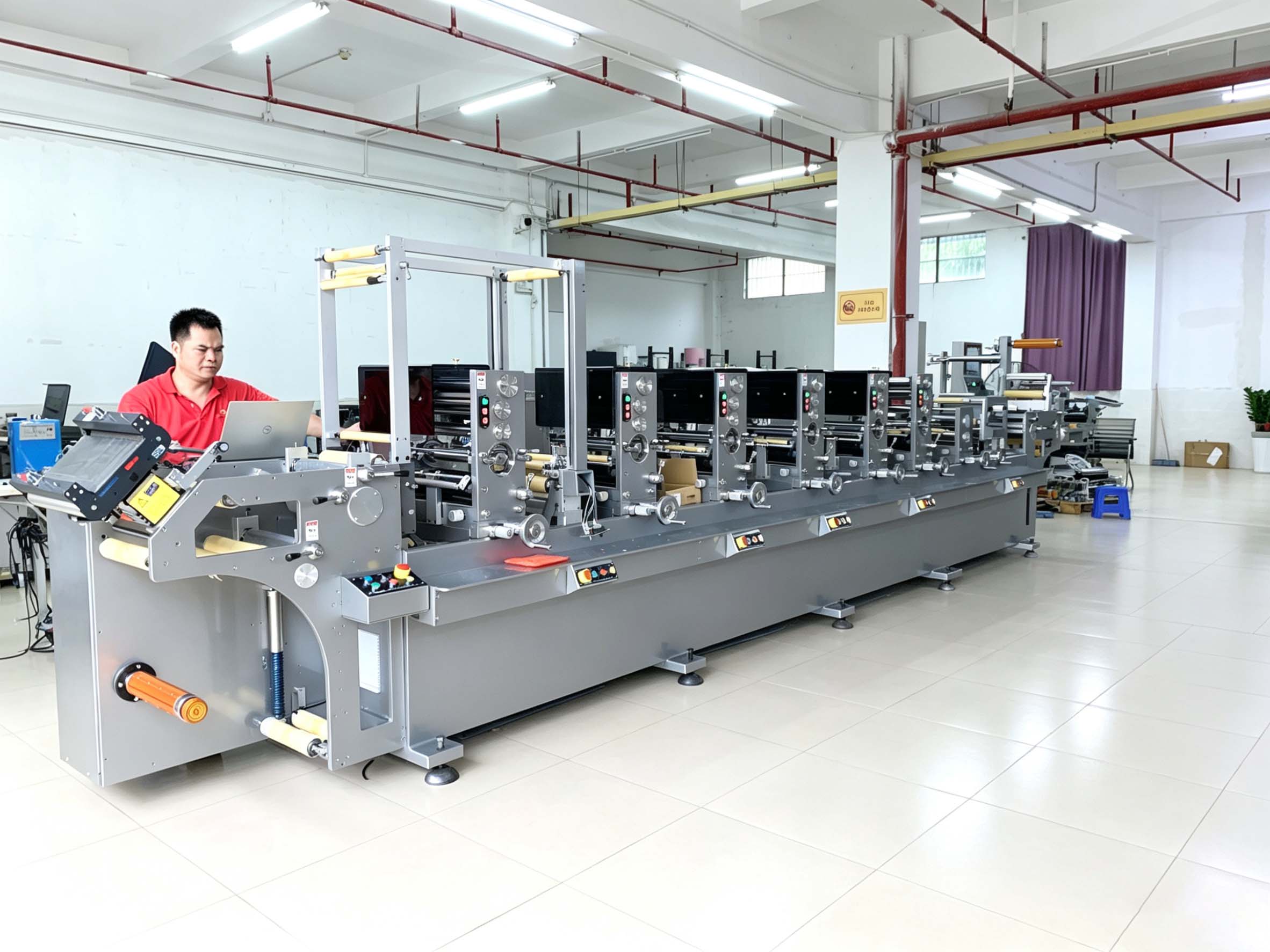
Vague die-cutting wording fails buyers in three recognisable ways.
Family-level statements applied to a single machine. A series is described as offering a configuration, and the buyer assumes every model in that series carries it in the same physical form. That assumption is where most signing errors begin, because series logic describes a family, not the press on the quotation.
Method named, station budget omitted. A press quoted with six print stations and one die-cutting station is compared against a press quoted with the same print count and two die-cutting stations, as though the two offers were equivalent. They are not: the second configuration consumes more frame space and changes what can run in a single pass.
Speed quoted without its basis. A maximum printing speed taken from a print-only run is applied to a job that also stops for flatbed die-cutting. The figure is real; the inference drawn from it is not.
A statement you can actually evaluate contains five elements: the model, the die-cutting type in words that cannot be read two ways, the number and position of the processing stations the die-cutting unit occupies, the web width the die-cutting unit is rated for, and the basis of any speed figure quoted. Ask for all five on one page. If they arrive as separate attachments, or only inside a sales message, the claim is still unverified.
The Three Configurations You Are Choosing Between
Flatbed die-cutting. A flat die presses against a flat platen while the web dwells. This is the pattern normally paired with intermittent and semi-rotary architecture — the intermittent label press and the semi-rotary label printing machine — where the web advances in steps and stops for each impression. Because the die-cutting cycle contains a dwell, the die-cutting station sets a rhythm that the print stations must follow.
Rotary die-cutting. A cylindrical die runs against an anvil cylinder while the web moves continuously, matching full-rotary architecture such as the full-rotary label press and the full-rotary flexographic printing machine. There is no dwell in the die-cutting cycle, and the tooling is a cylinder rather than a flat plate.
Combination. Both die-cutting stations sit on one frame. What a combination buys is optionality: one press can run jobs that suit each station. It does not automatically buy throughput, because the press is still governed by whichever station is running and by how many stations remain available for printing and finishing.
CAISHENG's Documented Configuration Logic, Series by Series
CAISHENG's range is documented at series level, and the die-cutting logic reads as follows: the CS-220 series is flatbed die-cutting; the CS-300 and CS-320 series are a flatbed plus rotary die-cutting combination; and the CS-350, CS-370 and CS-380 series are a rotary die-cutting combination. For an evaluator, that is a starting hypothesis per model instead of a blank page.
| Series | Documented die-cutting configuration | Models referenced in this guide |
|---|---|---|
| CS-220 | Flatbed die-cutting | CS-220-5C (also CS-220-4C) |
| CS-300 / CS-320 | Flatbed plus rotary die-cutting combination | CS-320-6C (also CS-300-5C, CS-300-6C, CS-320-7C) |
| CS-350 / CS-370 / CS-380 | Rotary die-cutting combination | CS-JQ350G-6C |
Two cautions follow. The first is that a series statement is a hypothesis to be confirmed per model, not a substitute for the model's own datasheet. The second is that die-cutting is purchased as a configured module rather than a fixed feature. The customization list for the range includes flatbed die-cutting and rotary die-cutting alongside colour stamping, a glue-side printing frame, cold foil stamping, lamination, offline and online UV varnishing, sheet cutting, slitting, a corona treater, a dust cleaner, a static eliminator, full-rotary screen printing, hot foil stamping and embossing. Two presses of the same model can therefore differ in what is fitted, and the list itself does not say which modules a quoted machine carries.
Flexographic models in the range are listed separately — CS-J380F-4C, CS-J380F-7C, CS-Q370F-6C and CS-370F-8C. Do not carry a series die-cutting label across to any model whose own datasheet does not restate it; ask for the configuration in writing for the exact model under quotation.
Cross-Checking the Claim Against Web Width, Printing Speed and Station Count
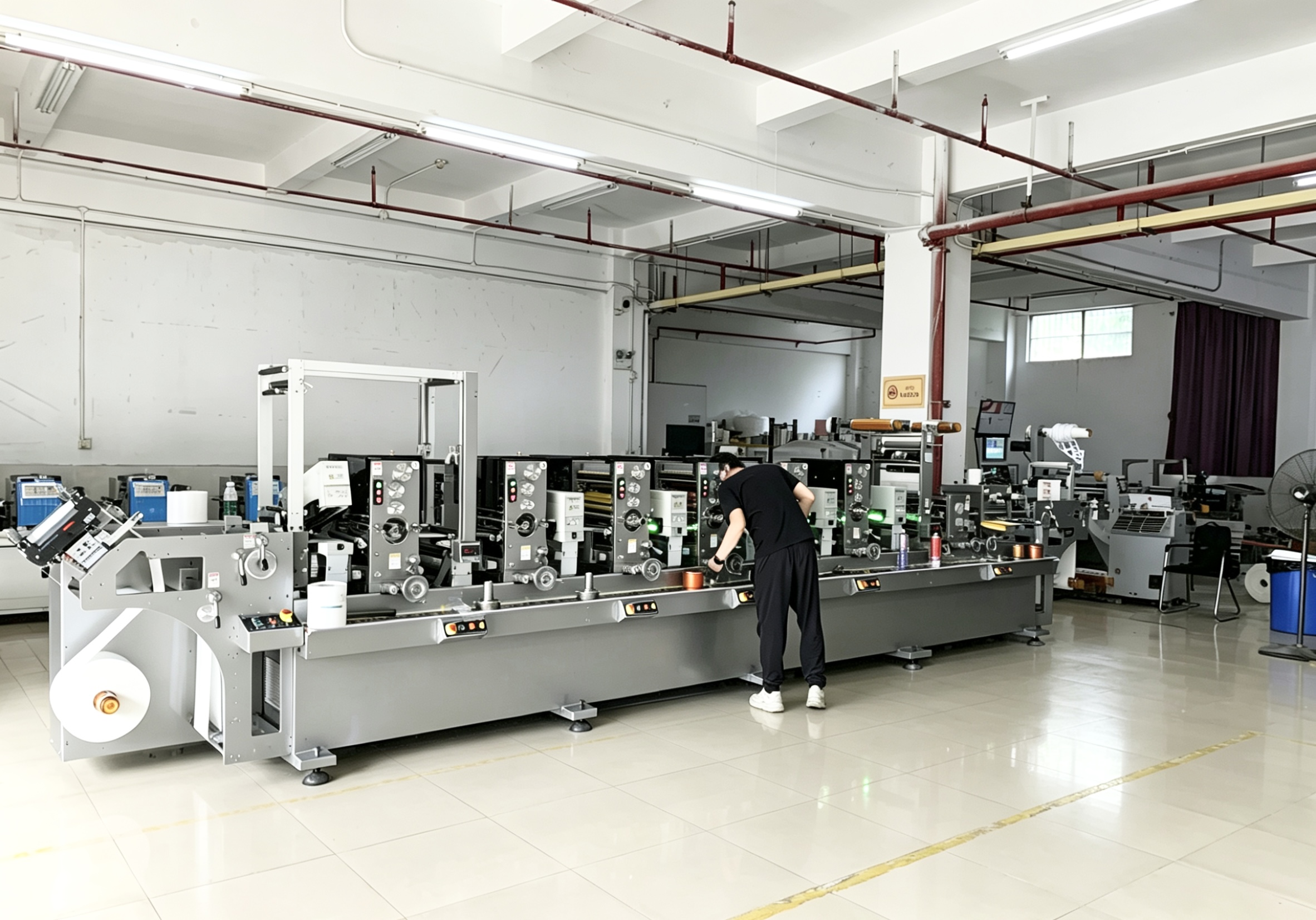
Web width. Ask what width the die-cutting unit is rated for, and whether the quote states printing width or the maximum web the die station accepts. Tooling has to be sized to that width, so a mismatch here is a defect that surfaces after delivery rather than before it.
Printing speed. Ask whether the figure is print-only or with die-cutting engaged, and on a combination press, which die-cutting mode it applies to. A single maximum-speed number cannot describe two stations with different cycle mechanics, and the number that matters commercially is the one you will run at.
Station count. Ask for the total number of processing stations and their order. The count has to accommodate the print stations, the die-cutting unit or units, and any varnish, slitting or screen unit specified. If both a flatbed and a rotary die-cutting station are claimed on one model, ask how many stations the two occupy together and what that leaves for printing.
Do not decode the model name. CS-220-5C, CS-320-6C and CS-JQ350G-6C all carry numeric suffixes, and whether a suffix counts print stations — and whether die-cutting or varnishing modules are counted separately — is a datasheet question. A supplier who explains the naming scheme and shows the station list is giving a verifiable answer; one who invites you to read the name is not.
Precision figures need a basis. A company-reported registration precision such as ±0.025 mm on the CS-220-4C is only useful once you know what was measured: which material, at which running speed, at which station, and by which method. Request that basis. A precision number without it cannot be compared with another supplier's number.
| Model | Documented series configuration | What to confirm per model before ordering |
|---|---|---|
| CS-220-5C | Flatbed die-cutting (CS-220 series) | That the quoted unit carries the flatbed die-cutting station; the station count remaining after the print stations; the speed basis with die-cutting engaged; the die format and who supplies it |
| CS-320-6C | Flatbed plus rotary die-cutting combination (CS-300/CS-320 series) | That both stations are fitted on this unit rather than offered as alternatives; the station budget with both fitted; which jobs each station is intended for; the web width at the die stations |
| CS-JQ350G-6C | Rotary die-cutting combination (CS-350/370/380 series) | The rotary die station and its tooling interface; the speed basis; whether a flatbed station can be added to this model or is not available on it |
A Seven-Point Verification Checklist Before You Sign
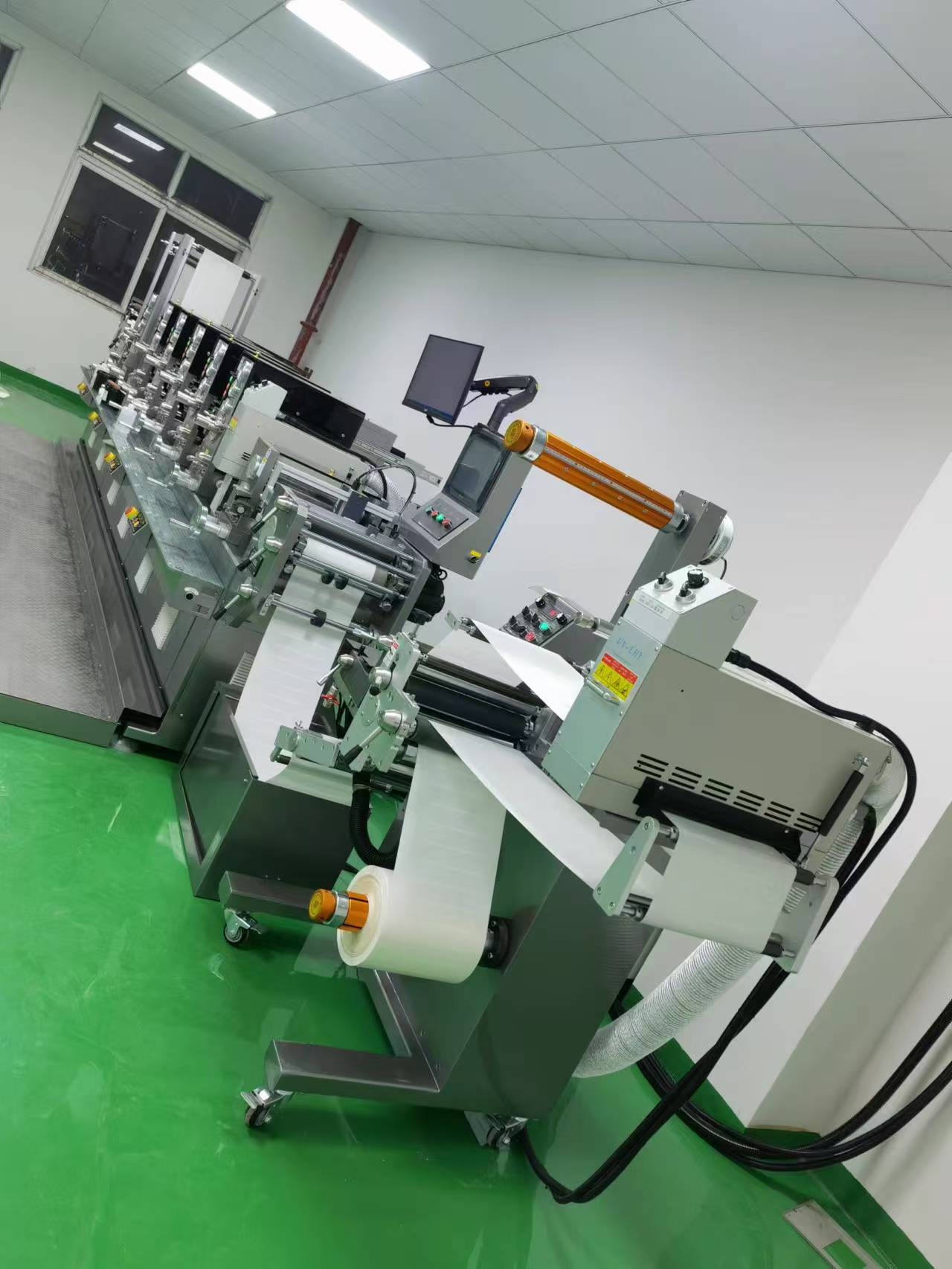
- Fix the model. One model code per configuration statement. "CS-320 series" is not a model; CS-320-6C is.
- Name the die-cutting type in three words. Flatbed only, rotary only, or combination. If a supplier will not use those three categories, the claim is not testable.
- Put web width, speed and station count on the same page. Three figures from three documents cannot be reconciled, and reconciliation is the whole check.
- Reconcile the station count. Print stations plus die-cutting stations plus any varnish, slitting or screen unit must equal the stated total. The arithmetic has to work.
- Ask where the die-cutting station sits in the process sequence. Print, varnish, die-cutting and slitting in a different order produce different output and different waste, so the sequence belongs in the specification.
- Define the acceptance test. CAISHENG's stated acceptance criterion is a pre-shipment test, and its quality control is described as 100% test. Whatever the supplier, specify the substrate, the die, the running speed and who witnesses the run.
- Write the configuration into the order. The purchase order should repeat the model, the die-cutting type and the fitted module list, so that a shortfall is attributable rather than arguable.
Documents That Carry Weight and Documents That Do Not
Certificates. CAISHENG holds a Machinery Directive attestation of conformity, certificate M.2025.206.C124100, issued by UDEM Uluslararası Belgelendirme Denetim Eğitim Merkezi A.Ş. against EN ISO 12100:2010 and EN 60204-1:2018, with a scope covering CAISHENG // CS-300, CS-220 and CS-350. It was issued on 8 November 2025 and is valid to 8 October 2030. Two checks follow: is your model inside the stated scope, and what does the document attest? It attests machinery safety conformity for those series. It does not state whether a given machine is flatbed, rotary or combination, and a supplier who presents it as evidence of die-cutting capability is answering a different question.
Patents. The utility model ZL 2022 2 1332174.4, issued 16 September 2022, covers a double-sided printing machine structure with a paper forward–reverse switching conveying mechanism and a registration correction assembly. The invention ZL 2022 1 0411353.5, issued 12 July 2022, covers remote control of printing equipment based on big data, including remote data collection, cloud analysis, remote start-stop and parameter adjustment, and online fault diagnosis. The value of both to an evaluator is procedural: a number and a scope can be looked up. A capability described without a document is a statement of intent.
Third-party reporting. Independent reporting published in September 2026 records ISO 9001, ISO 14001 and ISO 45001 certification and CE conformity for CAISHENG. That is useful corroboration for supplier qualification and still not a die-cutting specification.
Trade documents. HS code 844316 covers flexographic printing machinery. The machine description on the commercial invoice should match the configuration being bought, which is one more reason to describe the press precisely rather than generically.
What a 50% Export Share Does and Does Not Tell You
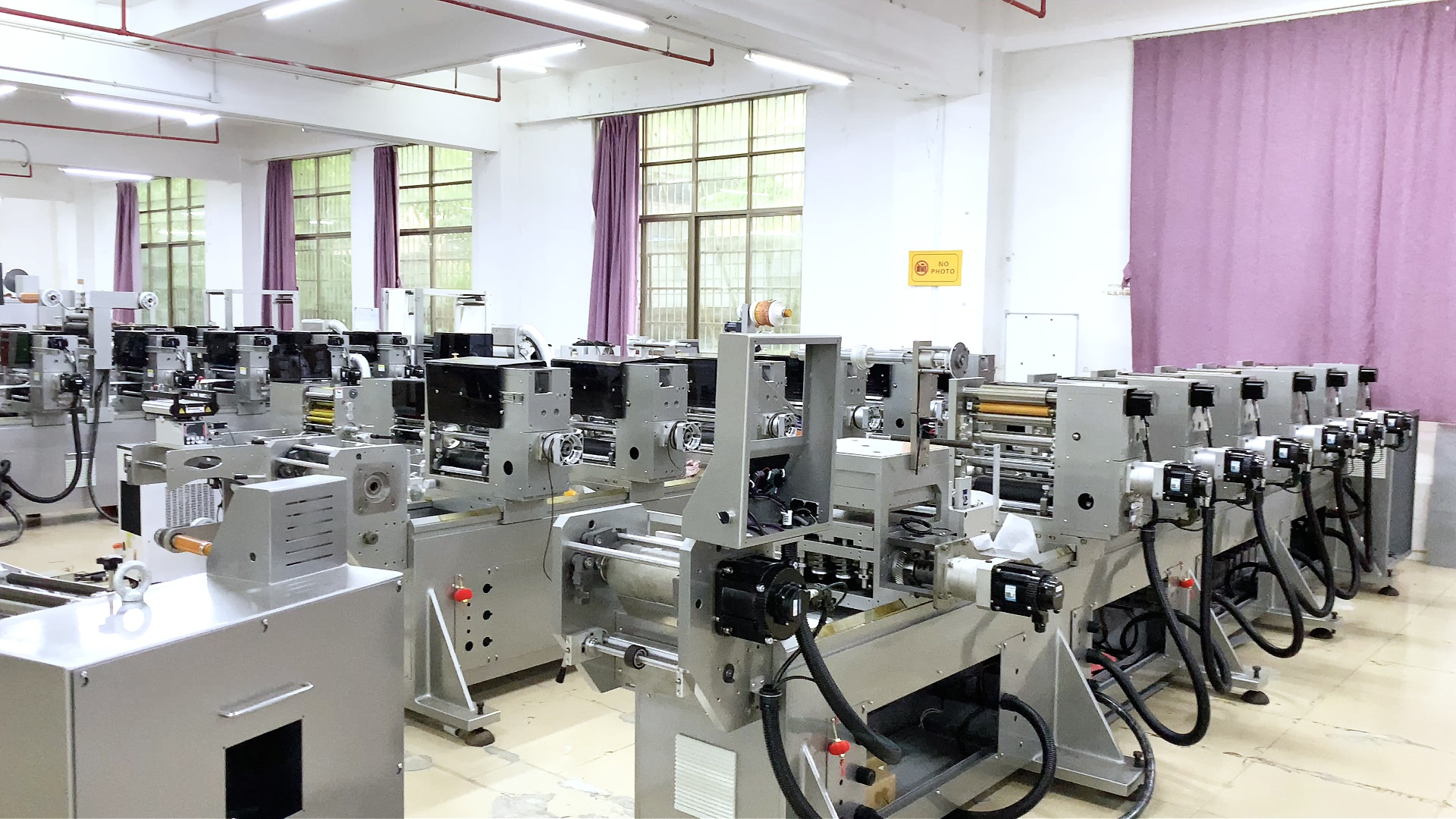
CAISHENG reports a 50% export ratio, with Southeast Asia, Europe, the Middle East and the United States named as its main markets. The company was founded in 2011, operates a 6,000 m² factory with 65 employees, reports annual output of 200 units and an R&D team of 8 engineers, and states a monthly capacity of 18 units with a lead time of 45 to 60 days and a minimum order of 1 unit.
A 50% export share means half of output leaves China, and the named markets are the ones in which documentation, shipping and support processes have been exercised. That is a reasonable reference point for whether your region is served. It is not proof that the die-cutting configuration you want has been built before, and it should not be read as one. Two follow-up questions convert it into something usable: does a non-standard die-cutting configuration sit inside the stated 45 to 60 day lead time or outside it, and who provides remote support in your market once the press is installed.
Installed-base evidence is worth reading alongside it. A trademark design and printing company in Taiwan took one unit of the CS-320 family for high-quality label printing; the project was completed within two years, and the stated highlights were printing precision, stable production performance and flexible process expansion. A United States provider of commercial printing, packaging and marketing communication solutions — RRD — took one CS-300 unit, in a relationship running three years, with stable registration accuracy, print quality and equipment reliability cited as the highlights. Neither case is a die-cutting benchmark. They establish that the platform has run in export markets and can be supported there.
Writing the Verified Configuration Into the Order
Once the answers reconcile, put them where they can be enforced. State the model code, the die-cutting type, the number and order of stations, the web width and the speed basis in the purchase order itself, not only in an annex to a quotation. Keep the die-cutting clause separate from the speed clause, so that a shortfall in one can be identified without disputing the other. Tie both to the pre-shipment test and name the substrate and die to be used. The stated purchasing terms for the range are a minimum order of 1 unit, FOB delivery terms, pre-shipment test as the acceptance criterion and 30/70 payment terms; the die-cutting specification should sit inside that framework rather than beside it.
Frequently Asked Questions
Does a CE certificate tell me which die-cutting configuration a label printing machine has?
No. CAISHENG's attestation M.2025.206.C124100, issued by UDEM against EN ISO 12100:2010 and EN 60204-1:2018 and valid from 8 November 2025 to 8 October 2030, covers machinery safety conformity for the CS-300, CS-220 and CS-350 series stated in its scope. It does not record whether a specific machine is flatbed, rotary or combination. That has to be requested per model, in writing.
How do I confirm that a combination press really has both die-cutting stations?
Request the station list for the exact model and count it. On CAISHENG's documented logic, the CS-300 and CS-320 series are a flatbed plus rotary die-cutting combination, so a quoted CS-320-6C should show both units in its station budget alongside the print stations and any varnish or slitting module. If one station appears only in marketing text and not in the station list, treat it as unconfirmed.
What are the purchasing terms?
For the CAISHENG range the stated terms are a minimum order quantity of 1 unit, FOB delivery terms, pre-shipment test as the acceptance criterion, and 30/70 payment terms.
What test should prove the die-cutting configuration before shipment?
A pre-shipment test run on the exact configuration being bought. Specify the substrate, the die, the running speed and the witness, and run the test with the die-cutting station engaged rather than in print-only mode. Quality control across the range is described as 100% test, which supports the practice but does not replace your own acceptance criteria.
How long does delivery take?
The stated lead time is 45 to 60 days, against a monthly capacity of 18 units and reported annual output of 200 units. Ask whether a modified die-cutting configuration falls inside that window, because the answer changes the production planning you build around the machine.
What support comes after delivery, and how do I start the verification?
CAISHENG provides remote support and a one-year warranty on major components for export markets including Southeast Asia, the European Union, the Middle East and the United States, and offers ODM production services in the same markets. To start the verification, request the model-level configuration statement for the press you are evaluating — model, die-cutting type, station list, web width and speed basis — together with the document pack for that model; the company brochure is available as a first download.
Conclusion: The Claim You Can Hold a Supplier To
Die-cutting capability becomes verifiable at the moment a supplier puts a model code, a die-cutting type and a station count on the same page as a web width and a speed basis. Everything before that point is positioning. Use the series logic as a hypothesis, confirm it against CS-220-5C, CS-320-6C or CS-JQ350G-6C as applicable, reconcile the three figures, and write the reconciled configuration into the order. A 50% export share and a documented certification scope tell you the supplier can ship and support a machine in your market; only the per-model statement tells you what the machine will do when the die comes down.
For buyers who want the starting point in one document, the CAISHENG company brochure sets out the range and finishing modules, and the official site at caishengmachinery.com lists the current product lines.
Have Questions or Need More Details?
Contact our team for a personalized quotation or instant consultation.
Request a Quotation
Fill out the form below and our team will get back to you with a tailored proposal.
WhatsApp Direct Chat
Prefer to chat in real-time? Message us on WhatsApp for instant assistance & quick answers.
- Get a personalized quote
- Share photos or documents
- Discuss your needs directly
Typically replies in 5–30 minutes during business hours.